
This page contains an affiliate link. If you request a quote through it, Heat Source Hub may earn a commission at no cost to you. How affiliate links work on this site.
Since 28 April 2026, the Boiler Upgrade Scheme (BUS) has offered £2,500 towards an air-to-air heat pump in England and Wales. For anyone living with electric panel heaters or old storage heaters, that sounds like a turning point: a heating system that also cools in summer, with no radiators or pipework to fit.
The grant is real, but there is a catch the headlines skip, and air-to-air only suits certain homes. I have fitted heat pumps for a long time, and this guide sets out what the rules actually say, what you can expect to pay, how the running costs compare, and whether it is worth doing now or waiting.
The short answer
- What it is: a heat pump that heats (and cools) rooms by blowing warm air from wall units. It does not heat your hot water.
- The grant: £2,500 through the BUS, but only once air-to-air is fully part of MCS. At the time of writing, MCS says there are no certified air-to-air installers yet, so the grant cannot be claimed in practice.
- The big rule: it must replace your existing fossil fuel or electric heating and be sized for the whole home. Hot water must come from something that does not burn fossil fuel.
- Best fit: flats and smaller homes on electric heating with no radiator system. Here it can cut heating bills by around two thirds or more.
- Poor fit: most homes with a gas boiler and radiators. An air-to-water heat pump with the £7,500 grant usually makes more sense.
On this page
What an air-to-air heat pump is
An air-to-air heat pump works on the same refrigerant cycle as any other air source heat pump: an outdoor unit pulls heat out of the outside air, even in cold weather, and a compressor raises it to a useful temperature. The difference is where that heat goes.
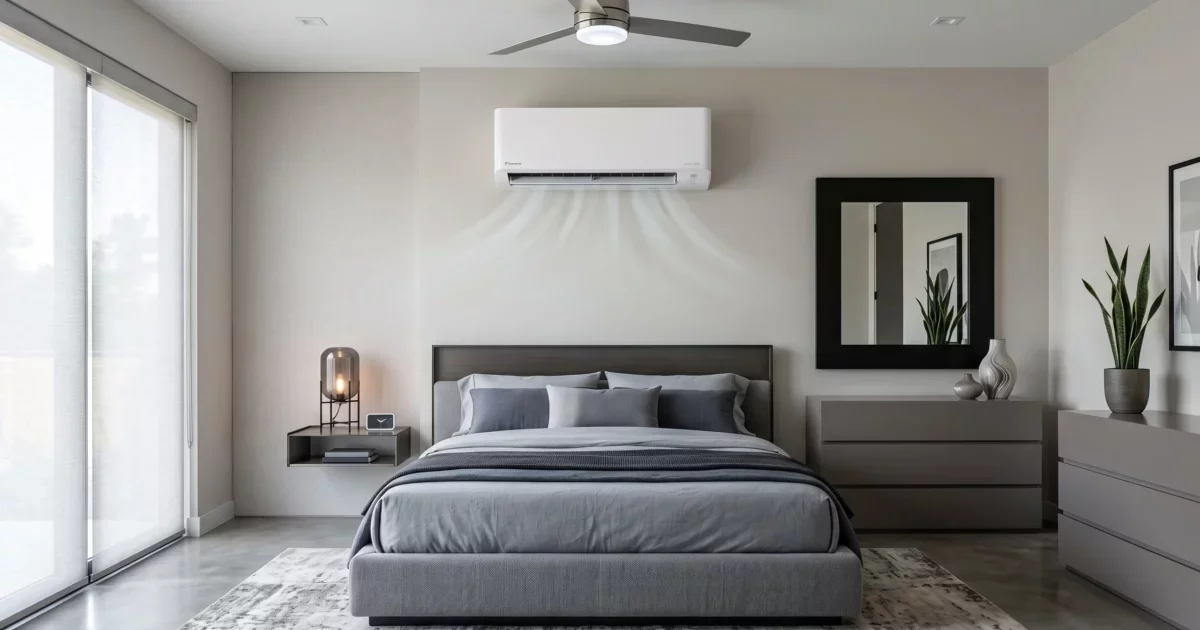
With an air-to-water heat pump, the heat goes into water that flows round radiators or underfloor pipes and heats a hot water cylinder. With air-to-air, the refrigerant runs through small insulated pipes to wall-mounted indoor units, which blow warm air into each room. Most people would recognise them as air conditioning units, and that is essentially what they are: a modern reversible air conditioner heats very efficiently as well as cooling.
You will see two set-ups:
- Single split: one outdoor unit serving one indoor unit. Good for one room or an open-plan space.
- Multi-split: one outdoor unit serving two to five indoor units. This is what most whole-home installs in a flat or small house will need.
What air-to-air does not do is heat your hot water. That matters a great deal for the grant, as you will see below.
The £2,500 grant and the catch right now
The government added air-to-air heat pumps to the Boiler Upgrade Scheme through the BUS amendment regulations that came into force on 28 April 2026. Ofgem’s guidance for property owners lists £2,500 off the cost of an air-to-air heat pump, alongside £7,500 for air-to-water and ground source systems.
As with every BUS grant, you do not apply yourself. Your installer applies and takes the grant off your quote. And the installer, and the product, must both be certified under MCS.
The catch: the law changed in April, but the certification side has not caught up. MCS has said that grant claims can only start once air-to-air is fully built into its scheme, and its consumer page on air-to-air heat pumps still says there are no certified installers yet. The first air-to-air products (Daikin multi-split systems) were only added to the MCS product directory in September 2026.
So if anyone offers you the £2,500 grant on an air-to-air install today, ask them to show you their MCS certificate for air-to-air. If they can’t, you won’t get the money.
None of this means the grant isn’t coming. The scheme now runs to 2030, so there is no rush to beat a deadline. But if the grant is part of your decision, it is worth waiting until MCS-certified air-to-air installers are listed on the MCS Find an Installer tool.
The rules that decide whether you qualify
These are the conditions in the scheme rules as they stand. Most are the same as for any heat pump under the BUS; a few are specific to air-to-air.
- England and Wales only. Scotland has its own schemes through Home Energy Scotland.
- You must own the property. Owner-occupiers and landlords can both apply. See the BUS for landlords if you let property.
- Homes only. Air-to-air grants are for residential properties; businesses and other non-domestic buildings can’t use the grant for air-to-air.
- It must replace your existing heating. That means fossil fuel heating (gas, oil, LPG, coal) or electric heating such as storage heaters or panel heaters. It can’t replace an existing heat pump or other low-carbon system.
- No keeping the old system alongside. The heat pump has to be sized to meet the full space heating needs of the home. You can’t fit one unit in the lounge, keep the gas boiler for the rest and claim the grant.
- Hot water must be covered without fossil fuel. The system must meet your heating and hot water needs, alone or with a supplementary appliance that doesn’t run on fossil fuel. In practice that means an electric hot water cylinder, an electric water heater or a heat battery. If you have a gas combi now, the gas has to go.
- Minimum efficiency. The unit must have a seasonal efficiency (SCOP) of at least 2.8. Any decent modern unit clears this comfortably.
- Most new builds are excluded. Self-builds can qualify if they meet Ofgem’s self-build criteria.
- No EPC needed. Since April 2026 you no longer need an EPC without outstanding insulation recommendations to apply.
The hot water rule is the one that catches people out. It is the main reason air-to-air suits all-electric homes far better than gas homes: if you already heat water with an immersion cylinder or electric water heater, nothing about your hot water needs to change. Our guides to hot water cylinders and electric water heaters cover the options if you need a new one.
What it costs to install
Air-to-air is usually cheaper to fit than air-to-water because there are no radiators, no wet pipework and no cylinder to install. Typical prices before any grant look like this:
| Installation | Typical price before grant | Typical home |
|---|---|---|
| Single split (1 indoor unit) | £1,500–£3,000 | One room or open-plan studio |
| Multi-split, 2 rooms | £3,200–£5,500 | One-bedroom flat |
| Multi-split, 3 or more rooms | £4,800–£10,000+ | Two- or three-bedroom flat or small house |
Price ranges are installer-reported figures for 2026. A grant-funded install will need MCS design and paperwork, so expect quotes towards the upper end of each range. Add the cost of a new electric cylinder or heat battery if your hot water currently comes from gas.
Because the grant requires the whole home to be heated, most qualifying jobs will be multi-split systems. Take £2,500 off a £6,000 three-room install and you are paying about £3,500, which is a genuinely good price for a full heating system with cooling included.
Running costs compared
A heat pump’s efficiency is measured as SCOP: the units of heat you get for each unit of electricity, averaged over a year. Manufacturers often quote 4 or more for air-to-air, but real homes vary, so the example below shows both a conservative 3.0 and a good 4.0.
The example is a small home needing 6,000 kWh of heat a year, using the Ofgem price cap rates for October to December 2026: 26.32p per kWh for electricity and 7.97p for gas.
| Heating system | Energy used per year | Approx. annual cost |
|---|---|---|
| Electric panel heaters (standard rate) | 6,000 kWh electricity | £1,579 |
| Gas boiler (90% efficient) | 6,667 kWh gas | £531 |
| Air-to-air heat pump, SCOP 3.0 | 2,000 kWh electricity | £526 |
| Air-to-air heat pump, SCOP 4.0 | 1,500 kWh electricity | £395 |
Space heating only; excludes standing charges and hot water. Your own figures will depend on your home’s heat loss, your tariff and how you use the system.
Two things stand out:
- Against direct electric heating, the saving is large. Swapping panel heaters for air-to-air cuts the heating bill in this example by roughly £1,050 to £1,180 a year. If you are on storage heaters with a cheap off-peak rate, the saving will be smaller, but still significant.
- Against gas, it is roughly level. At a conservative SCOP the running cost is about the same as a gas boiler; at a good SCOP it is cheaper. If going all-electric means closing your gas account, you also stop paying the gas standing charge, about £108 a year at current rates.
A heat pump tariff can improve these numbers further. Our guide to electricity tariffs for heat pump owners compares the current options; check whether a tariff requires a particular type of heat pump before you sign up.
Air-to-air vs air-to-water
If you have a choice between the two, this is how they compare.
| Air-to-air | Air-to-water | |
|---|---|---|
| BUS grant | £2,500 (once MCS installers are certified) | £7,500 (£9,000 for some off-gas homes until 31 March 2027) |
| Heats hot water | No: needs a separate electric cylinder, water heater or heat battery | Yes, via a hot water cylinder |
| Needs radiators or underfloor heating | No | Yes (existing radiators may need upsizing) |
| Cooling in summer | Yes | Not usually |
| Typical install price before grant | £3,200–£10,000+ for a whole home | See our air source heat pump cost guide |
| Disruption | Low: small pipe runs, usually a day or two | Higher: cylinder, pipework, often radiator changes |
| Best for | Flats and smaller homes on electric heating | Most houses with existing radiators |
For a typical house with a gas boiler and radiators, air-to-water usually wins: the grant is three times larger, it handles your hot water, and your radiators may well work as they are. Air-to-air comes into its own where there is no wet system to build on.
Living with one: the practical side
The things I would want a customer to know before going ahead:
- Every room you want heated needs a unit, or a way for warm air to reach it. Bedrooms with closed doors won’t warm from a unit on the landing. Bathrooms usually need an electric towel rail, and hallways may need a small heater.
- The heat feels different. Warm air from a high wall unit heats a room quickly but doesn’t give the radiant warmth of a radiator. Most people get used to it; some never do.
- Wall units are visible. Floor-standing and ceiling cassette units exist, but cost more. Think about where each unit and its pipe route will go before you get quotes.
- Outdoor unit placement. In England, air-to-air units can be fitted under permitted development, as long as they meet the MCS 020(a) noise standard. Flats are different: you will usually need the freeholder’s permission, and planning permission may apply. Listed buildings and conservation areas need checking.
- A condensate drain is needed. Indoor units produce water when cooling, and outdoor units when heating in cold weather. Your installer should plan where it drains.
- Cooling costs money. Running it as air conditioning all summer adds to your bill, although an efficient unit uses less than you might expect.
- Servicing. Clean the indoor filters every few weeks, and have the system serviced as the manufacturer recommends to keep the warranty valid. Work on the refrigerant circuit must be done by an F-gas certified engineer.
Installer’s tip: ask every installer how they sized the system. A proper quote starts with a room-by-room heat loss calculation, not a count of rooms. An undersized system will struggle in a cold snap, and an oversized one will cycle on and off, which wastes energy and wears the compressor.
Who it suits and who it doesn’t
A good fit if…
- You heat with storage heaters, panel heaters or other direct electric heating
- You have no radiators, so a wet system would mean a big, disruptive install
- You live in a flat or a smaller, reasonably insulated home
- Your hot water already comes from an electric cylinder or water heater
- You would also value cooling in summer
Probably not for you if…
- You have a gas boiler and a radiator system in decent condition
- You want to keep a gas combi for hot water (you can’t, if you want the grant)
- You live in a large, poorly insulated house with many separate rooms
- You don’t like the look or feel of wall-mounted units
- You need the grant now and can’t wait for certified installers
If you only want to warm one room, such as a garden office or a cold extension, a single split can still be a very efficient choice, just without the grant. Our guide to electric heaters to supplement a heat pump covers cheaper options for occasional use.
Getting quotes
Get at least two or three quotes, and make sure each one includes a heat loss calculation, the exact models and number of indoor units, how hot water will be handled, the pipe and drain routes, and whether the BUS grant has been taken off (and on what basis). Our comparison of heat pump installers covers the national companies, and the MCS Find an Installer tool will list certified local firms once air-to-air certification is up and running.
Comparing heat pump options?
iHeat gives online quotes for air source heat pumps, including the BUS grant where it applies. It is a quick way to compare an air-to-water system with the air-to-air quotes you collect.
Installer’s tip: always get a quote from a local MCS-certified installer too, so you can compare like for like.
FAQs
Can I get the £2,500 air-to-air grant today?
Not in practice yet. The law allowing it has been in force since April 2026, but claims can only be made through an MCS-certified installer using MCS-certified products, and air-to-air certification is still being set up. Check the MCS Find an Installer tool before you commit.
Can I keep my gas boiler for hot water and get the grant?
No. The heat pump must replace your existing heating, and hot water must be provided by the heat pump or by an appliance that doesn’t use fossil fuel, such as an electric cylinder or heat battery.
Can I get the grant for one room?
No. The system must be sized to meet the heating needs of the whole property. A single unit for one room can still make sense, but you would pay the full price.
Is an air-to-air heat pump just air conditioning?
Essentially, yes. It is a reversible air conditioning system that heats as well as cools. The difference for the grant is that the product and the installation have to meet MCS standards and the system has to be designed to heat the whole home.
Can landlords use the air-to-air grant?
Yes. Landlords who own the property can apply through an installer in the same way as owner-occupiers, as long as the home meets the other conditions.
Final thoughts
Bringing air-to-air into the Boiler Upgrade Scheme was the right move. For the many flats and small homes stuck on expensive electric heating, it offers a big cut in running costs without the cost and disruption of fitting radiators, and you get cooling as a bonus.
But it isn’t a cheap fix for every home. It doesn’t do hot water, it has to heat the whole property to qualify, and for most houses with a gas boiler and radiators, an air-to-water heat pump with the larger £7,500 grant is still the better route. And until MCS-certified installers are in place, the £2,500 is a promise rather than money off your quote.
If you are on electric heating, now is a good time to start planning: work out which rooms need units, how your hot water will be handled, and collect quotes, ready to go ahead once certified installers are listed. For the bigger picture on grants, see our heat pumps hub and our guide to applying for the Boiler Upgrade Scheme.