
Introduction
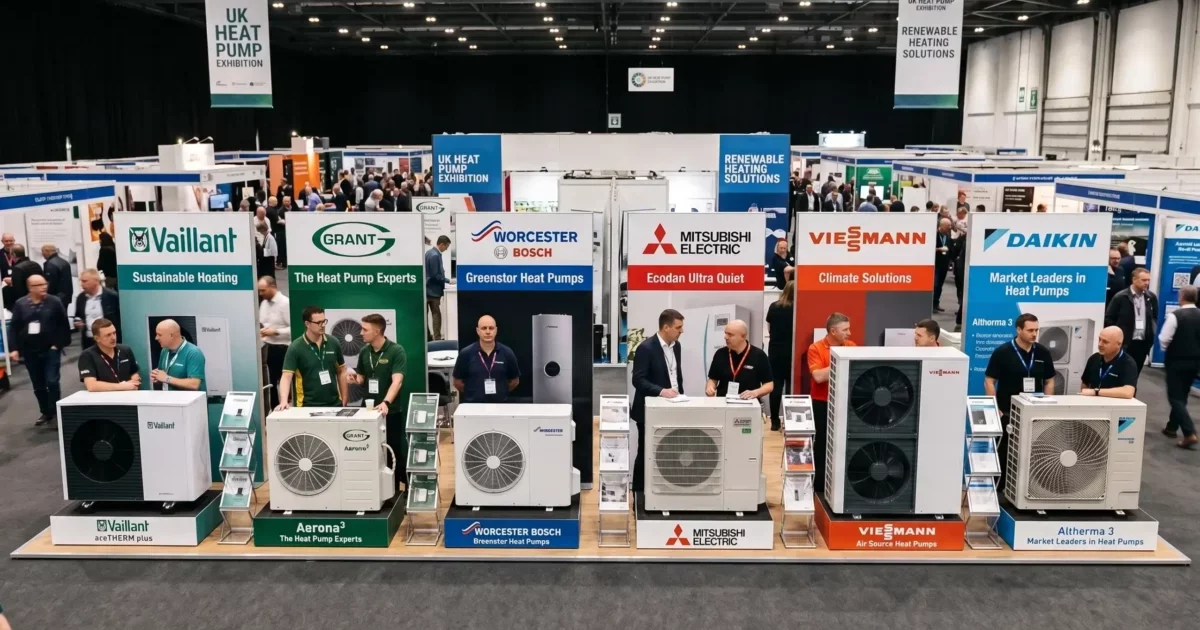
Once you’ve decided a heat pump makes sense for you and your home, the next question is which brand to go with. Walk into any installer consultation and you’ll hear a handful of names: Vaillant, Mitsubishi, Daikin, Grant, Worcester Bosch, and Viessmann, each with their own claims about efficiency and price tags that can differ by thousands of pounds for what looks like a similar spec on paper.
This page contains affiliate links. If you get a quote through them I may earn a commission, at no extra cost to you. How this site earns money.
This guide compares them on the things that affect your day-to-day running costs and long-term reliability, not just the headline numbers, so you can go into that installer conversation knowing what questions you need to ask.
Worth knowing before you shortlist a brand: UK heat pump uptake is real but slower than the headlines suggest, and cost is only part of the story. For the full picture, see our honest look at heat pump uptake in the UK.
What you need to know
- Refrigerant type: many modern models now use R290 (propane), which has a much lower global warming potential than older refrigerants. Not every brand’s full range has switched yet, so check the specific model.
- Flow temperature: how hot the system can run the water through your radiators. Higher flow temperatures (some models reach up to 75°C) make retrofitting older properties easier without replacing radiators and can support anti-legionella cycles using the heat pump alone rather than an electric immersion boost. This varies significantly by model, not just by brand.
- Control unit: some systems come with a built-in appliance interface and wiring centre as standard; with others it’s a separate purchase. Worth confirming what’s included in a quoted price.
- Noise levels: measured in decibels (dB). Check the sound output at the property boundary, especially if the unit will sit near a bedroom or a neighbour’s house.
- Watch for: “up to” figures in marketing material, usually the best-case number at an ideal flow temperature, not what you’ll see in an older, less insulated home.
- Warranty length: most manufacturers only offer their longest warranty terms when the system is installed and registered by an accredited installer, not automatically.
- Installation quality: correct sizing, flow temperature setup, and commissioning affect real-world performance more than the brand badge on the unit. A good-quality unit can still underperform if any of these are wrong.
A Quick Guide
Here’s the short answer
- Want the biggest installer network and a proven track record? → Mitsubishi Ecodan
- Want the highest efficiency figures on paper? → Vaillant aroTHERM plus or Grant Aerona3
- Want the lowest net cost after the BUS grant? → Grant Aerona3
- Want the most recognised UK brand and the longest aftercare warranty? → Worcester Bosch
- Want solid cold-weather performance at a mid price? → Daikin Altherma 3
- Want a premium European build with a flexible warranty? → Viessmann Vitocal
Brand Comparison
Before comparing brands head-to-head, it helps to know which numbers matter. SCOP (Seasonal Coefficient of Performance) tells you real-world efficiency across a full heating season: it’s a far better guide than COP, which is measured under a single lab condition and rarely reflects how a system performs through a UK winter.
| Approx. SCOP range | Standard / extended warranty | Typical installed cost (before grant) | Best known for | |
|---|---|---|---|---|
| Vaillant aroTHERM plus | ~4.0–5.0 | 2 yr standard / up to 10 yr via accredited installer | £9,000–£15,000 | Efficiency, R290 refrigerant, retrofit-friendly flow temps |
| Mitsubishi Ecodan | ~4.0–4.9 | 5 yr standard / up to 7 yr extended | £8,500–£14,000 | Largest UK installer network, proven reliability |
| Daikin Altherma 3 | ~4.0–5.1 | 3 yr standard / up to 12 yr via accredited installer | £9,000–£15,000 | High efficiency, long product lifespan |
| Viessmann Vitocal | ~3.9–5.1 | 2 yr standard / up to 15 yr via accredited installer | £9,500–£16,000 | Premium European build, R290 high-flow-temp models, flexible extended warranty |
| Grant Aerona3 | ~4.0–5.4 | 2 yr standard / up to 7 yr extended | £6,000–£10,000 | Lowest net cost after BUS grant, strong efficiency for price |
| Worcester Bosch Compress | ~4.3–5.0 | 2 yr standard / up to 12 yr via accredited installer | £9,000–£15,000 | Brand recognition, longest available extended warranty |
SCOP ranges reflect variation across manufacturer test conditions and installer-reported figures: always ask your installer for the SCOP specific to your property’s flow temperature, not the headline “up to” figure.
Brand-by-brand notes
- Vaillant aroTHERM Plus: R290 refrigerant, high flow temperature (useful for retrofits with older radiators), large UK installer network, sits at the premium end on price.
- Mitsubishi Ecodan: most installed brand in the UK by volume, strong cold-weather output, widest parts/service network.
- Daikin Altherma 3: consistently high SCOP figures, strong reputation for longevity, premium pricing.
- Viessmann Vitocal: premium German build, R290 models with high flow temperatures suited to retrofits, one of the more flexible warranty structures on the market (extendable well beyond the base 2 years via an accredited installer), sits at the premium end on price.
- Grant Aerona3: Irish manufacturer, least brand recognition but consistently the cheapest net cost after the BUS grant, strong efficiency figures for the price point.
- Worcester Bosch: most recognised UK heating brand, longest extended warranty available (up to 12 years via accredited installer), mid-to-premium pricing.
Which brand suits which property?
Small terraced house, retrofit with existing radiators
Look for a brand offering R290 refrigerant models with higher achievable flow temperatures, so you can avoid replacing radiators. Vaillant aroTHERM Plus and Viessmann Vitocal are both strong fits here.
Large detached home with high heat demand
Prioritise output capacity and proven cold-weather performance over the lowest price. Daikin Altherma 3 and Mitsubishi Ecodan both have a strong track record in larger, harder-to-heat properties.
Budget-conscious homeowner or landlord
Grant Aerona3 consistently comes out as the lowest net cost after the BUS grant, without a significant efficiency trade-off: a sensible starting point when upfront cost is the main driver.
Noise-sensitive suburban property with close neighbours
Check the manufacturer’s dB rating at 1 metre and 3 metre distances rather than relying on brand reputation alone: quiet operation varies by specific model, not just brand, so this is one area worth checking the datasheet directly rather than taking a general brand recommendation.
Wanting the largest local installer choice
Mitsubishi Ecodan’s installer network is the widest in the UK, which can mean more competitive quotes and easier servicing down the line.
Frequently asked questions
Is a more expensive heat pump brand always more efficient?
Not necessarily. Price often reflects brand reputation, build quality, and warranty terms as much as raw efficiency: Grant Aerona3, one of the cheaper options here, posts SCOP figures competitive with premium brands. Efficiency depends more on correct sizing and installation than on price alone.
Does the warranty apply automatically or only through an accredited installer?
Most manufacturers only offer their longest warranty terms, sometimes stretching to 10-15 years, when the system is installed and registered by an accredited installer. Without that, you’re typically left with the shorter standard warranty, often just 2 years, so it’s worth confirming installer accreditation before you commit.
Which brands are eligible for the Boiler Upgrade Scheme?
All the brands covered in this guide are MCS-certified and eligible for the £7,500 BUS grant when installed by an MCS-accredited installer. Eligibility depends on the installer and installation meeting MCS standards, not the brand itself.
Does brand matter more than installer quality?
No: installation quality generally has a bigger impact on real-world performance than brand choice. Correct sizing, flow temperature setup, and commissioning determine whether you get the efficiency figures on the datasheet or fall well short of them, regardless of which brand is on the unit.
Ready for a price?
Get a fixed-price heat pump quote online
iHeat installs Vaillant, Worcester Bosch and Alpha heat pumps across the UK using MCS-certified engineers, and can apply the Boiler Upgrade Scheme grant for you. The online quote takes about a minute.
Get my iHeat quoteInstaller’s tip: get a second quote so you can compare. You can request one through me: I’ll call you first, then arrange a survey with an MCS-certified installer I work with. If you go ahead through this link I may earn a commission, at no extra cost to you.
Final Thoughts
One last thing worth knowing: many installers only carry one or two brands, and it’s easy to end up with whichever one they happen to stock rather than the one that best suits your property. That’s not necessarily a bad outcome: a good installer fitting a mid-tier brand correctly will outperform a premium brand fitted poorly, but it’s still worth asking directly which brands an installer offers before you commit and requesting a quote for your preferred option if it isn’t already on their list. It costs nothing to ask, and my heat pump installers comparison shows which brands the main national companies fit.
This guide is for the majority of properties in the UK and the more common heating and hot water needs of the average households. There are much larger properties that will require higher-output units and higher-premium products, which are not covered here.