

The Boiler Upgrade Scheme (BUS) is still one of the UK’s flagship programmes in 2026, designed to help homeowners shift towards more sustainable heating solutions. This guide will help homeowners understand how the scheme works and give them the confidence to make a start on upgrading their heating and hot water systems in a better way.
On this page
This page contains affiliate links. If you get a quote through them, I may earn a commission, at no extra cost to you. How this site earns money.
Boiler Upgrade Scheme 2026
What’s the big picture with the BUS right now? It’s all about reducing carbon footprints by encouraging more green energy solutions in homes. This means moving away from those old gas, oil, or LPG setups to cleaner alternatives like heat pumps or approved biomass boilers.
Navigating this landscape might seem tricky, but getting the basic facts straight can make the journey much smoother. It’s about knowing if you’re eligible, figuring out what kind of system your home has, and planning the process without missing a step.
Here’s the downside: there’s a lot of confusion about what qualifies, what you can claim, and how it all fits together. For people looking to make the switch, understanding these details can be a bit like cracking a code.
Compare the grant schemes
| Technology | Grant Amount | Notes |
|---|---|---|
| Air Source Heat Pump (ASHP) | £7,500 | Standard grant for on-gas-grid properties |
| Air Source Heat Pump (ASHP): Off-Grid Gas | £9,000 | Temporary uplift for oil/LPG homes, 21 July 2026–31 March 2027 |
| Ground Source Heat Pump (GSHP) | £7,500 | Includes water-source heat pumps |
| Ground Source Heat Pump (GSHP): Off-Grid Gas | £9,000 | Same temporary uplift as ASHP, for oil/LPG properties |
| Biomass Boiler | £5,000 | Must meet sustainability and emissions criteria |
| Air-to-Air Heat Pump | £2,500 | Added to the scheme in 2026 |
Off-grid uplifts apply only between 21 July 2026 and 31 March 2027. All installations must be carried out by an MCS-certified installer, and grant values stay fixed regardless of system size or installation cost.
How is it paid?
Don’t expect to see this money hit your bank account. The government’s plan is designed to make things seamless and straightforward. The grant is directly deducted from your installer’s invoice, so you pay the difference.
People often ask, ‘Is this really going to save me money?’ Well, that depends. If you’re replacing an old, less efficient system, these updates could cut energy bills while reducing your home’s carbon output.
The BUS grants make smart, green heating solutions more affordable upfront, especially when considering high initial costs. But beyond just saving money, this shift could mean a warmer, more comfortable home.
What Can You Claim under BUS?
If you’re a homeowner or a landlord in England or Wales, you’re on the right track. The scheme supports replacing older systems, such as gas, oil, or LPG boilers and even electric storage heaters, with more eco-friendly options.
Got your eyes on an upgrade? Make sure your chosen installer is MCS-certified. That’s crucial because it ensures the installation meets specific standards and helps avoid any future issues.
As of 28 April 2026, a valid Energy Performance Certificate (EPC) is no longer strictly required to apply for the UK Boiler Upgrade Scheme in England and Wales.
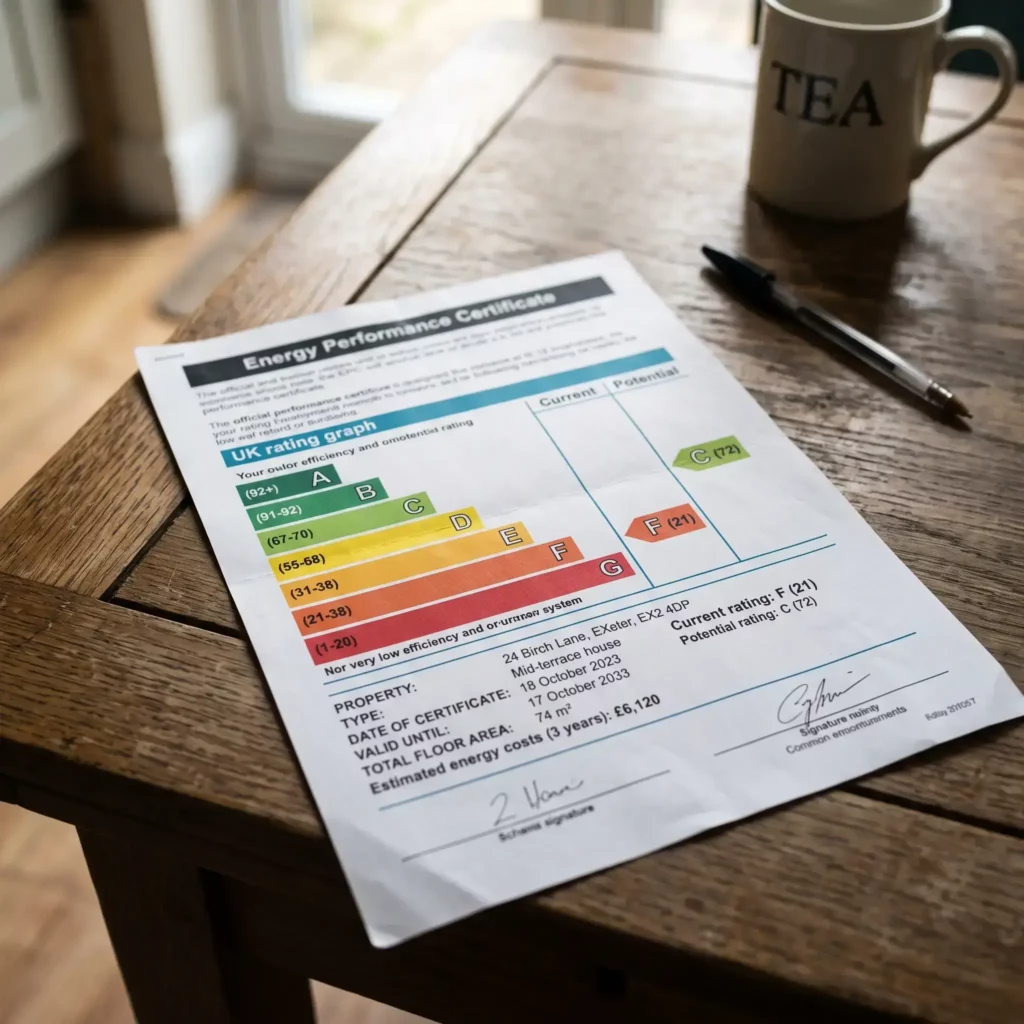
However, there are a few important details:
- If your property already has a valid EPC (less than 10 years old), your installer will usually use it as part of the application.
- If there is no valid EPC, your installer can now submit alternative evidence instead, such as:
- Recent utility bills or fuel receipts
- Photos of the existing heating system
- Details of any expired EPC, if available.
Before 28 April 2026, an EPC was mandatory, and there had to be no outstanding loft or cavity wall insulation recommendations. That rule has now been relaxed.
In practice, many installers still prefer having an EPC because it helps with heat-loss calculations and can speed up approval. Some homeowners and installers on Reddit report that BUS applications without an EPC can face extra checks from Ofgem.
Good news for those with second homes or small commercial properties: they might also qualify. There is no funding for new builds or social housing on this scheme. Its aim is to lower the carbon footprint of existing housing stock.
When you cannot claim
The Boiler Upgrade Scheme (BUS) might seem like a golden ticket for ditching fossil fuels, but there are some clear restrictions you’ll want to keep in mind. Not all heating aspirations fit neatly into this scheme’s framework.
What does not qualify?
- Hybrid systems, such as a mix of a heat pump and a gas boiler, don’t qualify for the grants.
- Swapping an existing heat pump for a new one; the scheme won’t cover that. The grant is strictly for replacing those conventional systems that we’ve discussed.
- Biomass boilers, while attractive, come with a few more strings. They’ve got to be off the gas grid, set in a rural location, and meet emission standards. Urban dwellers with access to mains gas will not qualify. If you do qualify, our comparison of the best biomass pellet boilers in the UK covers the models worth considering.
- New builds. If you’re dreaming of a shiny new heating setup for your newly built home, you won’t find support under BUS. It’s set up to retrofit older homes, not kick-start new ones. Plus, don’t expect help if it’s social housing. The exception is an eligible self-build, which can claim.
- The core idea is steering homes away from old fuel systems to something greener. So, before you carry out an installation, check first that you qualify against these limits and chat with a certified installer about your options.
The £9,000 Grant for Heat Pumps
The Facts:
Official figures still stand at £7,500 for both air-source and ground-source heat pumps. As of 21st July 2026, the £9,000 temporary uplift for oil/LPG homes applies from 21 July 2026 to 31 March 2027.
This is part of the enhanced grants that came out this year, particularly targeting rural areas relying heavily on oil and LPG. While these conversations have always happened with these types of grants, it remains to be seen whether they’ll last the distance.
For now, the safest bet is to work with the confirmed numbers. It’s always a good idea to keep an ear out for any announcements or changes, but planning your budget around the current grants until you know for sure will help avoid any financial surprises.
Check official resources like gov.uk for the latest updates. This way, you’re not just relying on what other people say but keeping your footing solid on what’s available.
The application process
You do not apply for the Boiler Upgrade Scheme yourself. Your MCS-certified installer applies to Ofgem on your behalf, and the grant comes off your bill. Here is how it works, step by step.
- Get quotesAsk more than one MCS-certified installer to survey your home and quote, with the grant shown as a discount.
- Choose an installerYour chosen installer applies to Ofgem for you. You do not fill in an application form yourself.
- Confirm with OfgemOfgem emails you to confirm you consent and meet the rules. Reply within 14 days, or the application may be rejected.
- InstallationOnce approved, the installer has three months to fit a heat pump or biomass boiler, or six months for ground source.
- Grant claimedAfter installation, the installer claims the grant from Ofgem. You only pay the balance on your invoice.
Things to watch:
- Keep your email address up to date with the installer, and check your spam folder for Ofgem’s message.
- If several installers apply for the same property, you can only confirm one. Ofgem rejects the others.
- Confirming with Ofgem does not tie you to that installer: your contract with the installer does that.
- If the installation is not finished in time, the installer must apply again and you must confirm again.
- The system must not be commissioned more than 120 days before the application is made, so do not let an installer fit first and apply later.
Outside England and Wales: the Boiler Upgrade Scheme does not apply. In Scotland, see Home Energy Scotland for its grant and interest-free loan. In Northern Ireland, see the Northern Ireland Sustainable Energy Programme. My guide to which heating grants you can claim covers every nation.
Free download
UK Heating Grant Schemes: BUS & ECO4 Guide
A complete guide to the Boiler Upgrade Scheme (BUS) and Energy Company Obligation (ECO4), covering eligibility, applications, and templates.
- Scheme comparison overview
- BUS and ECO4 eligibility checklists
- Qualifying benefits list
- Step-by-step application guide
- Documents you’ll need
- BUS application letter template
- ECO4 self-declaration template
- What comes after ECO4?
Real-world costs post-grant
The installed cost can range from roughly £9,000 to £13,000. With the £7,500 grant taken off, you can expect to pay between £1,500 and £5,500.
On the ground source front, it gets a bit steeper. Installations can range anywhere from £15,000 to £35,000. Minus the grant, that’s £7,500 to £27,500. Quite a gap, but they do offer some big energy savings over time.
Homes often need more than just a new heat pump. Think of extra things like radiator upgrades, new pipework, buffer tanks or switching to a more efficient hot water cylinder. It all adds up, and the grant won’t cover these extras. If you need to borrow for the rest, see how to borrow for a heat pump or insulation.
It’s also worth thinking strategically about these upgrades. Sometimes investing a bit more in making your home energy-efficient now can save you money in the long run on energy bills.
Ready for a price?
Get a fixed-price heat pump quote online
iHeat installs Vaillant, Worcester Bosch and Alpha heat pumps across the UK using MCS-certified engineers, and can apply the Boiler Upgrade Scheme grant for you. The online quote takes about a minute.
Get my iHeat quoteInstaller’s tip: get a second quote so you can compare. You can request one through me: I’ll call you first, then arrange a survey with an MCS-certified installer I work with. If you go ahead through this link I may earn a commission, at no extra cost to you.
Key changes to be aware of
The changes in the new guidelines mean you won’t need mandatory loft and cavity wall insulation for BUS eligibility anymore. This change has opened the door for many more homes to join the heating upgrade club and make it more affordable.
Even though insulation requirements have been dropped, your installer will take a broader look at your property’s suitability for low-temperature heating. This ensures the new system can work efficiently within your home’s specific conditions.
It’s important to have the basics of your home’s energy efficiency sorted. While basic insulation might not be available, improvements can go a long way in boosting your home’s performance post-installation.
Keeping up with these changes not only involves understanding eligibility adjustments but also knowing how they affect your overall heating plan.
If you’re considering an air-to-air system, our guide to air-to-air heat pumps explains the £2,500 grant and which homes it suits.
Evaluating the worth of the scheme
Wondering if the Boiler Upgrade Scheme (BUS) is the right move for your home? If you’re thinking about air source heat pumps, the £7,500 grant makes them a very good deal, especially in well-insulated homes where running costs can be quite competitive.
The application process is largely left to the installer, and they wait for payment, not you. You basically pay the installer the difference, which makes it a lot simpler than the last set of grant schemes.
The grant can still help older homes or those lacking proper insulation; you might still face some initial upgrades to really reap the energy savings, but It’s not just about the grant; it’s about making sure your home is ready to maximise what these systems can offer.
The cost of energy and the world’s conflicts make the need for making our homes as energy efficient as we can make them a problem to be solved now more than at any other time, so while the help is here, we can take advantage of it now.