
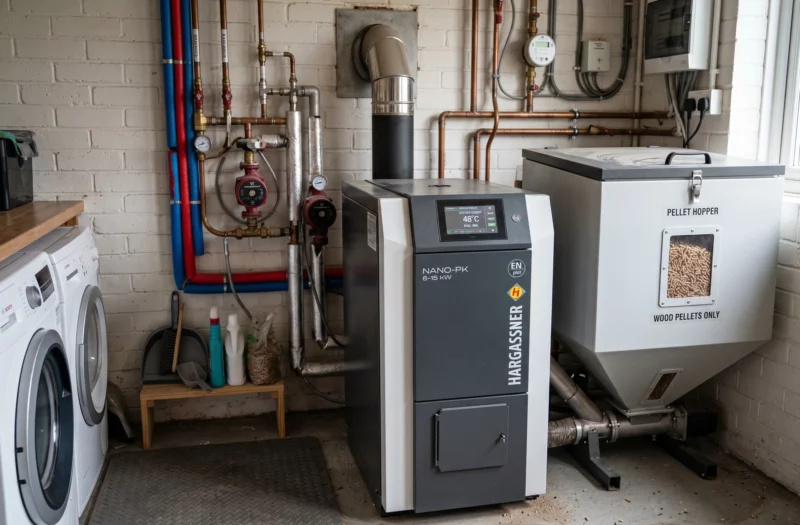
Pellet boilers run on compressed sawdust pellets. These pellets are formed into small, uniform pieces, typically 6-8 mm in diameter.

So what does this actually mean for you?
The small size and consistent shape of these pellets allow for automated feeding systems and easy storage, cutting down on the hassle. It’s all about reducing the manual work needed in keeping your home warm.
Table of Contents
- Modern Pellet Boilers
- Compare Biomass Fuel Types
- How Biomass Pellet Boilers Operate
- Technology in Biomass Boilers
- Biomass as a Green Solution
- Running Costs and Government Support
- Challenges in Adopting Biomass Boilers
- Ideal Users for Biomass Boilers
- Conclusion: Is Biomass Heating Right for You?
Modern Pellet Boilers
Biomass pellet boilers are a solid choice for people looking to heat their homes in a more eco-friendly way. They stand as a neat alternative to wood chip boilers, which have their own advantages but often require more space for storage.
Pellet boilers take the upper hand with convenience and advanced automation design to just make life easier. A good-sized utility room is required with space for pellet storage and a hot water cylinder. Unless a buffer tank is needed, then this will be your whole high-temperature heat source to feed hot water to your house.
Riding the wave of innovation, biomass technology has come a long way. While traditional boilers get the job done with burning oil or gas, wood pellet systems are about shifting to a cleaner and potentially cheaper energy source. a system that can heat your water and deliver it straight to your radiators and satisfy all your hot water needs as well.
“Considering the fuel storage, be prepared; you will need some room. These systems take up more space than your classic gas or oil boilers. But, for the environmentally conscious, it’s a small price to pay in the bigger picture of sustainability goals.”
Compare Biomass Fuel Types
When it comes to biomass fuels, one size definitely doesn’t fit all. Sure, all these fuels ultimately aim to keep your home heated, but understanding the differences can help you make the right choice for your heating source.
The most common forms of biomass are:
- Wood pellets are the go-to for most modern biomass systems. They’re tiny, uniform, and possibly the most convenient. This means they’re easy to handle with automated feeding systems, saving you a lot of time and effort.
- Wood chips: These are bigger pieces of chipped wood and are generally cheaper than pellets. However, they do require more storage space and don’t easily fit every system’s feeding setup and are generally thought of as commercial boiler fuel.
- Logs or Waste Wood: The traditionalist’s choice. If you have access to a good supply of logs, it doesn’t get cheaper than this. However, they demand more physical labour to load and maintain and are typically used for commercial use.
How Biomass Pellet Boilers Operate
Getting a grip on how biomass pellet boilers function can make a world of difference in deciding if they’re the right fit for your home. These boilers aren’t just your average home appliance; they’re a blend of old-school combustion and new technology.
Keeping it Simple
Picture this: you have a dedicated area, usually a hopper or storage bin, where your wood pellets reside. An automated auger (a fancy term for a type of screw conveyor) comes into play, feeding these pellets into the boiler’s combustion chamber or burner grate. ensuring a steady supply without manual intervention.
Once in the combustion chamber, the pellets burn and release energy; the heat energy is then channelled efficiently into a heat exchanger. Here, your water starts to heat up. This hot water is then off on a mission, circulating around your home, bringing warmth to either radiators or underfloor heating systems. They also give you hot water all at the same time.
Dealing with the aftermath, ash collects in an easily removable drawer. Some boilers have nifty arrangements to make ash removal less frequent, but it still requires a regular check to keep everything running like clockwork. The fumes are controlled by the boiler’s fan and extracted through a steel twin-wall flue.
“For users leaning towards modern convenience, some models go a step further with smart tech connections. Imagine tweaking your home environment from a phone app on the go. Efficiency is also a winner here. It’s about striking a balance between eco-friendliness and high-tech living.”
Technology in Biomass Boilers
When it comes to modern heating solutions, biomass pellet boilers are cutting-edge tech marvels wrapped up in a rustic heating method. Today’s models are packed with features that not only boost efficiency but also ease everyday operations.
Putting it in Layman’s Terms
Starting with controls, these boilers often come with automated systems capable of adjusting everything from fuel input to water temperature. Say goodbye to the days of constantly fiddling with settings just to keep things going. Instead, these boilers learn and adapt to your heating needs, stretching efficiency to new heights.
Smart connectivity is another game-changer. With some models, it’s possible to tweak settings via smartphone apps, which means whether you’re on the couch or away on holiday, maintaining the perfect climate is just a tap away. For tech enthusiasts and busy bees alike, this feature is a powerful ally in managing your home’s energy consumption.
Looking at efficiency, biomass pellet boilers hold their ground against traditional heating methods with ratings of 85-95%. This is achieved through innovations like modulated output, which ensures that energy usage matches your home’s immediate requirements. No more wasted energy, only cleaner, smarter heating.
“The combination of high efficiency and tech-savvy features means these boilers aren’t just keeping your home warm. They’re offering a blend of past and future combustion methods paired with digital convenience.”
Biomass as a Green Solution
Biomass heating isn’t just a trend; it’s a powerful step towards sustainable living. With environmental issues stealing the spotlight, there’s an increasing need to adopt a range of different greener alternatives, and that’s where biomass pellet boilers come into play.
How green are they?
One of the standout advantages of biomass heating is its carbon-neutral status. The process of burning wood might release CO₂, but let’s remember this carbon was absorbed from the atmosphere when the trees were growing. It’s essentially a circular cycle, especially when the burning is balanced by replanting. So while other fuel sources contribute to a growing carbon footprint, pellet boilers keep things in equilibrium.
Sustainability is another tick for biomass. Unlike fossil fuels, which are here today and gone tomorrow, biomass can be replenished through sustainable forestry practices. It’s about using resources wisely and making sure there’s enough for the long term.
There’s also a smart element of waste reduction involved here. Many biomass fuels are made from what would otherwise be discarded wood or sawdust, giving new life to materials that might end up as waste. It’s about maximising resources and ensuring that nothing goes to waste.
By choosing biomass heating, you’re not just warming your home but potentially slashing your carbon footprint by up to 90% compared to oil heating and about 80% compared to gas. For those off the gas grid, focusing on eco-friendly solutions, it’s a compelling option.
Running Costs and Government Support
Running a biomass pellet boiler doesn’t have to break the bank, especially if you play it smart. When we talk about costs, it’s more than just the initial setup; it’s about understanding the ongoing expenses and the savings that come with them.
Biomass fuels vary in price, but generally speaking, wood pellets come in at around £200-£300 per tonne. Compare that to the fluctuating prices of oil or electricity, and biomass often sits at the more attractive end of the spectrum.
For an average home, expect annual expenses in the ballpark of £800-£1,500. In many cases, that’s competitive with oil and easier on the wallet than electricity or LPG. So right off the bat, you’re looking at something budget-friendly.
“But wait!…There’s more help on the horizon. The Boiler Upgrade Scheme (BUS) is like your financial wingman, offering grants of up to £5,000. This kind of support can significantly ease the upfront costs, making it a much more accessible option for homeowners.”

Another thing to remember is that maintenance of these systems annually comes in at more than other heating sources like oil or LPG boilers, simply because there are many more moving parts and elements to service on a pellet boiler, and bear in mind that there are strict criteria by Ofgem on annual servicing to ensure clean burning if you are claiming the Boiler Upgrade Scheme (BUS) grant.
But let’s not forget, beyond fuel costs and grants, there are ongoing savings. The high efficiency of these boilers means your money isn’t trickling away on wasted energy. You’ll feel the direct benefits in your reduced running costs year on year.
“Being savvy about financials switches the focus from seeing biomass boilers as an expense to appreciating them as an investment, one that pays you back not just in savings but in a cleaner, more sustainable lifestyle.”
Challenges in Adopting Biomass Boilers
While biomass pellet boilers have plenty going for them, it’s important to be upfront about some of the challenges that come with the territory. Transforming your home into an eco-friendly haven isn’t without its hurdles.
Pro’s and Con’s
Space can be a significant consideration. Biomass boilers aren’t tiny (see photo); they take up more room than your standard gas or oil options. Plus, you’ll need space for storing the fuel, typically 3-5 cubic metres of pellets for an average year’s supply, depending on your heating needs. If space is at a premium in your home, this could be a major factor.
A biomass pellet boiler can be an excellent long-term investment for the right property, particularly in rural or off-grid locations where oil heating is expensive.
They offer:
- Renewable heating
- Lower carbon emissions
- High temperature efficiency
- Reliable whole-home heating
However, they also require:
- Higher upfront investment
- More maintenance
- Adequate installation space
Who are they for?
For homeowners with sufficient space and high heating demands, biomass pellet boilers remain one of the most effective renewable heating options available today.
Are they easy to keep?
Regular maintenance is part and parcel of the biomass boiler experience. Unlike the hands-off approach of a gas boiler, these systems require a bit more TLC. This includes regularly emptying the ash drawer, which can accumulate 1-2 kg of ash for every 100 kg of pellets burnt. The trade-off for lower running costs is more hands-on involvement.
Cost Estimate
Initial installation costs are another aspect to weigh up. Despite the generous grants available, including the Boiler Upgrade Scheme, the upfront financial commitment is typically higher than that of gas or oil boilers. Total installation can range between £10,000 and £20,000. But remember, this is an investment in long-term savings and sustainability.
Keeping Compliant
There’s also the issue of regulatory compliance. Depending on where you live, there may be regulations around emissions or planning permissions if you’re in a smoke control area. These are critical conversations to have with your installer, ensuring everything is above board and correctly set up.
Make Way
And not forgetting access for trucks to be able to blow the pellets into the silo: if you want to buy pellets in bulk, lighter users can buy the pellets as a one-tonne load on a pallet, but you still need the access and space to receive these loads.
“These challenges aren’t insurmountable with the right planning and the help of professionals, but they’re worth considering before leaping into the biomass game. As with anything worthwhile, it’s all about weighing the pros and cons and deciding what aligns best with your home and lifestyle.”
Ideal Users for Biomass Boilers
Not every home is perfectly set up for a biomass pellet boiler, but for the right situation, it’s a winning choice. Homes that stand to benefit the most often share a few key characteristics.
Who Can It Benefit?
If you’re off the mains gas grid and reliant on oil or LPG, biomass can offer a refreshing alternative. It’s a greener choice, potentially cheaper in the long run, and gives you greater independence from fluctuating energy prices, especially with hiked prices of fossil fuels due to wars and unstable markets.
The countryside often provides the perfect backdrop for these systems. If you’ve got a rural property with sufficient space, maybe an unused outbuilding or a spacious garage, you’re in a great position to accommodate the boiler and the fuel it requires. Space may be less of a concern in such settings, allowing you to store a year’s worth of pellets with ease.
Beyond the physical logistics, consider whether you’re ready for a heating system that requires more interaction. Regular maintenance and fuel management. This might appeal to those who enjoy a bit of hands-on involvement with their household systems.
“To decide if biomass is right for you, evaluate your space availability, existing heating source, and how much involvement you’re willing to invest. If the stars align, the benefits of switching can be both financially rewarding and environmentally fulfilling.”
Conclusion: Is Biomass Heating Right for You?
Biomass pellet heating is more than just a heating solution; it’s a lifestyle choice that merges sustainability with technological innovation. We’ve journeyed through what it takes to set up, run, and maintain a biomass system, as well as the benefits it can bring to your energy bills and your comfort.
Reasons to be Cheerful
- For many, the financial and environmental benefits will far outweigh the lifestyle adjustments required. The possibility of leaving behind fossil fuels and embracing a more sustainable system is a compelling motivator.
- Whether it’s a fit for your home depends on a careful balance of these elements. But if they point favourably, you’re on track to make an impact on both your personal comfort and the broader environment.
- Ultimately, choosing biomass pellet heating aligns your home with your values, delivering warmth, savings, and sustainability.