
Electric boilers are gaining attention as an alternative to gas, particularly in homes without a gas connection. But are they actually a good choice? Here’s an honest look at running costs, suitability, installation, and what grant support (if any) is available.
Table of Contents
- How they work
- Running costs vs gas boilers and heat pumps
- Pros, cons and suitability
- Installation and pricing
- Grants and tariffs
- The bottom line
How they work
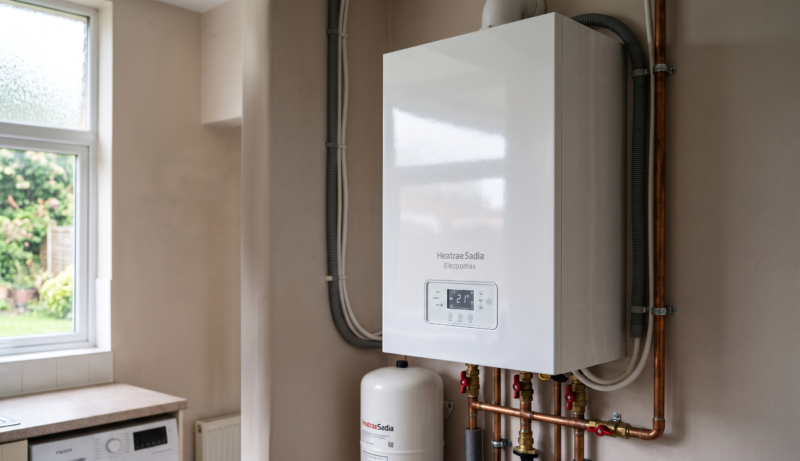
An electric boiler heats water using an electric element rather than burning gas or oil. Like a gas boiler, it can supply central heating and hot water, and installation is broadly similar; no flue is needed, which simplifies fitting in flats or homes where flueing a gas boiler would be difficult.
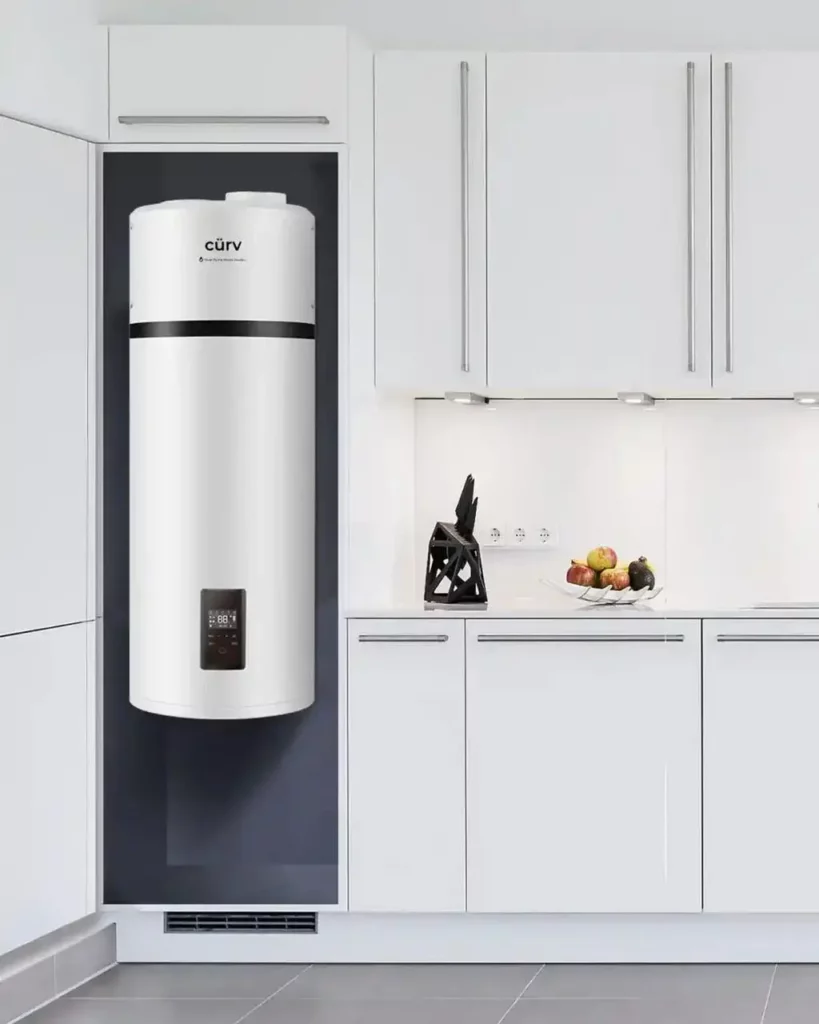
Modern electric boilers can come in a range of cylinder types with more efficient immersion controls that can utilise the electrical generation of solar PV and battery systems.
Running costs vs gas boilers and heat pumps
This is the area homeowners most need to understand before switching.
- Electric boilers: Essentially 100% efficient at converting electricity to heat, but electricity costs roughly 3–4 times more per unit than gas in the UK. As a result, running costs are typically higher than gas boilers for an equivalent amount of heat.
- Gas boilers: Cheaper to run per unit of heat, assuming a working gas connection is available.
- Heat pumps: Also run on electricity, but because they move heat rather than generate it directly, they typically deliver 3–4 units of heat per unit of electricity used. This usually makes heat pumps considerably cheaper to run than an electric boiler, even though both use the same fuel.
In short: if you’re off the gas grid, an electric boiler will usually cost more to run than a heat pump but avoids the higher upfront cost and disruption of a heat pump installation.
Pros, cons and suitability
Where electric boilers make sense:
- Small flats or homes with low heat demand, where installation simplicity matters more than running costs
- Homes where a heat pump or gas connection isn’t practical (e.g., no outdoor space, leasehold restrictions)
- As a secondary or backup heat source
Drawbacks to weigh up:
- Higher running costs than both gas boilers and heat pumps for most homes
- No flue, but still requires adequate electrical supply capacity — larger properties may need supply upgrades
- Not typically recommended as the primary heating solution for larger or poorly insulated homes, purely on cost grounds
Installation and pricing
Electric boilers are generally cheaper and quicker to install than heat pumps, since there’s no outdoor unit, refrigerant circuit, or (usually) major electrical upgrade for smaller units.
Typical supply-and-install costs sit below both ASHP and biomass installations, though larger properties needing bigger units or electrical upgrades will cost more.
As with any heating system, get quotes from more than one MCS-registered or NICEIC-certified installer.
Grants and tariffs
This is where expectations often need resetting. The Boiler Upgrade Scheme (BUS) — the UK’s main heating grant, offering up to £7,500 — funds heat pumps and biomass boilers and can support homes moving away from direct electric heating. It does not fund electric boiler installations themselves, since they aren’t a low-carbon technology in the same sense.
That leaves two practical routes for reducing electric boiler running costs:
- Economy 7 or similar time-of-use tariffs, which offer cheaper overnight electricity — useful if your boiler has a hot water cylinder that can be heated overnight, though less helpful for on-demand space heating.
- ECO4 or Warm Homes Plan, aimed at low-income and vulnerable households, which may fund insulation improvements (not electric boilers directly) to reduce overall heat demand.
The bottom line
Electric boilers are a practical, low-hassle option for smaller properties or specific situations, but they’re rarely the cheapest way to heat a UK home long-term. If you’re off the gas grid and considering your options, it’s worth comparing the higher running costs of an electric boiler against the higher upfront cost of grant-supported and generally cheaper-to-run heat pump installs before deciding.