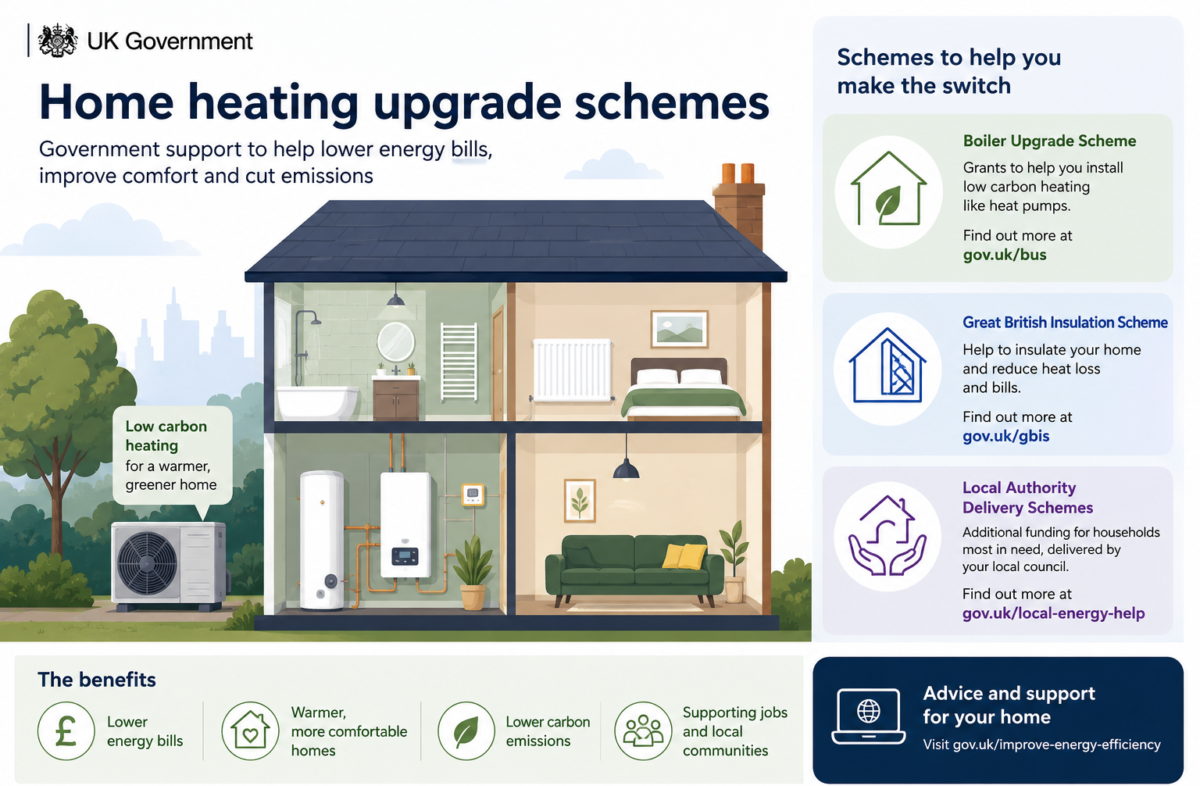
The Boiler Upgrade Scheme (BUS) is still one of the UK’s flagship programmes in 2026, designed to help homeowners shift towards more sustainable heating solutions.
This guide is set up to help all homeowners with the transition without needing to dive deep into technical jargon. Having a clear guide through the maze of grants, applications, and technologies can make a world of difference.
Boiler Upgrade Scheme 2026
So, what’s the big picture with the BUS right now? It’s all about reducing carbon footprints by encouraging more green energy solutions in homes. This means moving away from those old gas, oil, or LPG setups to cleaner alternatives like heat pumps or approved biomass boilers.
Navigating this landscape might seem tricky, but getting the basic facts straight can make the journey much smoother. It’s about knowing if you’re eligible, figuring out what kind of system your home has, and planning the process without missing a step.
Here’s the downside: there’s a lot of confusion about what qualifies, what you can claim, and how it all fits together. For people looking to make the switch, understanding these details can be a bit like cracking a code. We will make it easier to understand for you.
What’s Available?
For heat pumps we’re talking a whopping £7,500. If a biomass boiler suits you better, there’s £5,000 up for grabs, and for air-to-air heat pumps, £2,500 comes off the bill.
Compare the schemes
| Technology | Grant Amount | Notes |
|---|---|---|
| Air Source Heat Pump (ASHP) | £7,500 | Standard grant for on-gas-grid properties |
| Air Source Heat Pump (ASHP) Off-Grid Gas | £9,000 | Temporary uplift for oil/LPG homes, 21 July 2026–31 March 2027 |
| Ground Source Heat Pump (GSHP) | £7,500 | Includes water-source heat pumps |
| Ground Source Heat Pump (GSHP) Off-Grid Gas | £9,000 | Same temporary uplift as ASHP for oil/LPG properties |
| Biomass Boiler | £5,000 | Must meet sustainability and emissions criteria |
| Air-to-Air Heat Pump | £2,500 | Added to the scheme in November 2025 |
| Heat Battery | £2,500 | Added to the scheme in November 2025 |
Note: The off-gas grid uplift (£9,000) is a temporary increase running from 21 July 2026 to 31 March 2027. All installations must be carried out by an MCS-certified installer. Grant values do not vary based on the size or cost of the installation.
How it’s paid
Don’t expect to see this money hit your bank account. The government’s plan is all about making things seamless and straightforward. The grant is directly deducted from your installer’s invoice, so you just pay the difference.
People often ask, ‘Is this really going to save me money?’ Well, that depends. If you’re replacing an old, less efficient system, these updates could cut energy bills while reducing your home’s carbon output.
The BUS grants make smart, green heating solutions more affordable upfront, especially when considering high initial costs. But beyond just saving money, this shift could mean a warmer, more comfortable home.
What Can You Claim under BUS?
If you’re a homeowner or a landlord in England or Wales, you’re on the right track. The scheme supports replacing your old systems—like gas, oil, or LPG boilers and even electric storage heaters—with more eco-friendly options.
Got your eyes on an upgrade? Make sure your chosen installer is MCS-certified. That’s crucial because it ensures the installation meets specific standards and helps avoid any hiccups down the line.
As of 28 April 2026, a valid Energy Performance Certificate (EPC) is no longer strictly required to apply for the UK Boiler Upgrade Scheme in England and Wales.
However, there are a few important details:
- If your property already has a valid EPC (less than 10 years old), your installer will usually use it as part of the application.
- If there is no valid EPC, your installer can now submit alternative evidence instead, such as:
- Recent utility bills or fuel receipts
- Photos of the existing heating system
- Details of any expired EPC, if available.
Before 28 April 2026, an EPC was mandatory and had to show no outstanding loft or cavity wall insulation recommendations. That rule has now been relaxed.
In practice, many installers still prefer having an EPC because it helps with heat-loss calculations and can speed up approval. Some homeowners and installers on Reddit report that BUS applications without an EPC can face extra checks from Ofgem.
Good news for those with second homes or small commercial properties: they might also qualify. There is no funding for new builds or social housing on this scheme. It’s about trimming the carbon footprint from existing housing stock.
When you cannot claim
The Boiler Upgrade Scheme (BUS) might seem like a golden ticket for ditching fossil fuels, but there are some clear restrictions you’ll want to keep in mind. Not all heating aspirations fit neatly into this scheme’s framework.
What does not qualify?
Hybrid systems, such as a mix of a heat pump and a gas boiler, don’t qualify for the grants. And if you’re thinking about swapping an existing heat pump for a new one, sorry, that won’t fly either. BUS is strictly for replacing those conventional systems that we’ve discussed.
Biomass boilers, while attractive, come with a few more strings. They’ve got to be off the gas grid, set in a rural location, and meet emission standards. Urban dwellers with access to mains gas are pretty much out of luck here.
New builds. If you’re dreaming of a shiny new heating setup for your newly built home, you won’t find support under BUS. It’s set up to retrofit older homes, not kick-start new ones. Plus, don’t expect help if it’s social housing.
The core idea here is steering homes away from old fuel systems to something greener. So, before you get too far down the road, check your setup against these limits and chat with a certified installer about your options.
The £9,000 Heat Pump Grant Debate
You may have heard whispers about bumping the grant for heat pumps to £9,000. Sounds great, right? Especially if you’re considering switching from oil or LPG systems. But let’s dig into what’s really going on here.
The Facts
Official figures still stand at £7,500 for both air-source and ground-source heat pumps. There’s no official nod yet to these higher figures, even if it seems tempting to believe otherwise.
Some industry chatter hints at potential enhanced grants rolling out later this year, particularly targeting rural areas relying heavily on oil and LPG. While these conversations are heating up, it remains to be seen if they’ll turn into concrete action.
For now, the safest bet is to work with the confirmed numbers. It’s always a good call to keep an ear out for any announcements or changes, but planning your budget around the current grants will help avoid any financial surprises.
Check official resources like gov.uk for the latest updates. This way, you’re not just riding the rumour wave but keeping your footing solid on what’s actually available.
The application process
Applying for the Boiler Upgrade Scheme (BUS) might seem like a maze, but it’s actually more straightforward than you might think. You don’t directly apply for the grant yourself; your installer handles most of it. Let’s walk through how it all generally unfolds.
- The first step is to get a quote from an MCS-certified installer. These people know the ropes and will ensure your system is up to standard. It’s crucial to vet them not just on price but also on their expertise and customer reviews.
- Once you’ve settled on a quote, it’s the installer’s turn to apply for a BUS voucher through Ofgem. This voucher is what eventually covers the grant money deducted from your final bill. You’ll need to confirm the application via email, so make sure your email details are current and accurate.
- After all the admin is settled, the installation date is set. The installer gets to work replacing your outdated system with your chosen greener option. Once installed, the installer redeems the voucher. And it’s sorted; the grant amount is reflected as a deduction, and you’re only paying the remaining balance.
Though the steps seem simple on paper, having a proactive dialogue with your installer can make the process even smoother. Keeping communication lines open ensures you understand every stage.
Real-world costs post-grant
Okay, let’s talk about how your wallet might feel after getting that grant. When eyeing an air-source heat pump, you’re looking at an installed cost ranging from roughly £9,000 to £13,000. With the £7,500 grant doing its work, you can expect to shell out between £1,500 and £5,500.
What’s the ballpark?
On the ground source front, it gets a bit steeper. Installations can range anywhere from £15,000 to a whopping £35,000. Minus the grant, that’s £7,500 to £27,500 you’re on the hook for. Quite a gap, right? But remember, they offer some big energy savings over time.
Now, these figures can vary. A lot. Homes often need more than just a new heat pump. Think of extra things like radiator upgrades, new pipework, buffer tanks or switching to a more efficient hot water cylinder. It all adds up, and the grant won’t cover these extras.
It’s also worth thinking strategically about these upgrades. Sometimes investing a bit more in making your home energy-efficient now can save in the long run on energy bills. But who likes surprises when it comes to costs? Keep lines open with your installer and make sure you’re clear on potential extra expenses and how to budget better.
Key changes to be aware of
The unfolding of new guidelines means you won’t need mandatory loft and cavity wall insulation for BUS eligibility anymore. This change from 2024 has opened the doors for many more homes to join in the green revolution.
What are my options?
Even though insulation requirements have been dropped, your installer will take a broader look at your property’s suitability for low-temperature heating. This ensures the new system can work efficiently within your home’s specific conditions.
It’s important to have the basics of your home’s energy efficiency sorted. While mandatory insulation might not be on the table, improvements can go a long way in boosting your home’s performance post-installation. Ensure you’re working with an installer who communicates these nuances clearly.
Keeping up with these changes not only involves understanding eligibility adjustments but also knowing how they affect your overall heating plan.
Evaluating the worth of the scheme
Wondering if the Boiler Upgrade Scheme (BUS) is the right move for your home? If you’re thinking about air source heat pumps, the £7,500 grant makes them a pretty sweet deal, especially in well-insulated homes where running costs can be quite competitive.
For older homes or those lacking proper insulation, though, you might still face some initial upgrades to really reap those energy savings. It’s not just about grabbing the grant; it’s ensuring your home is ready to maximise what these systems can offer.