

A solar diverter is easy to sell. It takes electricity your panels would otherwise export and turns it into hot water, and the app shows a neat figure for “free” heat. With a heat pump already doing the same job, the sums change.
A diverter heats water by resistance, so one unit of electricity gives one unit of heat. A heat pump moves heat from outside, so the same unit gives roughly three. As a heat pump installer, I work through here when a diverter still pays, and when it does not.
Solar diverters with a heat pump in short
- A diverter only heats hot water, through the immersion heater. It never feeds your radiators or talks to the heat pump.
- One unit of surplus makes one unit of heat. A heat pump makes about three from the same unit, so the diverter burns three times the electricity.
- The break-even: a diverter only wins if your export rate is below about a third of your import rate, roughly 9p at today’s price cap.
- It can still earn its place with a poor or capped export, a controller that cannot heat water at midday, or a big cylinder and heavy hot water use.
- Try the free options first: move the hot water schedule to midday and compare export tariffs.
What a solar diverter does, and what it cannot do for your radiators
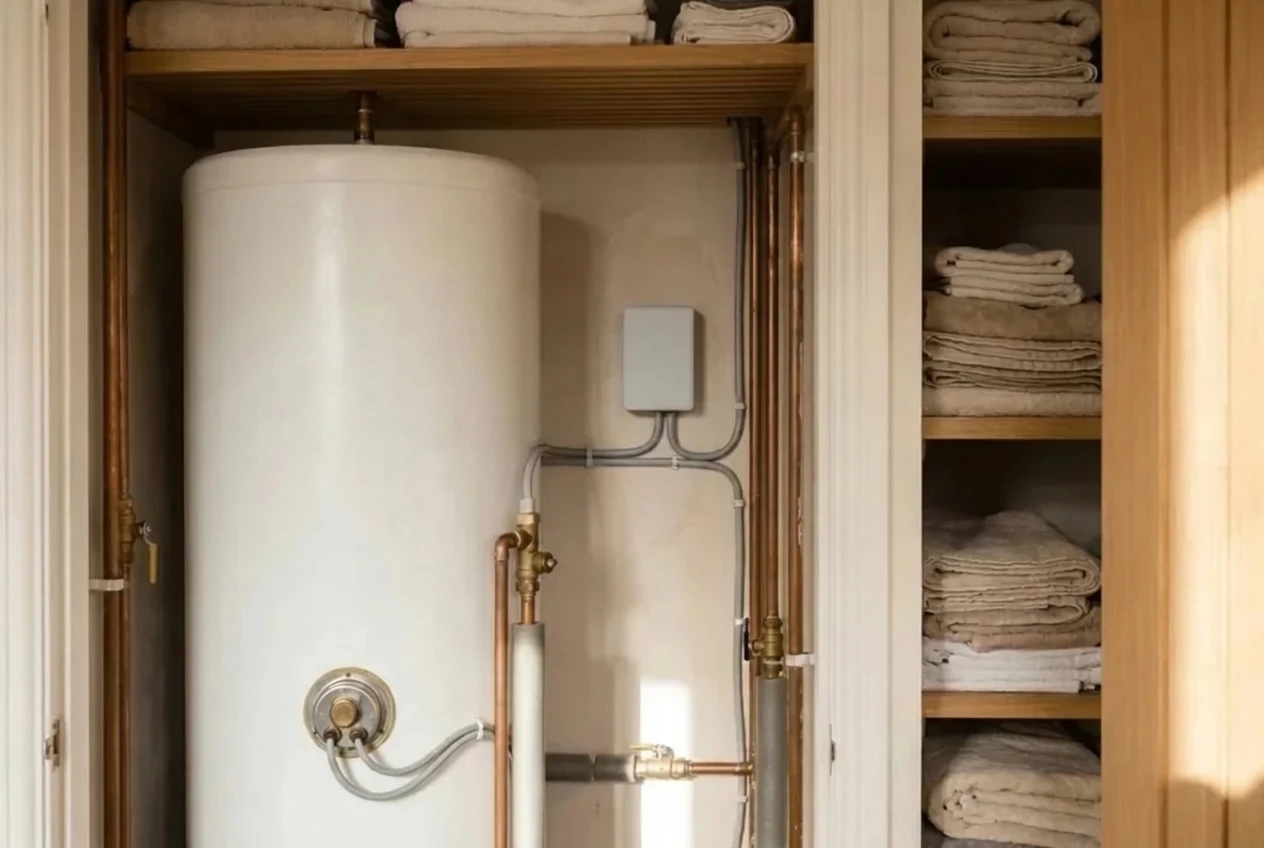
A diverter watches what your panels produce against what the house is using. When there is spare power, it sends it to the immersion heater in your hot water cylinder, in proportion to the surplus, so nothing is drawn from the grid. Once the water reaches temperature, it stops.
That is all it does. It does not feed your radiators or underfloor heating, and it does not talk to your heat pump. And the sun is strongest when you need least heating, so the surplus is largest when the heat pump has little to do except top up the cylinder.
Why a heat pump changes the sums on hot water
Heating a 200 litre cylinder from 10°C to 50°C takes about 9.3 kWh of heat, whatever does the heating.
So the diverter burns roughly three times the electricity for the same hot water. That is fine if the electricity would be wasted, but your surplus has a price: the export payment you give up. Heat pump efficiency on hot water is lower than on heating, because the water is stored hotter, so ask your installer for the figure on the hot water cycle.
The break-even, worked through
The diverter only comes out ahead when your export payment is below about a third of what you pay for the heat pump’s grid electricity. If the heat pump can run at midday on your own solar, the diverter’s case is weaker still, because the heat pump uses a third as much of the same surplus.
| Your export rate | Diverter: export given up | Heat pump on grid power | Heat pump on your own solar | Cheapest |
|---|---|---|---|---|
| 4p per kWh | 37p | 82p | 12p | Heat pump at midday; otherwise the diverter |
| 8p per kWh | 74p | 82p | 25p | Heat pump at midday; the diverter only just beats grid power |
| 15p per kWh | 140p | 82p | 47p | Heat pump, either way |
Cost of heating one 200 litre cylinder from 10°C to 50°C. Grid electricity at 26.32p per kWh (Ofgem cap, October to December 2026); heat pump hot water efficiency of 3. Use your own rates and your installer’s hot water efficiency figure.
Where a diverter still earns its place
- Your export is poor or capped. With a very low export rate, no export contract, or an export limit that throttles your panels in midsummer, surplus is worth close to nothing and a diverter turns it into something.
- The heat pump cannot heat water at midday. Some controllers only allow a fixed hot water window, usually early morning or evening. Then the heat pump buys grid power for a job your surplus could do, and a diverter sidesteps the controller.
- You have a large cylinder and heavy hot water use. A diverter can also push the stored temperature higher to carry extra energy into the evening. Water stored near 60°C scalds, so the outlet needs a mixing or tempering valve.
- Legionella cycles. Many heat pump cylinders use the immersion for a weekly high-temperature cycle. Running it from summer surplus is a modest but real saving.
The figures to gather before you spend anything
A diverter decision comes down to a few numbers you can collect in an afternoon. Do not ask a seller for a payback estimate until you have them.
- Export rateIn pence per kWh, and whether it is fixed or variable.
- Import rateIncluding any time-of-use tariff and its cheap windows.
- Summer surplusThe kWh you exported each month from May to September, from your inverter app or smart meter.
- Cylinder and hot water useA small cylinder or light use means the diverter fills it by mid-morning, then sits idle.
- Heat pump hot water efficiencyAnd whether the controller can move the hot water cycle to midday.
- Installed costIncluding the electrician’s time and any change to the cylinder wiring.
Then estimate the saving: work out the hot water heat the diverter could supply over the summer, divide by your heat pump’s hot water efficiency to see what the heat pump would have used, and value that at your import rate. Subtract the export income lost on the diverter’s larger consumption. If the result is a few pounds a year, you have your answer. An energy monitor app shows your midday export clearly enough to test it.
Cheaper ways to use surplus solar with a heat pump
- Move the hot water schedule to midday. It costs nothing, and the heat pump uses a third of the surplus a diverter would.
- Raise the hot water setpoint on sunny days, within the limit your installer set for safety, to store more energy for the evening.
- Check for a solar or smart-grid input. Some heat pumps accept a signal from an inverter or energy manager to heat when there is surplus. Check the installation manual.
- Shift flexible loads: run the dishwasher and washing machine at midday.
- Compare export tariffs. A better export rate raises the value of every unit you do not use, and weakens the case for a diverter further.
A battery or an EV charger competes for the same surplus, and both usually put each unit to better use than an immersion heater. For the wider picture, see will your solar panels run your heat pump?
Who should buy a diverter, and who should leave it
Buy one if
- Your export payment is very low, zero, or limited by an export cap on your connection
- Your heat pump controller cannot move hot water to midday, and has no solar input
- You have a large cylinder and high daily hot water use
- You have no battery or EV charger competing for the surplus
Leave it if
- You get a reasonable export rate: you would give up three units of income to save one
- Your heat pump can already heat water at midday
- Your cylinder is small or your hot water use is light
- You plan to add a battery or EV charger, which will take the surplus first
- The installed cost would take a decade or more of savings to recover
If your figures say yes: compare solar immersion diverters by the element rating they support, whether they can boost on a cheap tariff, and the monitoring app.Amazon affiliate link: I may earn a small commission if you buy, at no extra cost to you. A diverter must be fitted by a qualified electrician.
See diverters on AmazonIf the heat pump is not fitted yet, do not buy a diverter now. Let the installer specify the cylinder and controls, then test the sums with a full summer of data. A diverter can be added later, and the cylinder you end up with may make it unnecessary.
What to ask your installer before the cylinder is specified
- Does the cylinder have an immersion boss, and what is the element rating? Without one, a diverter has nowhere to connect, and the rating limits how fast surplus can be absorbed.
- Can the hot water schedule be set to midday, or respond to a signal? Ask to see it on the controller, not just in the brochure.
- Does the heat pump have a solar or smart-grid input, and will the installer set it up?
- What temperature is the cylinder set to, and is there a mixing valve at the outlet? It matters if a diverter will store water hotter.
- Would adding a diverter affect the warranty or commissioning paperwork? Get the answer in writing.
- How was the cylinder sized? Oversizing for solar storage adds cost and standing heat loss, which your figures should justify.
When comparing installers, ask each to price the cylinder and any diverter as separate lines, and use my printable heat pump quote checklist to compare the answers.
Common questions
Solar diverter questions
Is a solar diverter worth it with a heat pump?
Often not. A diverter turns one unit of surplus into one unit of heat, while a heat pump makes about three. It is only worth it when your export rate is very low, the heat pump cannot heat water at midday, or you use a lot of hot water.
Can a solar diverter heat my radiators?
No. A diverter feeds the immersion heater in your hot water cylinder only. Space heating on a heat pump system comes from the heat pump alone.
What export rate makes a diverter worth it?
Roughly below a third of what you pay for grid electricity. At the October to December 2026 price cap of 26.32p, that is around 9p per kWh, and lower still if your heat pump can run on your own solar at midday.
Is a battery better than a solar diverter?
Usually. A battery stores surplus to power the whole house, including the heat pump, which uses each unit about three times more effectively than an immersion heater.
Can I add a diverter later?
Yes, as long as the cylinder has an immersion element. That is why it is worth waiting a full summer to collect your own export figures before buying.
Does a diverter help with legionella cycles?
It can. Many heat pump cylinders use the immersion for a weekly high-temperature cycle, and running it from solar surplus in summer is a modest but real saving.
Final thoughts
With a heat pump, a solar diverter is the exception rather than the rule. Move the hot water cycle to midday, check your export rate, and gather a summer’s figures. If the export is poor and the controller cannot be scheduled, a diverter can pay its way; otherwise, the heat pump is already the better use of your sunshine.