

Two or three heat pump quotes rarely look alike. One runs to six pages with model numbers and a heat loss report attached; another is a single page with a total at the bottom. This checklist turns every quote into the same set of answers, so you compare like with like rather than total against total.
As a heat pump installer, these are the 20 things I would want to see on any quote for my own house. Print the score sheet, work through it for each quote, and the gaps show up straight away.
The quote checklist in short
- 20 items in five sections, each scored 0, 1 or 2, for a maximum of 40 per quote.
- If it is not in writing, it scores 1 at best. A verbal promise cannot be pointed to later.
- Check credentials before the price. A cheap quote from a firm that cannot claim the grant is not cheap.
- Add the exclusions back in before comparing totals: a quote £800 cheaper can be £1,500 dearer once extras are counted.
- Red flags override the score: one of them is enough to drop a quote.
How to use this checklist with two or three quotes
- Print the score sheet below, or copy the items onto paper with a column for each quote: A, B and C.
- Work one section at a time across all the quotes, rather than reading each quote start to finish. A gap in one quote then shows up against a quote that fills it.
- Score each item 0, 1 or 2: 2 if it is stated in writing with specifics, 1 if it is vague or only promised verbally, 0 if it is missing.
Landlords and self-builders can use the same sheet. Give every installer identical drawings or property details so the quotes describe the same job. Landlords should also check the quote gives what is needed for an EPC reassessment; self-builders should check it matches the design stage you are at.
The printable score sheet
Heat pump quote score sheet
Score each item 0, 1 or 2 for every quote. 2 = in writing with specifics. 1 = vague, or promised verbally. 0 = missing.
| # | Item | Quote A | Quote B | Quote C |
|---|---|---|---|---|
| Credentials (max 8) | ||||
| 1 | MCS certificate number given, and it checks out | |||
| 2 | Consumer code named (RECC or HIES) with membership number | |||
| 3 | Named, qualified people for the unvented cylinder and any refrigerant work | |||
| 4 | Workmanship warranty length stated, and what happens if the firm stops trading | |||
| Has anyone measured your house? (max 8) | ||||
| 5 | Someone visited the house in person | |||
| 6 | Room-by-room heat loss calculation included (watts per room) | |||
| 7 | Each radiator checked at the new flow temperature, with any changes listed | |||
| 8 | Design flow temperature and expected SCOP for your house stated | |||
| Named equipment (max 10) | ||||
| 9 | Heat pump make, model, output in kW and outdoor unit position | |||
| 10 | Cylinder make, model and size in litres (or why the old one is suitable) | |||
| 11 | Controls named: weather compensation, thermostat, cylinder control, app | |||
| 12 | Pipework size and rough route from the outdoor unit | |||
| 13 | Buffer tank included or excluded, with a reason | |||
| Grants and payment (max 8) | ||||
| 14 | Full price, grant and balance shown as separate lines | |||
| 15 | Deposit amount stated, and how it is protected | |||
| 16 | Stage payments tied to events, not dates | |||
| 17 | How long the price is valid, and on what basis | |||
| Exclusions and extras (max 6) | ||||
| 18 | A written list of what is excluded | |||
| 19 | Provisional sums marked, estimated and capped | |||
| 20 | Radiators, pipework and electrical work priced or clearly ruled out | |||
| Total (max 40) | ||||
Tip: print this page and write the scores in the boxes. Any one red flag from the list below rules a quote out, whatever it scores.
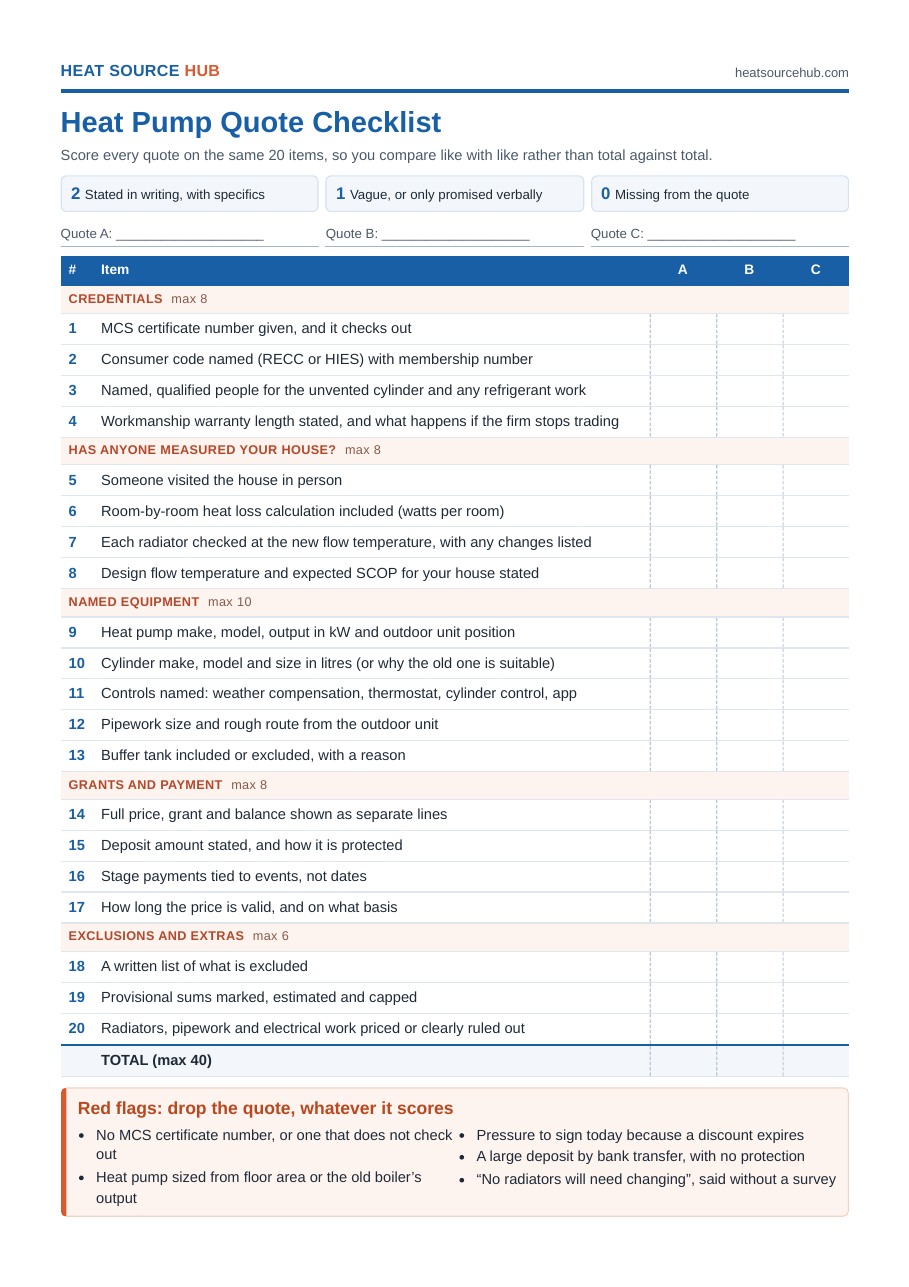
Free download
Heat Pump Quote Checklist (PDF)
A two-page A4 version of this checklist, ready to print and take to every survey.
- 20-item score sheet for three quotes
- Red flags that rule a quote out
- Six questions with space for the answers
- “Real price” calculator for exclusions and the grant
1. Credentials to confirm before you read the price
Check credentials first. A cheap quote from a company that cannot be certified for the grant is not cheap.
- MCS certification: the company should give its MCS certificate number, which you can check on the MCS website. The Boiler Upgrade Scheme grant depends on it.
- Consumer code: MCS installers belong to an approved consumer code such as RECC or HIES. The quote should name it and give the membership number.
- Named competence: fitting an unvented cylinder needs the right qualification, and handling refrigerant on split systems needs its own certification. Ask who holds each and whether they will be on site.
- Workmanship warranty and insurance: the installer’s own warranty length, separate from the manufacturer’s, and what happens to it if the company stops trading.
For judging an installer’s track record, references and attitude, see choosing the right heat pump installer. This checklist covers what the paperwork itself should tell you.
2. Has anyone measured your house?
A heat pump has to be sized to the heat your house loses on a cold day. If nobody has measured the house, the size on the quote is a guess, and an undersized or oversized unit costs you in comfort or running costs for years.
- A site visit took place. A video call or a quote from photographs and a postcode is a starting point, not a design.
- A room-by-room heat loss calculation is included, typically to BS EN 12831, listing every room with its design temperature and heat loss in watts. A single kW figure with no working behind it scores 0.
- Radiators are checked against it. A heat pump runs cooler than a boiler, so the quote should show each radiator’s output at the new flow temperature and which need replacing. See underfloor heating or radiators with a heat pump and my radiator guides.
- A design flow temperature and efficiency estimate are stated: the expected seasonal efficiency (SCOP) for your house, not just the unit’s headline figure.
3. What the quote should name
“Supply and install air source heat pump” is not a description. Every component should be identified so you can look it up, and nothing can be swapped quietly.
- Heat pump: make, model, and output in kW, and where the outdoor unit will stand.
- Cylinder: make, model and size in litres, sensible for your household. If the old cylinder is being kept, the quote should say why: many older coils are too small for a heat pump.
- Controls: weather compensation, room thermostat, cylinder control and any app. See smart thermostats for heat pumps before adding your own.
- Pipework: heat pumps often need larger pipes, so the quote should state the size and rough route from the outdoor unit.
- Buffer tank: included or excluded, with a reason either way. See, do you need a buffer tank?
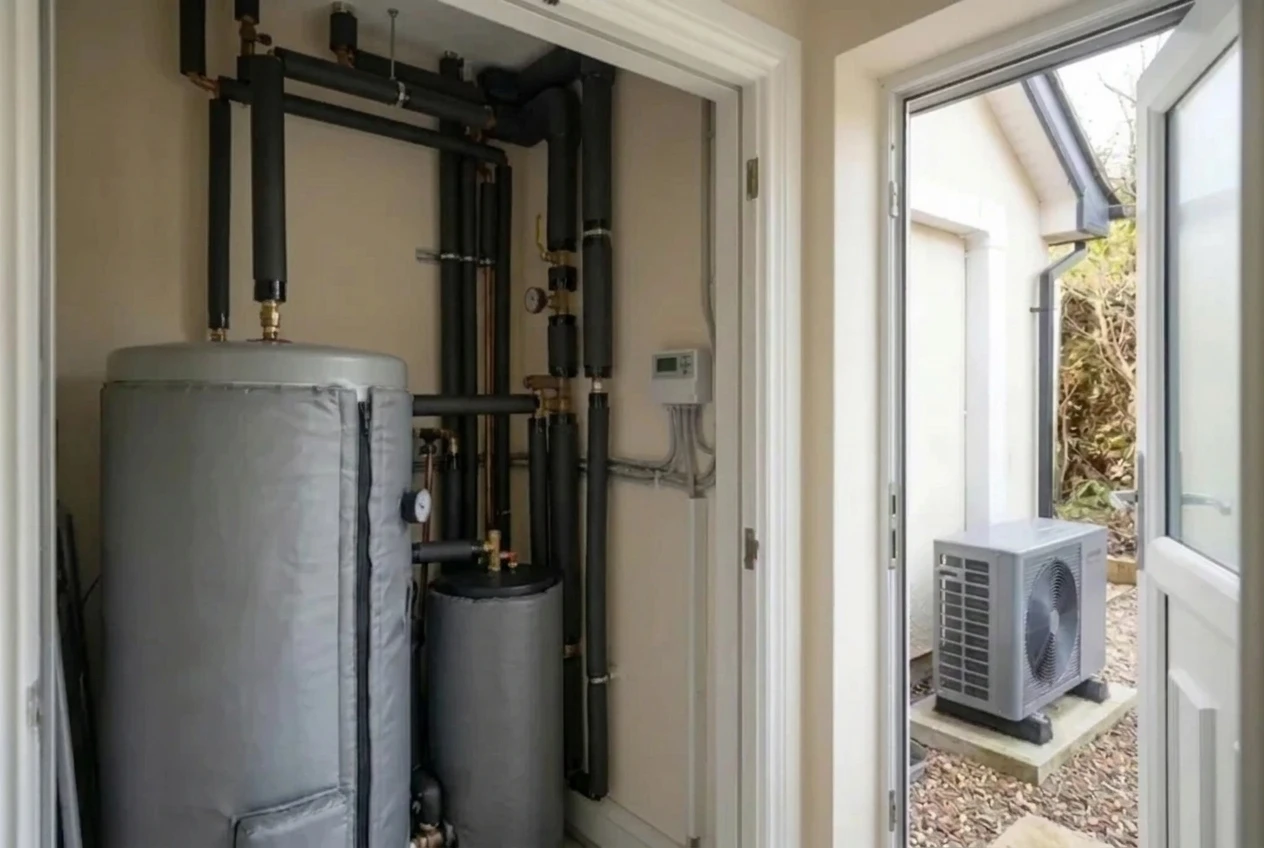
If Quote A names a 200 litre cylinder and Quote B says only “new cylinder”, you do not yet know whether the prices cover the same equipment.
4. Grants, deposits and payment terms
- The grant is shown and deducted: full price, grant and balance on separate lines. Rules differ between England and Wales, Scotland and Northern Ireland: see which heating grants you can claim.
- Deposit amount and protection: stated as a figure or percentage, with how it is protected, for example, through the consumer code or an insurance-backed guarantee.
- Stage payments tied to events: equipment delivered, installation complete, commissioning finished, not calendar dates.
- Validity and price basis: how long the price holds and whether it depends on the grant staying the same. No expiry or basis scores 0.
If you plan to finance the work, check that the payment stages fit the lender’s terms. See how to borrow for a heat pump or insulation.
5. Exclusions and extras that raise the price after you sign
Every quote leaves something out. The better ones say what.
- A written exclusions list. Common exclusions: electrical work or a consumer unit upgrade, making good and decorating, removing the old cylinder and tanks, scaffolding, replacement radiators, and the base for the outdoor unit.
- Provisional sums marked and capped, with a point where the installer asks for your agreement before spending more.
- Radiators, pipework and electrics priced or ruled out. “Radiator changes may be required; price on request” is a gap in the total, and it can be a large one.
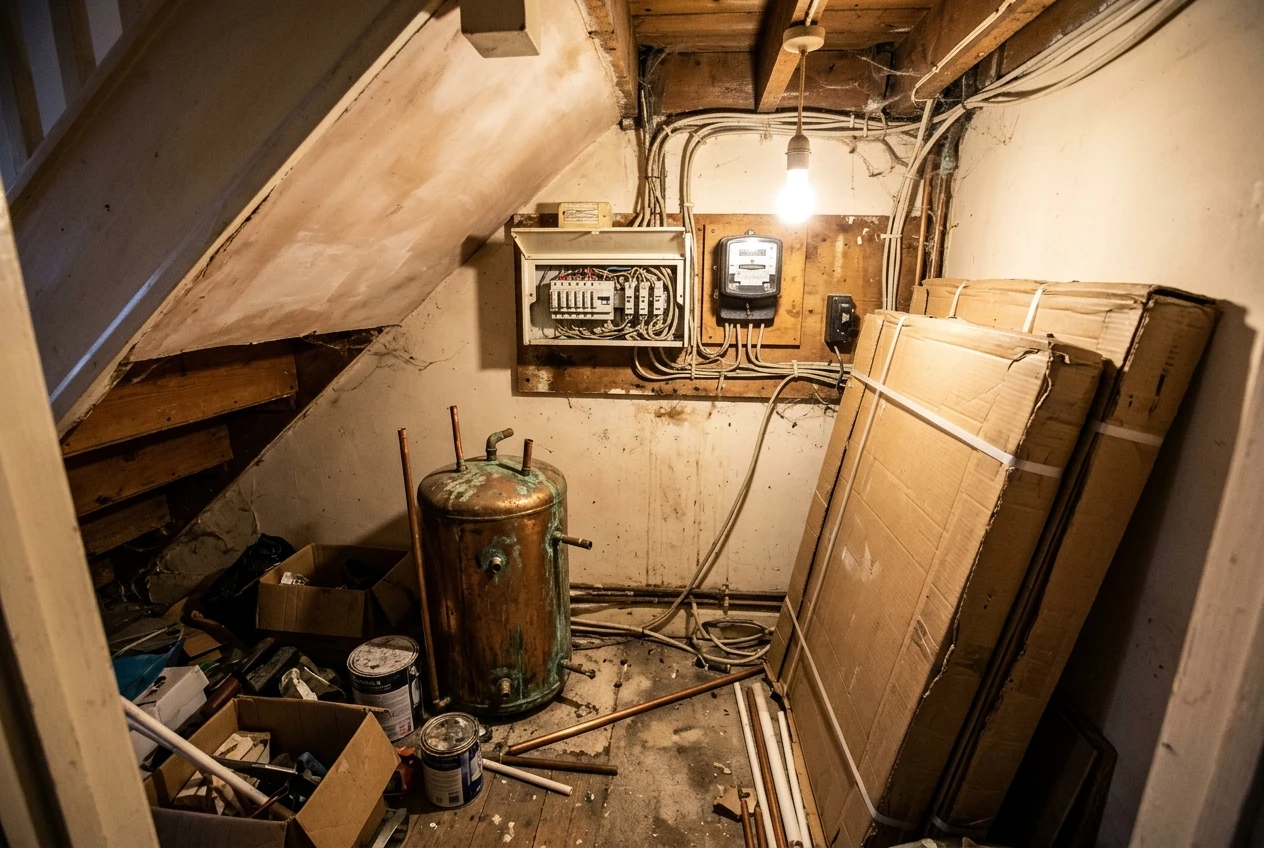
Ask each installer to put a figure on every excluded item, so all quotes cover the same ground. A quote that looks £800 cheaper may be £1,500 dearer once the electrics and radiators are added.
Questions to put to each installer
Some points do not fit a score box. Ask these of every installer, in writing if you can, and keep the replies with the quote.
- “Can I see the heat loss calculation for my house?”A prompt yes is right. Be wary of “we don’t need one, we’ve done hundreds like yours”.
- “What flow temperature is the system designed for?”You should get a number. A vague answer suggests the system was not designed around your radiators.
- “Which parts of the quote could change?”An honest installer lists them. “Nothing” is rarely true in an existing house.
- “Who applies for the grant, and when is it taken off?”The installer should. If you are asked to pay in full and claim it back, ask why.
- “What if the house doesn’t reach the promised temperatures?”Look for a stated commissioning process and a workmanship guarantee, not reassurance.
- “What does the manufacturer’s warranty cover, and who handles claims?”Terms vary. See my heat pump warranties comparison.
Answers that should end the conversation
Red flags: drop the quote
- No MCS certificate number, or a number that does not check out
- Heat pump sized from floor area or your old boiler’s output
- Pressure to sign today because a discount expires
- A large deposit by bank transfer, with no mention of protection
- “No radiators will need changing”, said without a survey
Any one of these overrides the score. A quote scoring 36 out of 40 with one of these answers should still be dropped.
Scoring your quotes and deciding which to take forward
Add up each column. The maximum is 40.
- Look at the section totals too. Full marks for equipment, but nothing for measurement means a specific machine nobody has checked against your house.
- Weak credentials matter most, because a revised quote cannot fix them.
- When two quotes are within a few points, compare prices, but only after adjusting: take the total, add every excluded item, subtract the grant, then compare.
- Before you pay anything, ask the front-runner to confirm every changed line in a revised written quote.
Common questions
Heat pump quote questions
How many heat pump quotes should I get?
Two or three. Fewer gives you nothing to compare against; more takes a lot of time for little extra benefit, as long as each quote is properly surveyed.
Should a heat pump quote include a heat loss calculation?
Yes. MCS installers must carry out a room-by-room heat loss calculation, and you should be able to see it. Without one, the heat pump size is a guess.
Why are heat pump quotes so different in price?
Usually because they cover different work. One may include radiators, electrics and making good; another may exclude them. Price the exclusions before comparing totals.
How much deposit should I pay for a heat pump?
Keep it modest and make sure it is protected. MCS installers belong to a consumer code that should protect your deposit if the firm fails. Avoid large deposits by bank transfer with no protection.
Is the Boiler Upgrade Scheme grant taken off the quote?
Yes. In England and Wales the installer applies and the £7,500 grant is deducted, so you pay the balance. The quote should show the full price, the grant and the balance separately.
Print it and score your quotes
Print this page and score each quote you hold. If you have no quotes yet, I can put you in touch with an MCS-certified installer I work with, and you can score that quote too.