
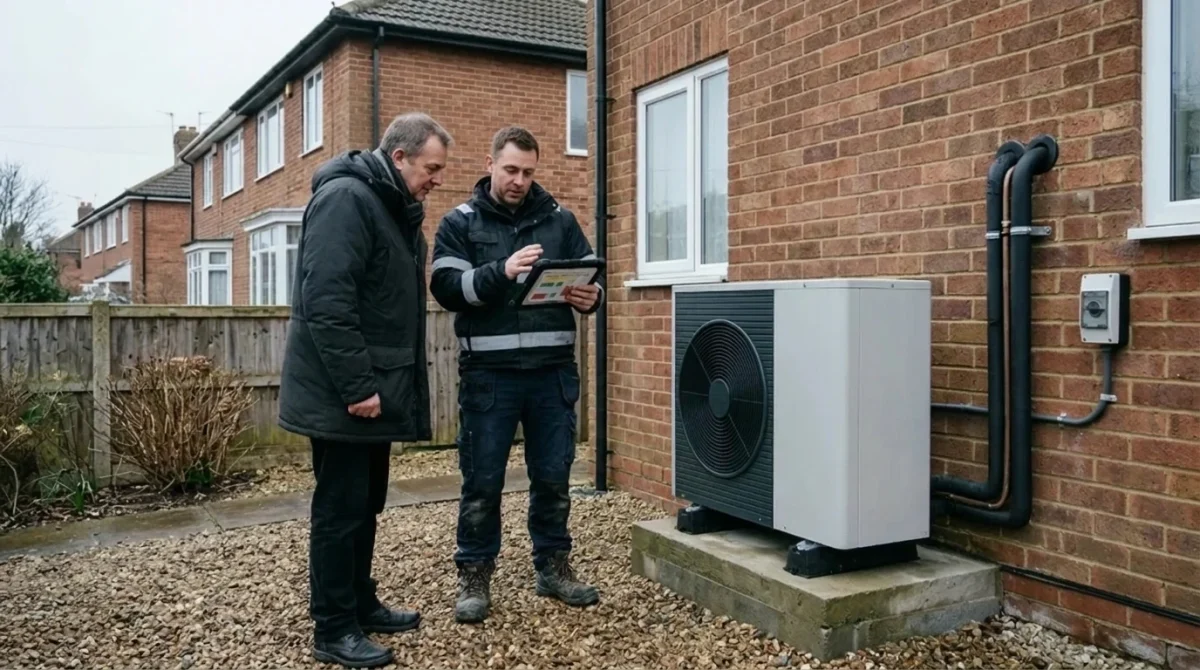
Ask five heating engineers which heat pump brand is best and you will get several answers, most of them right for a different house. A unit with a very high efficiency figure can be a poor choice if nobody trained on it works within an hour of your postcode, and a brand with a dense service network can be wrong if your radiators need a flow temperature it handles badly.
So this guide does not hand you a league table. It gives you three tests to run on any manufacturer, covers the makers most often fitted in British homes, and ends with a method for using it all against three quotes. For the current models side by side, see my heat pump brands comparison.
Choosing a manufacturer in short
- Run three tests: efficiency at your flow temperature, the real evidence on reliability and parts, and trained support near your postcode.
- Compare SCOP at your design flow temperature, not the best-looking figure. The 55°C number can be a third lower than the 35°C one.
- Reliability rankings rarely have data behind them. Track record, service documents and a written parts commitment tell you more.
- Local support decides year eight, when the original installer may have moved on.
- When two brands are close, choose the one your preferred installer fits regularly and will service.
Published SCOP at the flow temperature your house will need, not the headline figure.
Track record, service documents and a written parts commitment, not badges and star ratings.
Trained installers and engineers within a reasonable drive of your postcode.
Why the best brand on paper may not be the best brand for your house
A manufacturer’s reputation is built on averages across thousands of homes. Yours is one home, with its own heat loss, radiators, hot water demand and installers within driving distance. The three tests pull against each other:
- Efficiency depends on the temperature the system must run at, which your house and emitters set, not the brand.
- Reliability depends partly on the machine and partly on how it was installed and commissioned, which is why the same model gets glowing and terrible reviews.
- Local support depends on who has trained on the product near you, and that differs from region to region.
Maximising one often costs another. The most efficient model may be a new design with a short track record; the best-supported brand may offer fewer sizes; the cheapest quote may fit a brand with a thin service network near you. Landlords and self-builders should add a fourth test: someone else may maintain the system later, so parts and service availability matter more than a marginal efficiency gain.
Test 1: reading efficiency claims at your flow temperature
Every heat pump comes with a SCOP, the seasonal coefficient of performance. A SCOP of 4 means four units of heat for each unit of electricity over a standardised season. It is a test result, not a forecast for your house.
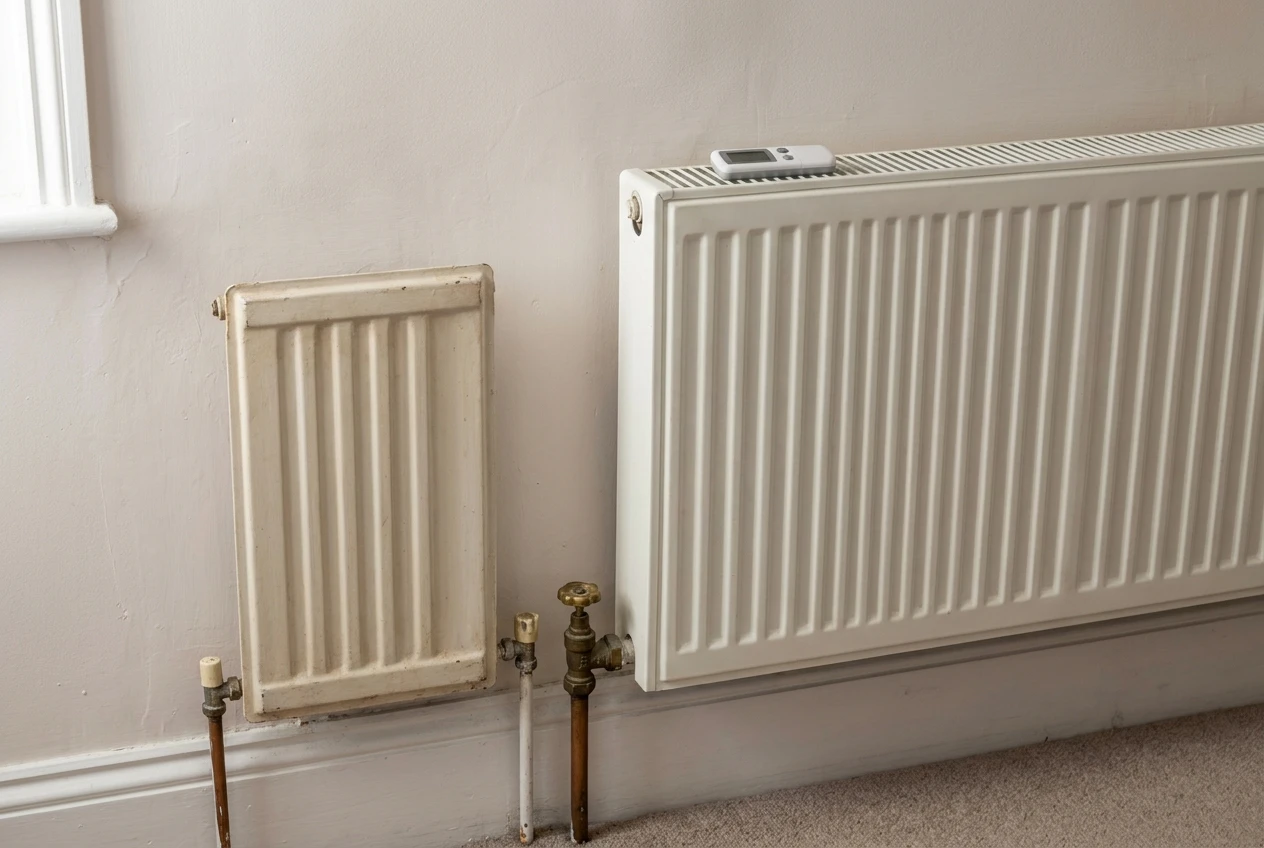
Manufacturers usually publish SCOP at 35°C and 55°C flow. The first suits underfloor heating or generous radiators; the second is closer to a house with older, smaller radiators. If your design flow temperature is 50°C and you compare brands on their 35°C figures, you are comparing performance your house will not get.
| Published example | SCOP at 35°C | SCOP at 55°C |
|---|---|---|
| Grant Aerona 290 (4 to 15.5 kW) | 4.56 to 5.08 | 3.33 to 3.74 |
| Worcester Bosch Compress 5800i AW (4 to 7 kW) | 4.53 to 4.54 | 3.03 to 3.29 |
Manufacturer figures. The same unit is around a third less efficient at 55°C than at 35°C: the gap between temperatures is bigger than the gap between brands.
Upgrading a few undersized radiators to lower the flow temperature usually does more for efficiency than switching brand. See underfloor heating or radiators with a heat pump.
What the datasheet leaves out:
- Your local weather: a cold, exposed site spends more hours at low outdoor temperatures than the test assumes.
- Hot water: heating a cylinder needs a higher flow temperature, and the heating SCOP does not include it.
- Defrost and standby use, which matter in damp British winters and are rarely given.
- Installation quality: pipe sizes, cylinder coil size and control settings all move real-world efficiency.
Ask your installer for the MCS performance estimate for your home. It is based on your heat loss and design flow temperature, so it is far closer to your reality. Use SCOP to compare machines at equal flow temperatures, and the estimate to know what to expect.
Test 2: What reliability evidence exists, and what is just marketing
There is no trusted UK source ranking heat pump brands by fault rate, so be wary of any page that claims one without saying where the data comes from.
Evidence worth weighing
- Field trials such as the government-funded Electrification of Heat project, which show where faults really come from: mostly design and installation
- Track record: how long the exact range has been sold in the UK
- Service documentation: fault codes, commissioning guides and manuals for engineers
- A written parts commitment: how long parts are supplied after a model is retired
- Owner surveys by consumer organisations, read with the sample size and date
Mostly marketing
- Awards and “best in class” badges, which often reward innovation or sales
- Warranty length on its own, without the conditions
- Online review scores that mix the brand with the installer: “installer never came back” says nothing about the compressor
- Any reliability ranking that does not say where its data comes from
When you read reviews, separate faults caused by the machine from faults caused by installation, commissioning or controls. A review naming a recurring component failure on a specific model is worth far more than general praise. For what each manufacturer’s cover really includes, see heat pump warranties compared.
The manufacturers most often fitted in UK homes, and what to check on each
Rather than ranking names, it helps to sort them by where they came from, because that shapes their strengths and the questions to ask.
| Where they came from | Typical names | Strengths | What to check |
|---|---|---|---|
| Boiler makers | Vaillant, Worcester Bosch, Viessmann, Ideal, Grant | Wide UK engineer coverage; own cylinders and controls | That service engineers are trained on the heat pump, not only the boilers |
| Air conditioning and refrigeration | Mitsubishi Electric, Daikin, Samsung, Panasonic | Long experience of refrigerant circuits and inverter compressors | Monobloc or split; whether the cylinder is supplied or left to the installer |
| Heat pump specialists | Nibe | Detailed weather compensation and control settings | How many installers near you are trained on it |
Questions for every brand on your list:
- Is the exact model on the MCS product directory? It must be listed for the Boiler Upgrade Scheme.
- What refrigerant does it use, and what does that mean for servicing?
- What is the published SCOP at my design flow temperature?
- How long are parts supplied after a model is retired?
- Who trains installers and engineers, and is there a postcode locator?
The answers matter more than the name. A well-known brand that cannot answer the parts question is a risk; a less familiar one with clear answers may be the safer choice. For current models, sizes and warranty terms side by side, see my UK heat pump brands comparison.
Test 3: support networks, parts and who answers when it breaks
A heat pump should run for fifteen years or more, so the support question is about year eight, when the installer who fitted it may have moved on. Check three layers:
- Trained installersSearch each manufacturer’s installer locator by postcode. A dozen firms within a sensible drive is a good sign; a handful fifty miles away is not.
- Manufacturer engineersDoes the maker send its own engineers to warranty faults, or rely on installers? Ask for the typical response time in writing.
- PartsAsk the installer how long major parts for that brand usually take. “Order Monday, here Wednesday” is worth more than “they’re very good”.
Landlords should ask how tenants report a fault: a support line that talks to the householder directly is a real advantage. Self-builders should keep the commissioning records, installer details and product documents together for a future owner.
Brand versus installer: why the person fitting it matters as much as the badge
A good brand badly fitted performs worse than an average brand fitted well. Wrong pipe sizes, an oversized unit that cycles on and off, a cylinder coil that is too small, or a flow temperature set far higher than needed all cost efficiency and reliability, whatever the badge.
An installer who fits one or two brands regularly knows their quirks, controls and common faults. Ask each installer which brands they fit most and why. A reason based on how the product commissions, services and lasts is a good one; a reason based on trade discount is not.
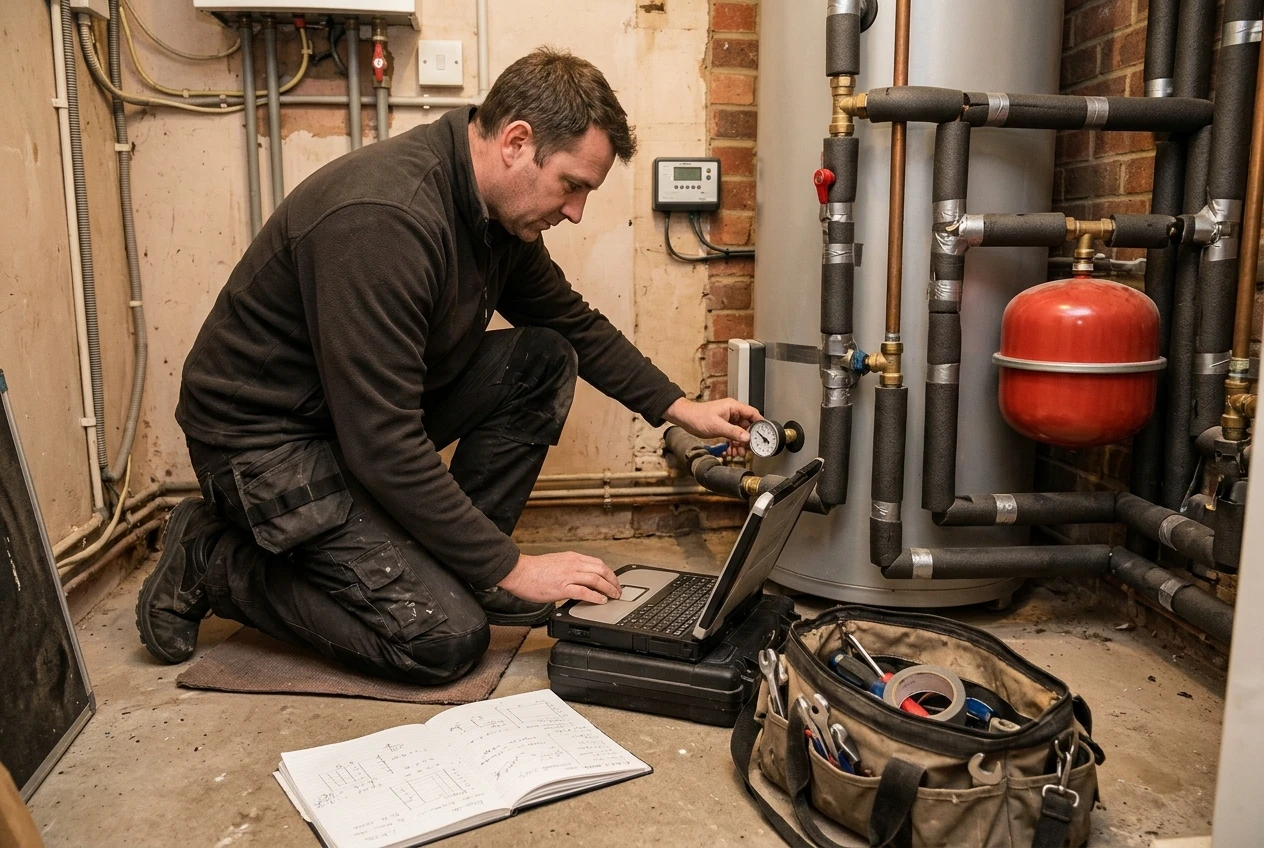
Warning signs: no heat loss calculation, no design flow temperature, no mention of radiator changes, and a brand chosen before anyone measured your house. See choosing the right heat pump installer. Siting and mounting change noise as much as the unit does, so read how loud is a heat pump? before you settle on a position.
A shortlist method you can use with three quotes in front of you
Put the facts side by side before you look at price.
| Check | Quote 1 | Quote 2 | Quote 3 |
|---|---|---|---|
| Brand and exact model | |||
| Heat loss for the house | |||
| Design flow temperature | |||
| Published SCOP at that temperature | |||
| MCS performance estimate | |||
| Radiator or emitter changes included | |||
| Cylinder size and coil | |||
| Trained installers near you | |||
| Parts supply commitment |
Copy this onto paper, or print the page, and fill in one column per quote before you look at price.
- Remove incomplete quotesDrop any quote without a heat loss figure or design flow temperature: you cannot compare efficiency without them.
- Check the MCS directoryMake sure each model is listed. An unlisted product can put the grant at risk.
- Compare SCOP fairlyUse each unit’s figure at your design flow temperature, and price in any radiator changes.
- Check local supportSearch each maker’s installer locator for your postcode and note how many trained firms are near you.
- Ask about partsAsk the maker or installer about parts supply, and note any answer you get in writing.
- Read the warranty lastCompare conditions with the warranty comparison, and check the installer’s workmanship cover is separate.

You will probably end up with two brands. Take the one with the better published efficiency at your flow temperature, unless the other has clearly stronger local support, in which case support should win on a system you will keep for a decade or more. If the numbers are very close, go with the brand your preferred installer fits regularly and will service.
For the full set of questions to put to each installer, print my heat pump quote checklist and keep it beside you when the quotes arrive.
Common questions
Choosing a heat pump manufacturer: common questions
Which heat pump manufacturer is the most reliable?
There is no trustworthy UK league table of fault rates by brand. Look instead at how long the exact range has been sold here, the service documentation, a written parts commitment and how many trained engineers are near you.
Is a higher SCOP always better?
Only when you compare at the same flow temperature, and ideally at the one your house will need. A unit with a lower 35°C figure can beat another at 55°C.
Should I choose the same brand as my boiler?
Only if the brand also passes the three tests. Boiler and heat pump ranges are designed separately, and engineers trained on one are not automatically trained on the other.
Can I ask an installer to fit a different brand?
You can ask, but many installers fit only one or two brands. If you want a particular make, look for an installer trained on it through the manufacturer’s locator.
Does the brand affect the Boiler Upgrade Scheme grant?
The model must be MCS listed and fitted by an MCS-certified installer. Any listed brand qualifies; the brand itself does not change the grant.
Next step
Ask for a quote through my heat pump quote page and send your shortlist of brands so an installer can tell you which suits your house and which they will stand behind.