
Most comparisons of heat pump vs gas boiler running costs stop at the annual bill, which is only one line of the ten-year cost. The bill depends on your electricity and gas rates and on how efficiently the heat pump runs in your house. The install price, the grant, servicing and repairs then decide how long any saving takes to repay the extra you spend at the start.
This guide builds the ten-year total in that order and works three example homes through it. Every figure in the worked examples is an assumption chosen to make the arithmetic easy to follow. None of them is a current tariff or a quote, so replace them with the numbers from your own bills and quotes.
Ten years of running costs in short
- Two numbers decide the running cost: your electricity-to-gas price ratio and the heat pump’s SCOP.
- A heat pump is cheaper to run when its SCOP is higher than the price ratio multiplied by the boiler’s efficiency. At the current price cap, that break-even SCOP is about 2.8.
- The grant narrows the upfront gap but does not close it, so the running saving has to repay the difference.
- Efficient homes come closest: a well-insulated semi with a SCOP of 4 is within a few hundred pounds of the boiler over ten years.
- Run your own figures with the calculator below; small changes can flip the answer.
What a ten-year comparison has to include before the numbers mean anything
A fair comparison puts the same house, heated to the same temperature, on both sides. That means one annual heat demand figure, measured in kilowatt hours of heat, used for both systems. If the boiler column assumes a cool house and the heat pump column assumes a warm one, the result tells you nothing.
The items that belong in each column are:
- Installed price of the system, including a hot water cylinder, pipework and any radiator changes the heat pump needs.
- Any grant that applies to one option and not the other.
- Annual running cost: fuel or electricity, plus the standing charge for any supply you would disconnect or keep.
- Annual servicing.
- A repairs allowance for the decade.
- Anything a warranty will and will not cover.
Three further points sit outside the arithmetic but change how you read it. A ten-year window stops counting before either unit reaches the end of its life, so a system that lasts longer is cheaper per year than the ten-year total suggests. Energy prices will move over ten years, and nobody can say in which direction, so the sensible approach is to test your figures at several rates rather than trust one. And a heat pump install can alter your home in ways a boiler swap does not, such as where the cylinder goes and which radiators change, so those costs belong in the total.
Upfront cost with the Boiler Upgrade Scheme grant taken off
The Boiler Upgrade Scheme currently pays £7,500 towards an air source heat pump in England and Wales. Other parts of the UK have separate schemes. Eligibility rules and exclusions are covered in the guide to which heating grants you can claim and who gets turned down, so check there before you build the grant into your figures.
The installer normally deducts the grant from the invoice, so the figure you pay is the quote minus £7,500. For the worked examples, I use an assumed £13,000 gross price for an air source system in a house that needs little radiator work. That gives a net cost of £5,500. A replacement gas boiler is assumed to be installed at £3,000, and the new boiler cost guide covers real boiler pricing in more detail.
The grant narrows the upfront gap but does not close it. In the base case, the heat pump costs £2,500 more on day one. Houses that need larger radiators, new pipework or a bigger unit widen that gap, and the grant stays at £7,500 however high the quote goes.
Yearly running costs: how the electricity and gas unit rates and your heat pump’s SCOP set the result
Running cost comes down to two numbers: the price ratio between electricity and gas and the heat pump’s SCOP. SCOP is the seasonal coefficient of performance, the amount of heat the unit delivers across a heating season for each kilowatt-hour of electricity it uses. A SCOP of 3.5 means 3.5 kWh of heat for every 1 kWh of electricity.
The ratio is the electricity unit rate divided by the gas unit rate. A boiler loses some heat in the flue and in the way it cycles, so its seasonal efficiency is below 100 per cent. The assumption here is 85 per cent. A heat pump costs less to run than a boiler when:
SCOP is higher than the price ratio multiplied by the boiler’s efficiency.
With gas at 6p per kWh and electricity at 24p, the ratio is 4. The break-even SCOP is 4 × 0.85 = 3.4. A heat pump achieving 3.4 costs the same to run as the boiler, and anything above it is cheaper. If you move to a tariff that brings your average electricity price to 18p, the ratio falls to 3, and the break-even SCOP falls to 2.55. At the October to December 2026 price cap the ratio is about 3.3, so the break-even SCOP is about 2.8. Our guide to the best electricity tariffs for heat pump owners covers the tariffs that bring the ratio down.
| Electricity price ÷ gas price | Example rates | Break-even SCOP (boiler at 85%) |
|---|---|---|
| 2.5 | 20p and 8p | 2.1 |
| 3.0 | 18p and 6p | 2.55 |
| 3.3 | 26.32p and 7.97p (price cap, Oct to Dec 2026) | 2.8 |
| 4.0 | 24p and 6p | 3.4 |
Above the break-even SCOP, the heat pump costs less to run than the boiler; below it, more. A heat pump tariff with a cheaper average rate lowers the ratio.
This is why two neighbours can get opposite results from the same product. One has radiators that allow a low flow temperature, a SCOP of 4 and a good tariff. The other runs the system hot, gets a SCOP of 2.8 and pays the standard rate.
Ask any installer to put the estimated SCOP and the design flow temperature in writing, along with the heat loss calculation behind them. A quote that gives neither is missing the figure you need most.
Servicing, repairs and warranty cover over a decade
Both systems need an annual service, and both can need repairs. For the examples, I assume £100 a year for servicing on each, so £1,000 over ten years, and a £500 repairs allowance for each. These assumptions cancel out, which keeps the comparison on the install price and the running cost. Real service prices vary by installer and unit.
What a heat pump service involves is set out in the guide to what is carried out during a heat pump service, which helps you judge whether a quoted price covers a proper check or a quick visit.
Warranty terms deserve more attention than the headline length of cover. Many manufacturer warranties depend on regular servicing and on installation by an approved installer, and the small print can exclude parts, labour or certain faults. The comparison of heat pump warranties goes through what manufacturers cover. Read the terms before you decide how much of a repair allowance to put in your own column. A longer warranty lowers the risk in the early years, but it does not remove the servicing cost.
Where the heat pump loses: poorly insulated homes, undersized radiators and the wrong tariff
Three conditions push the running cost against a heat pump.
Poor insulation. A house that loses heat quickly needs more kWh of heat each year. Where the SCOP is below the break-even figure, every extra kWh of demand adds to the heat pump’s disadvantage. Where the SCOP is above it, the same extra demand adds to the savings. Insulation therefore changes the comparison in both directions, and it lowers the bill whichever system you choose.

Radiators too small for the room’s heat loss. A heat pump is most efficient when it delivers water at a low temperature. Radiators sized for a boiler running at high temperature may not heat the room at that lower flow temperature, so the installer either replaces them or raises the flow temperature. Replacing them adds cost, and raising the flow temperature lowers SCOP. Either way, the number in your column moves, which is why the preparation guide for a heat pump install is worth reading before the survey.
The wrong tariff. On a standard tariff, the ratio is whatever it is. A tariff with a lower unit rate for part of the day only helps if the heating can use that rate, for instance through a hot water cylinder heated off-peak. Some tariffs charge more at peak times, which can make a heat pump dearer if the house needs heat in the evening. Work out your own usage pattern before you assume a cheap rate applies to most of your consumption.
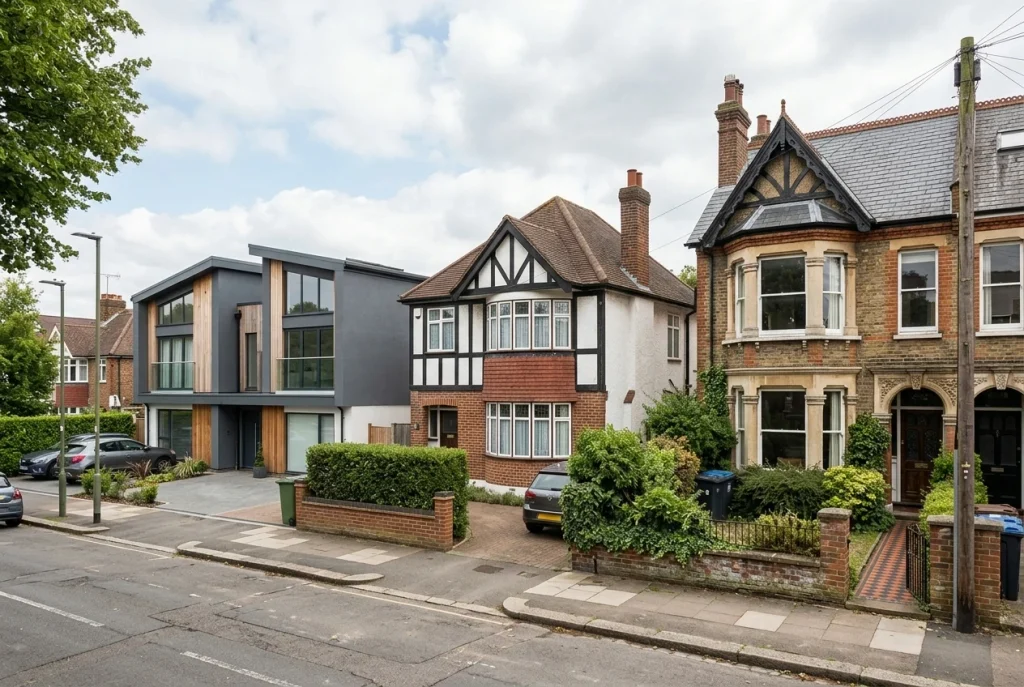
Three worked ten-year scenarios: a well-insulated semi, a 1930s house and a period property
The model uses these shared assumptions: gas at 6p per kWh, boiler efficiency of 85 per cent, and electricity at 24p (ratio 4) or 18p (ratio 3). The heat pump is air source with a £7,500 grant, and the boiler costs £3,000. Servicing and repairs come to £1,500 for each system over ten years. Heat demand includes hot water. Gas and electricity prices are held flat for the decade, and the gas standing charge is left out for now.
Scenario A: a well-insulated semi
Heat demand is 8,000 kWh a year, and the heat pump achieves a SCOP of 4.0. The installed price is £13,000 gross and £5,500 net.
- Boiler: 9,412 kWh of gas a year costs about £565. Ten years of gas costs £5,650, and the total with installation, servicing and repairs is £10,150.
- Heat pump at 24p: 2,000 kWh of electricity costs £480 a year. Ten years cost £4,800, and the total is £11,800.
- Heat pump at 18p: the annual cost is £360, ten years costs £3,600, and the total is £10,600.
At ratio 3 the gap is £450 over ten years. Gas standing charge is not in the model. If you disconnect the gas completely, that charge comes off the heat pump side. Your bill shows the amount, and you can set it against the remaining gap.
Scenario B: a 1930s house
Heat demand is 12,000 kWh a year. A SCOP of 3.2 assumes some radiators are upsized, so the gross install price is £15,000 and the net cost is £7,500.
- Boiler: 14,118 kWh of gas costs about £847 a year. Ten years of gas costs £8,470, and the total is £12,970.
- Heat pump at 24p: 3,750 kWh costs £900 a year. Ten years cost £9,000, and the total is £18,000.
- Heat pump at 18p: the annual cost is £675, ten years costs £6,750, and the total is £15,750.
At ratio 4 the SCOP of 3.2 is below the break-even of 3.4, so the heat pump costs more to run as well as more to install. At ratio 3 it saves about £172 a year on running costs, and the extra £4,500 upfront is not repaid within the decade.
Scenario C: a period property
Heat demand is 18,000 kWh a year, and the SCOP is 2.6, which reflects higher flow temperatures and radiators that are hard to change. A larger system, a cylinder and pipework, brings the gross price to £18,000 and the net cost to £10,500.
- Boiler: 21,176 kWh of gas costs about £1,271 a year. Ten years of gas costs £12,710, and the total is £17,210.
- Heat pump at 24p: 6,923 kWh costs £1,662 a year. Ten years cost £16,620, and the total is £28,620.
- Heat pump at 18p: the annual cost is £1,246, ten years costs £12,460, and the total is £24,460.
At ratio 3 the break-even SCOP is 2.55, so 2.6 only just clears it, and the running saving is about £25 a year. The cost here is mainly the upfront gap. The guide to heating a period property efficiently covers what can be done to raise SCOP without damaging the building.
What the three examples show
| Ten-year total | Boiler | Heat pump, ratio 4 | Heat pump, ratio 3 |
|---|---|---|---|
| A: well-insulated semi (8,000 kWh, SCOP 4.0) | £10,150 | £11,800 | £10,600 |
| B: 1930s house (12,000 kWh, SCOP 3.2) | £12,970 | £18,000 | £15,750 |
| C: period property (18,000 kWh, SCOP 2.6) | £17,210 | £28,620 | £24,460 |
Using the article’s assumptions: gas at 6p, electricity at 24p or 18p, prices held flat, gas standing charge excluded.
On these assumptions, the boiler is cheaper in cash terms over ten years in all three homes, and the gap is smallest where the house is efficient, SCOP is high, and the electricity-to-gas ratio is low. The result moves if your gas price is higher than 6p, if the heat pump quote is lower than the assumed price, or if you remove the gas standing charge. It also moves if you value the years after year ten, when the heat pump’s remaining life reduces its cost per year. Those inputs are yours to set, and the calculator in the next section lets you try them.
For comparison, here are the same three homes at the October to December 2026 price cap, which sits between the two ratios used above:
| Ten-year total at the Oct to Dec 2026 price cap | Boiler | Heat pump | Difference |
|---|---|---|---|
| A: well-insulated semi | £12,001 | £12,264 | Heat pump £263 more |
| B: 1930s house | £15,752 | £18,870 | Heat pump £3,118 more |
| C: period property | £21,378 | £30,222 | Heat pump £8,844 more |
Gas at 7.97p and electricity at 26.32p per kWh, held flat for ten years, with the same install, servicing and repair assumptions. Excludes the gas standing charge, which comes off the heat pump side if you disconnect the gas.
At today’s prices, the well-insulated semi is within £263 over ten years, which disconnecting the gas would more than cover. The other two homes still favour the boiler on cash alone.
How to run your own ten-year figures and test an installer’s quote against them
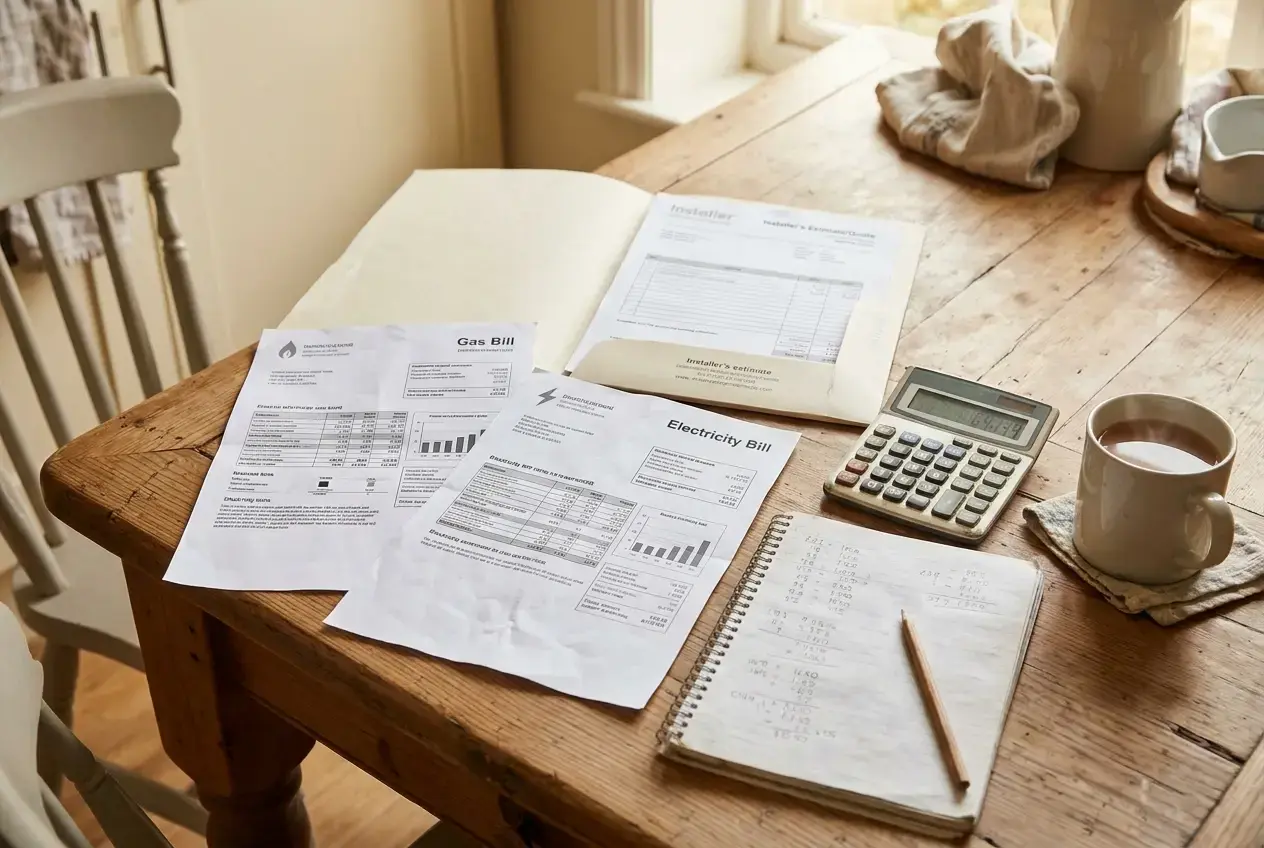
Use this sequence with your own bills and quotes:
- Find your heat demand. Add up twelve months of gas use in kWh from your bills or meter readings. Subtract gas used for cooking if you have a gas hob. Multiply the remainder by your boiler’s seasonal efficiency, using 85 per cent if you have no better figure. The result is the kWh of heat your house needs.
- Compare it with the installer’s design. The heat loss calculation in a heat pump quote gives its own annual heat demand. If it differs a lot from the figure you calculated, ask why before comparing prices.
- Get the SCOP and flow temperature in writing. Divide your heat demand by the SCOP to get the heat pump’s annual electricity use in kWh.
- Price both fuels from your current bills. Use the unit rates on your latest statements. Calculate the ratio, then repeat with a lower electricity rate if you plan to change tariff.
- Add the net install price. For the heat pump, that is the quote minus the grant. For the boiler, use a real quote or the figures in the new boiler cost guide.
- Add servicing and repairs. Use the service prices quoted to you, and the warranty terms for the repairs allowance.
- Test the result. Move the SCOP by 0.5 either way, change the electricity rate, and add or remove the gas standing charge. If the answer flips with small changes, treat it as a close call and decide on other grounds, such as warranty terms or what suits your property.
Your ten-year figures
Then use the same figures to check quotes. A quote should show the heat loss calculation, the radiator changes, the cylinder, the estimated SCOP and the grant deduction as separate lines. If it does not, you cannot fill in your own table. The guide on how to vet a heat pump installer covers what to ask for and what the answers should look like.
Heat pump or gas boiler: questions
Is a heat pump cheaper to run than a gas boiler?
It depends on the heat pump’s SCOP and your electricity-to-gas price ratio. At the October to December 2026 price cap, a heat pump needs a SCOP above about 2.8 to cost less to run than an 85% efficient boiler. A good tariff lowers that figure.
What SCOP should a heat pump achieve?
A well-designed system in a reasonably insulated home commonly achieves 3 to 4. Lower flow temperatures and correctly sized radiators push it up; running the system hot pulls it down.
How long does a heat pump take to pay back?
In an efficient home with a good SCOP and tariff, the running saving can repay the extra install cost within ten to fifteen years. In a draughty home with a low SCOP, it may never pay back on running costs alone.
Should I disconnect the gas if I get a heat pump?
If nothing else in the house uses gas, disconnecting removes the gas standing charge, which is often more than £100 a year. That can tip a close comparison in the heat pump’s favour.
Does the Boiler Upgrade Scheme grant change the answer?
It narrows the upfront gap by £7,500, but in most homes a heat pump still costs more to install than a boiler. The running saving then has to repay the difference.
Ask for a heat pump quote through the heat pump quote page and compare it against your own ten-year figures from this article.