
This page contains affiliate links. If you get a quote through them I may earn a commission, at no extra cost to you. How this site earns money.
When you have decided to go ahead with your installation, you can expect the following steps:
Survey & heat loss calculation: An MCS-certified installer assesses your home’s insulation, radiators, and heat demand to size the system correctly (undersizing or oversizing is the most common cause of disappointing performance).
BUS grant application: If eligible, the installer applies for the £7,500 Boiler Upgrade Scheme grant on your behalf and deducts it from the quote upfront.
System design: You choose the unit (usually a monoblock outdoor unit for most UK homes), decide on any radiator or pipework upgrades needed, and plan the heat pump-compatible hot water cylinder if you don’t already have one. My UK heat pump brands comparison can help you choose the unit.
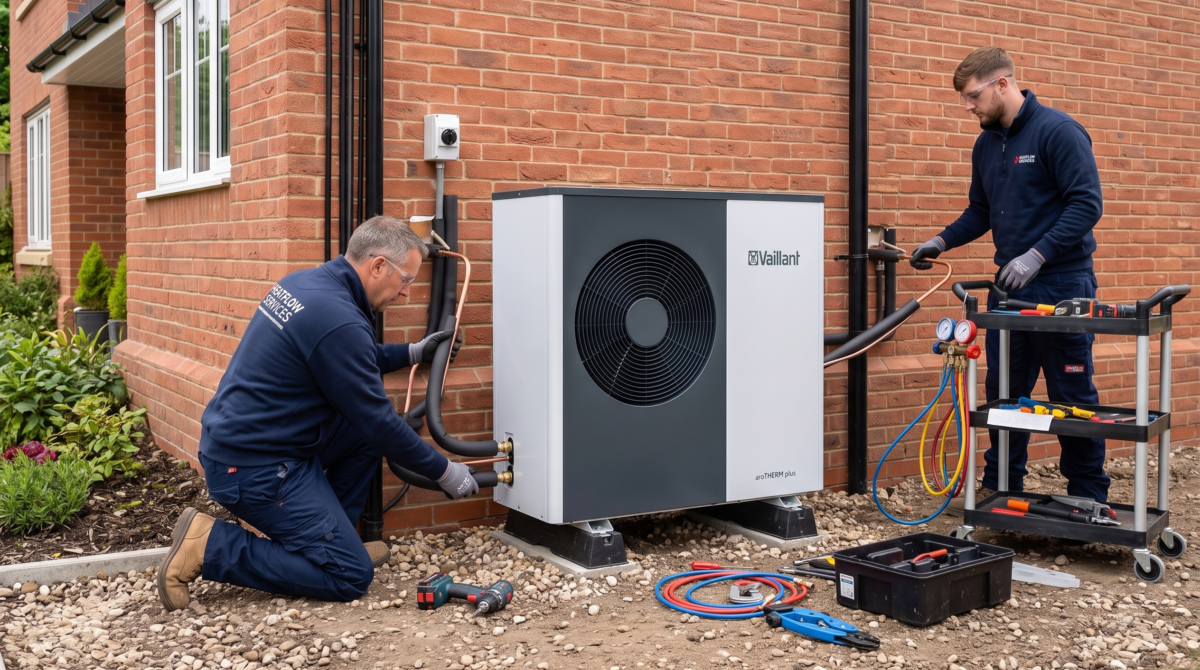
Groundwork & installation: Usually 3–5 days; outdoor unit sited on a concrete base or on a wall bracket, pipework run to an indoor hydraulic unit or buffer tank if required, old boiler removed, and any radiator/pipework upgrades fitted.
Electrical connection: A dedicated circuit is wired in, sometimes requiring a consumer unit upgrade depending on the property’s existing supply. An isolation switch is fitted at the recommended space near the outdoor unit.
Commissioning & handover: The installer sets flow temperatures, balances the system, and talks you through the controls; heat pumps behave differently to a gas boiler (lower flow temps and longer running periods), so this step matters.
MCS certificate & building control notification: Issued for warranty, grant compliance, and any future EPC assessment. All paperwork checked and verified.
Ready for a price?
Get a fixed-price heat pump quote online
iHeat installs Vaillant, Worcester Bosch and Alpha heat pumps across the UK using MCS-certified engineers, and can apply the Boiler Upgrade Scheme grant for you. The online quote takes about a minute.
Get my iHeat quoteInstaller’s tip: get a second quote so you can compare. You can request one through me: I’ll call you first, then arrange a survey with an MCS-certified installer I work with. If you go ahead through this link I may earn a commission, at no extra cost to you.
Below is a presentation of a typical air-source heat pump installation. To flip pages, simply hover over or tap the bottom of the picture and use the arrow and zoom tool that appears.