

If you are searching for the most reliable heat pump brands UK buyers can trust, you will find plenty of lists and very little hard evidence behind them. What you can compare properly is the warranty each manufacturer publishes, and the comparison only works if you read the terms that decide a claim rather than the number on the brochure.
This guide covers those terms, the conditions that can void them, and the questions that tell you whether a manufacturer and installer combination will still look good in year eight.
Why a long warranty headline tells you less than you think
“Up to 10 years” or “up to 12 years” on a leaflet describes the best case on the best product tier, under conditions you may not meet. The words “up to” carry most of the weight. A base warranty might be a fraction of the headline figure, with the longer period unlocked only by registering within a set window, using an accredited installer, or paying for annual servicing.
Even where the full period applies, it usually covers different things for different lengths of time. Parts may be covered for the whole term while labour is covered for one or two years, or not at all. The compressor may have its own period. The cylinder, controls, pumps and valves are often separate products with separate warranties.

A short warranty with generous labour cover can be worth more than a long one that replaces a failed part and leaves you paying an engineer for the day. A long warranty is also worth less if the paperwork to maintain it is easy to get wrong. So the number is where you start reading, not where you stop.
What reliability evidence exists for heat pumps, and where does it run thin
Heat pumps are mature technology. The refrigeration cycle is the same one that runs fridges and air conditioners, and manufacturers have sold units in Europe and Asia for decades. That does not give you a tidy table of UK failure rates by brand, and it is worth being clear about why.
- Installed base. Domestic heat pumps in UK homes are still a small share of heating systems compared with gas boilers, so the pool of long-term UK data is smaller than for boilers.
- Models change. A brand’s reputation is built on older units, but the range you are quoted today may have different refrigerants, controllers and compressors.
- Installation quality muddies the picture. A fault that looks like a product failure may come from poor pipework sizing, a badly set heating curve, a dirty system or incorrect commissioning. Brand-level complaints can therefore reflect installer practice.
- Owner reviews skew. People write reviews when something goes wrong or when they are delighted. Neither tells you a failure rate.
Where evidence does exist, it tends to come from monitoring trials, industry bodies, installer feedback and the manufacturer’s own support record. Treat any ranking that does not explain its method as an opinion. If a site names the most reliable heat pump brands UK buyers should pick without showing how it measured reliability, that is a marketing claim.
What you can verify is how a manufacturer behaves when something fails: what it promises in writing, how it supports engineers, and whether parts are held in the UK. That is where the rest of this article concentrates.
Read the warranty terms side by side
Get each manufacturer’s current warranty document for the specific model on your quote, not the general marketing page. Then put the same questions to each one.

Parts versus labour
Check whether the warranty pays for the part only or for the engineer’s time to fit it too. If labour is included, find out for how long and whether there is a cap. Ask whether call-out charges or travel time are covered and whether the work has to be done by the manufacturer’s own engineers or an approved network.
Compressor cover
The compressor is the most expensive single component in the outdoor unit, so check it by name. Some terms give it a longer period than the rest of the unit, and some limit it to a repair or a replacement at the manufacturer’s discretion. Read for exclusions: damage from low refrigerant caused by an installation fault or from operation outside stated conditions is commonly excluded.
When the clock starts
This is the term that most often shortens real-world cover. The warranty period may begin on:
- the date of purchase from the merchant,
- the date of installation,
- the date of commissioning, or
- the date the warranty is registered.
If your unit sits in a merchant’s store or on site for months before the install, a warranty that runs from purchase loses that time. On a self-build or a landlord’s refurbishment where work is delayed, the gap can be significant. Ask which date applies, and make sure the commissioning and registration dates are recorded.
Replacement terms
Find out whether a replacement part or unit carries on the original period or starts a new one. Most warranties continue the original period, but you should confirm it rather than assume.
Items that sit outside the main warranty
Cylinders, buffer tanks, controls, immersion heaters, pumps and smart thermostats often have separate terms. A heat pump system is only as dependable as its weakest part, so list each component and its cover period on one sheet.
Transfer and use
If you plan to sell, ask whether the warranty passes to the next owner and whether the buyer must notify the manufacturer. Landlords should also check that cover applies to a rented property. Some domestic warranties are written for owner-occupiers, and a tenancy can change the position.
The conditions that can void your cover
A warranty is a contract with conditions, and failing one can invalidate it at the moment you need it. The common ones fall into three groups.
Installer accreditation. Many manufacturers only honour the full warranty if the system was fitted by an installer they have approved or trained, and many also expect the installation to be certified under MCS. Check that your installer meets the manufacturer’s condition, not just a general registration. You should also confirm that the heat pump model and installer are eligible for any grant you are claiming, which the grants guide covers separately.
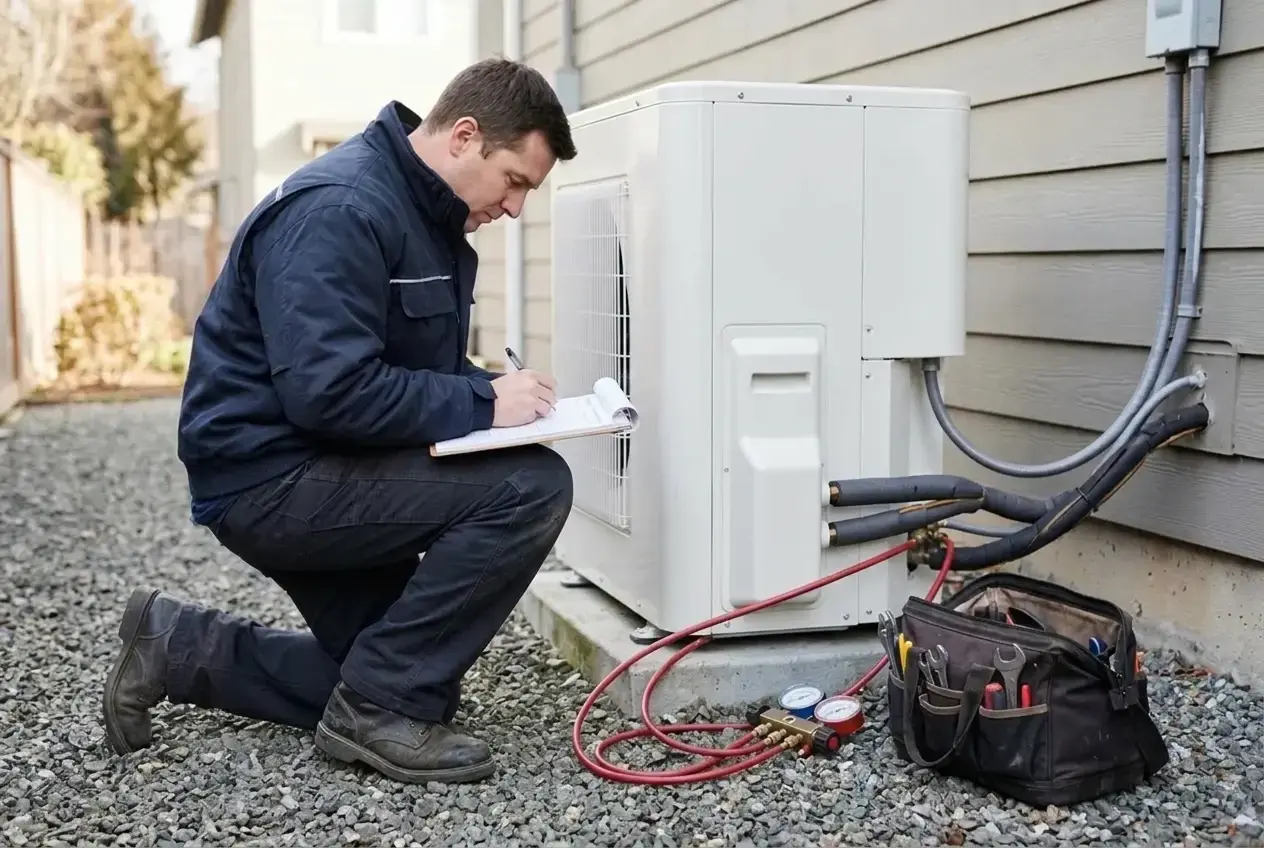
Commissioning. A commissioning record shows the system was set up correctly: flow rates, temperatures, refrigerant checks, controls settings and system cleanliness. Some manufacturers require a completed commissioning sheet, and some require the warranty to be registered within a set number of days. Ask for a copy of both and keep them with your deeds or tenancy file.
Annual servicing. Many extended warranties depend on a yearly service by a competent engineer, with a record each time. Missing a year can end the extended cover or hand the manufacturer a reason to refuse a claim. If you want to know what a visit should involve so you can judge a quote for it, the guide to what is carried out during a heat pump service sets it out.
Other exclusions that turn up in the small print include frost or freezing damage, faults from poor water quality or an uncleaned existing system, damage from power surges, unauthorised modifications, and operating the unit outside its stated limits. None of these is unreasonable on its own, but you should know them before the claim, not after it.
Who picks up the phone: UK support, spare parts and engineer networks
A warranty only has value if a fault gets fixed quickly. In winter, a heat pump that is down for two weeks waiting for a part is a real cost, and for a landlord, it can mean a tenant without heating and a legal duty to respond.
When comparing manufacturers, find out:
- whether there is a UK technical helpline and whether installers can reach it at all hours or only in office hours,
- whether the manufacturer holds spare parts in the UK or ships them from abroad,
- whether it runs its own engineer network or relies on the original installer to attend,
- what response time it publishes, if any, and whether that is a commitment or a target,
- whether remote monitoring or fault diagnosis is available through an app or portal.
Be wary of any claim about parts availability that you cannot check. Installers who service a brand regularly will usually know which manufacturers deliver parts quickly and which leave them waiting. That is first-hand knowledge, and asking for it costs nothing.
If the brand has no engineers of its own, the practical question becomes who in your area is trained to work on it. A good warranty from a manufacturer with no local engineer coverage is difficult to use.
A checklist for comparing the main manufacturers sold in the UK
Manufacturers such as Mitsubishi Electric, Daikin, Vaillant, Worcester Bosch, Samsung, Nibe, Viessmann and Panasonic all sell heat pumps in the UK, and their terms differ and change between product ranges. This article does not list their warranty periods, because those figures are revised, and a copy printed here would be outdated. Each manufacturer publishes current terms on its website or in the installer documentation for each model, and you should ask your installer for the PDF for the exact model quoted.
Copy this table for each brand you are considering and fill it in from the written terms.
| Question | Where to find the answer | Your note |
|---|---|---|
| Base warranty period on the unit | Warranty document for the model | |
| Extended period and what unlocks it | Same document, registration page | |
| Parts covered? For how long? | Warranty document | |
| Labour covered? For how long, with what cap? | Warranty document | |
| Compressor period and exclusions | Warranty document | |
| Start date: purchase, install, commissioning or registration | Terms and conditions | |
| Registration deadline | Terms and conditions | |
| Installer accreditation required | Terms and conditions | |
| Annual service required to keep cover | Terms and conditions | |
| Cylinder, controls and accessories covered separately? | Each product’s documents | |
| Transfers to a new owner? Applies to a rental? | Terms and conditions | |
| UK helpline, parts stock and engineer network | Manufacturer’s support pages, installer |
Tip: print one copy per brand. If you cannot fill a box from a written source, mark it “unknown” rather than guessing.
Once the table is complete, weigh it against what matters in your situation. A landlord with several properties may value fast response and rental cover over a long compressor period. An owner who plans to stay twenty years may care most about parts availability and servicing cost over time. Running costs matter too, and since efficiency varies by model and by how well the system is designed and set up, compare quoted seasonal efficiency figures for each system, and see the winter running guide for the settings side.
What happens to your warranty if your installer stops trading
This is the risk buyers rarely ask about and the one that causes the most trouble. A manufacturer’s product warranty normally belongs to the product and the owner, so it does not automatically end because the installer has closed. The difficulty is the conditions attached to it.
If the warranty needs servicing by an approved installer, you will need another approved engineer to take over, and they may want to inspect the system and see the commissioning record before they agree. If you cannot produce the commissioning sheet, the registration confirmation and the service history, that is where claims get refused.
Workmanship is a separate matter. The manufacturer covers the product, and the installer covers the installation. If the installer disappears, the workmanship guarantee goes with them unless it is backed by an insurance policy or a scheme that stands behind the work. Ask any installer whether their workmanship guarantee is insurance-backed, which body provides it, and whether you receive the policy documents. Also ask which consumer code they are signed up to, since that route gives you a complaints process.

Keep a folder from day one containing the quote, the contract, the commissioning record, the registration confirmation, the MCS certificate, the guarantee documents and every service report. The guide on how to vet a heat pump installer covers the checks to make before you hire.
Questions to put to an installer before you sign a quote
Installers often favour a small number of manufacturers, and the one on your quote may have been chosen for its margin or the installer’s training rather than your circumstances. These questions bring out the answers that matter. For a view of how the larger installers compare, see the heat pump installers comparison.
- Which manufacturer and exact model are you quoting, and why that one for my house?
- Which warranty terms apply to this system? Can I have the written terms for that model before I sign?
- Is the warranty period the base or the extended one, and what do I need to do to qualify for the extended one?
- Does the warranty cover labour as well as parts, and for how long?
- What is the compressor cover, and what are its exclusions?
- From what date does the warranty start, and who registers it?
- Are you accredited by this manufacturer, and does that accreditation meet the warranty’s installer condition?
- Will I receive a commissioning record and a copy of the registration confirmation?
- What does an annual service cost with you, and will you record it in a way the manufacturer accepts?
- Who do I call when there is a fault, you or the manufacturer? What happens in the first week of a winter breakdown?
- Is your workmanship guarantee insurance-backed, and what happens if your company stops trading?
- Does the cover still apply if I let the property or sell it?
Installers who answer clearly and offer to put it in writing are showing you how they will behave after the sale. Vague answers, or a refusal to name the exact terms, are worth weighing against any saving on the quote.
Get quotes you can compare properly
To compare like with like, you need quotes that name the manufacturer and model. You can request a heat pump quote and, when installers respond, ask each one which manufacturer they fit and exactly which warranty terms apply to the quoted system. Put the answers into the table above and the comparison will be much clearer.