
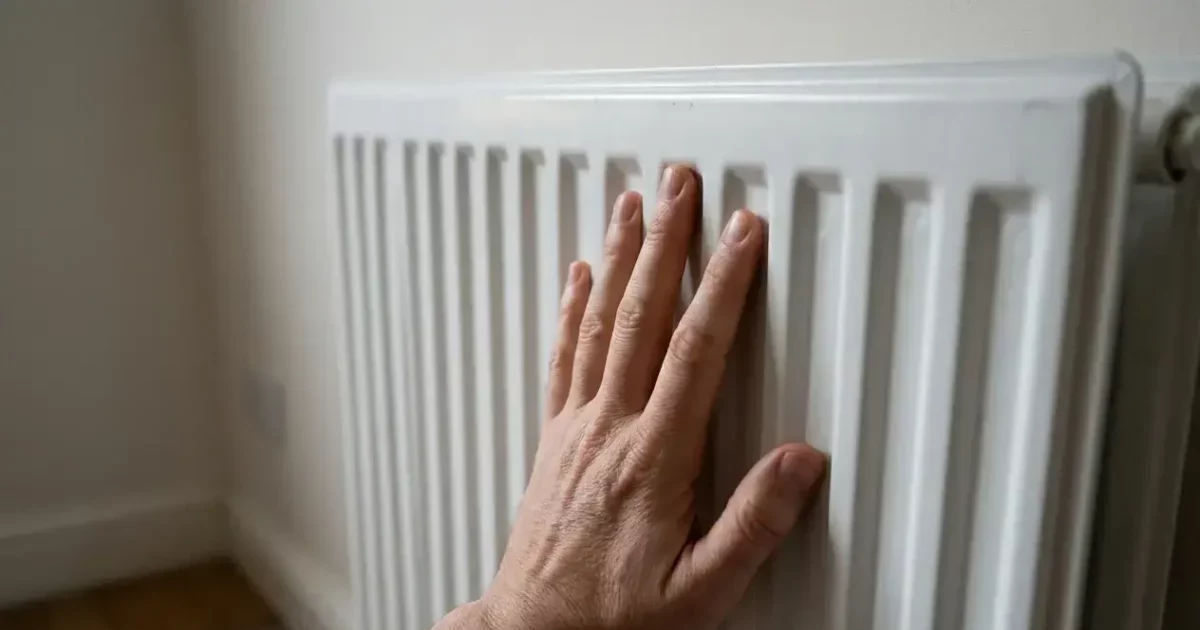
If a radiator feels cold at the top but warm at the bottom, that is air trapped in the system, and it is one of the easiest heating faults to fix yourself. Get the order and the technique right, though, and you will save yourself a soaked carpet and a repeat job next month. This guide might seem obvious to some people, but it can be a big help to others.
Bleeding a radiator in short
- Check it is air. Cold at the top and warm at the bottom means air; bleed it. Cold at the bottom or in patches means sludge; a bleed key will not help.
- Heating off first. Switch off at the programmer and give it 15 to 20 minutes to cool slightly.
- Work in order. Upstairs first, then downstairs; on each floor, start with the radiator furthest from the boiler.
- Go slowly. Open the valve a quarter turn at a time and close it as soon as water trickles out steadily.
- Check the pressure afterwards. Most sealed systems want 1 to 1.5 bar when cold. Header tank systems refill on their own.
The telltale signs you have an airlock
Put your hand flat across the radiator, from top to bottom, while the heating is running. Cold at the top with warm underneath is the classic sign of trapped air, because air rises and collects at the highest point inside the radiator, pushing the hot water down and out of contact with the top panel.
That pattern matters because it is the opposite of what sludge and debris do. If a radiator is cold at the bottom and warm at the top, or cold in patches across the middle, that is not air. That is sludge or corrosion debris sitting in the bottom of the radiator, blocking the water flow, and a bleed key will not touch it. Keep that distinction in mind as you work through the house, because treating a sludge problem as an air problem just wastes your time.
What you need before you start
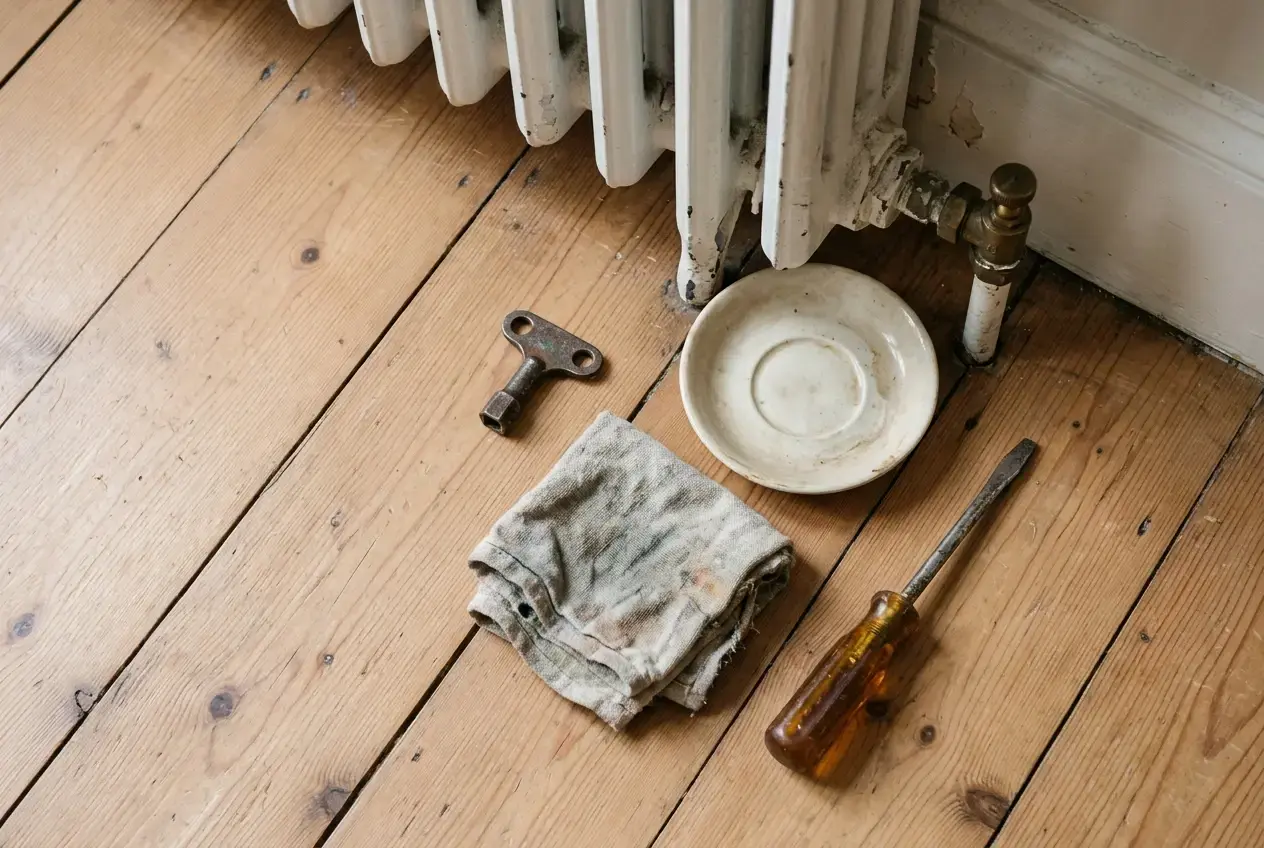
You do not need much, but having it ready stops a five-minute job turning into a trip to the hardware shop with wet socks.
- A radiator bleed key (a square-socket key, sold cheaply at any DIY shop and often bundled free with a new radiator)
- An old cloth or a small towel, plus a container to catch drips, such as a jam jar or shallow dish
- A flat-blade screwdriver, in case your system uses a slotted bleed valve rather than a square key
- Something to protect the floor if the radiator sits on carpet
Turn the heating off before you start, and give the system fifteen to twenty minutes to cool slightly. You want it warm enough to feel where the cold spots are, but not so hot that you are working with scalding water under pressure. Bleeding a radiator while the pump is running can also pull more air into the system than it releases, so switch the heating off at the programmer first.
The correct order: why upstairs first and furthest last
In a multi-radiator system, the order you work in really matters. Air naturally rises, so it tends to collect in radiators upstairs and in the ones furthest from the boiler, where flow is weakest. Start upstairs and work downstairs, and within each floor, start with the radiator furthest from the boiler and finish with the one closest to it.
This order follows the direction air tends to migrate through the pipework, and it means you are not forcing air that has already escaped one radiator back into a radiator you have already cleared. If you bleed in a random order, it is common to find yourself going back round the house a second time because air has resettled somewhere you thought was done.
You will see some guides recommend starting downstairs instead. Whichever floor you start on, finish with a quick second check of the upstairs radiators once the heating has run for half an hour, as that is where any air left behind will gather.
Step by step: bleeding a single radiator without spraying water everywhere
- Locate the bleed valve, usually a small square or slotted fitting at the top corner of the radiator, opposite the thermostatic valve.
- Hold your cloth underneath the valve and have your container ready.
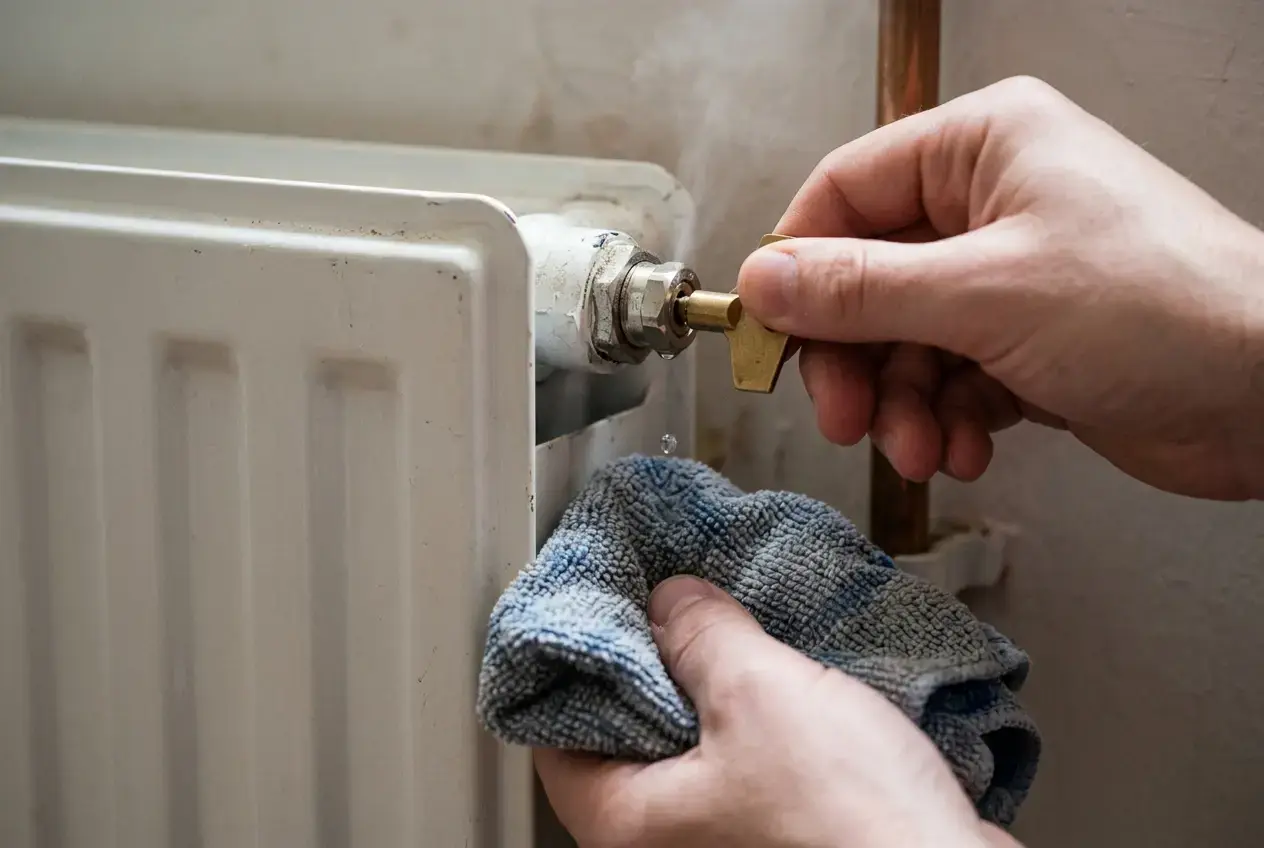
- Insert the bleed key (or screwdriver) and turn it slowly, anticlockwise, a quarter turn at a time. You should hear a hiss as air escapes.
- Keep the cloth pressed close to the valve. When the hiss changes to a spit or dribble, that is your warning that water is coming next.
- As soon as a steady trickle of water appears with no more hissing, close the valve firmly but gently. Do not overtighten, as these valves are brass and strip easily.
- Wipe up any drips immediately and move to the next radiator in your running order.
The whole thing per radiator takes two or three minutes once you have done a couple. The main skill is turning the key slowly enough that you catch the moment air stops and water starts, rather than opening it fully and getting a faceful.
Topping up your system pressure afterwards
Every time you release air from the system, you let a small amount of water out with it, and that drops your boiler’s system pressure. This step gets skipped more than any other, and it is the reason people bleed their radiators, feel satisfied, and then find the boiler locking out or losing heat a day later.

Check the pressure gauge on your boiler once you have finished bleeding. Most systems want to sit between 1 and 1.5 bar when cold. If it has dropped below that, use the filling loop (a braided hose, usually under or beside the boiler) to top it back up, following the manufacturer’s instructions for your model, and then bleed the radiators again briefly if any fresh air has worked its way in during refilling.
Once the pressure is back in range, close both filling loop valves fully, and disconnect the hose if your loop is the removable type. If you overshoot, let a little water out through a radiator bleed valve until the gauge drops back down.
Not every home has a gauge to check. This is how it works on the three systems you are most likely to have:
| Your system | How to tell | After bleeding |
|---|---|---|
| Combi or system boiler (sealed) | Pressure gauge on or under the boiler; no tank in the loft | Check the gauge and top up to 1 to 1.5 bar (cold) using the filling loop |
| Regular boiler with a header tank (open-vent) | Small feed and expansion tank in the loft; usually no pressure gauge | Nothing to top up: the tank refills the system automatically |
| Heat pump (sealed) | Gauge on the indoor unit, hydraulic module or pipework near the cylinder | Check against the pressure your installer set; ask before adding water if the system contains antifreeze |
Got a heat pump?
The radiators bleed in the same way, but the system is sealed and the pressure gauge is usually on the indoor unit, hydraulic module or near the cylinder rather than on a boiler. Some systems, particularly monoblocks, run on a mix of water and glycol antifreeze to protect the outdoor pipework from frost. Topping those up with plain tap water dilutes the antifreeze, so check with your installer before you add any water.
For getting the rest of the system running efficiently, see our guide to heat pump settings for winter.
When bleeding doesn’t fix it
If you have bled a radiator correctly and it is still cold in patches, particularly cold at the bottom or in the middle, bleeding was never going to solve it. That pattern points to sludge and corrosion debris sitting inside the radiator, restricting flow, and the fix for that is a power flush rather than a bleed key.
| What you notice | Likely cause | Will bleeding fix it? |
|---|---|---|
| Cold at the top, warm at the bottom | Trapped air | Yes |
| Gurgling or trickling noises | Air moving through the system | Usually |
| Cold at the bottom or in patches | Sludge or corrosion debris | No: it needs a flush |
| Evenly lukewarm all over | Balancing, or a sticking TRV pin | No: the valves need adjusting |
| Whole radiator stone cold | Valve closed or TRV pin stuck | No: check both valves first |
| Pressure keeps dropping | A leak somewhere in the system | No: get it looked at |
| Same radiators need bleeding every few weeks | Leak, faulty automatic air vent or corrosion gas | No: get it looked at |
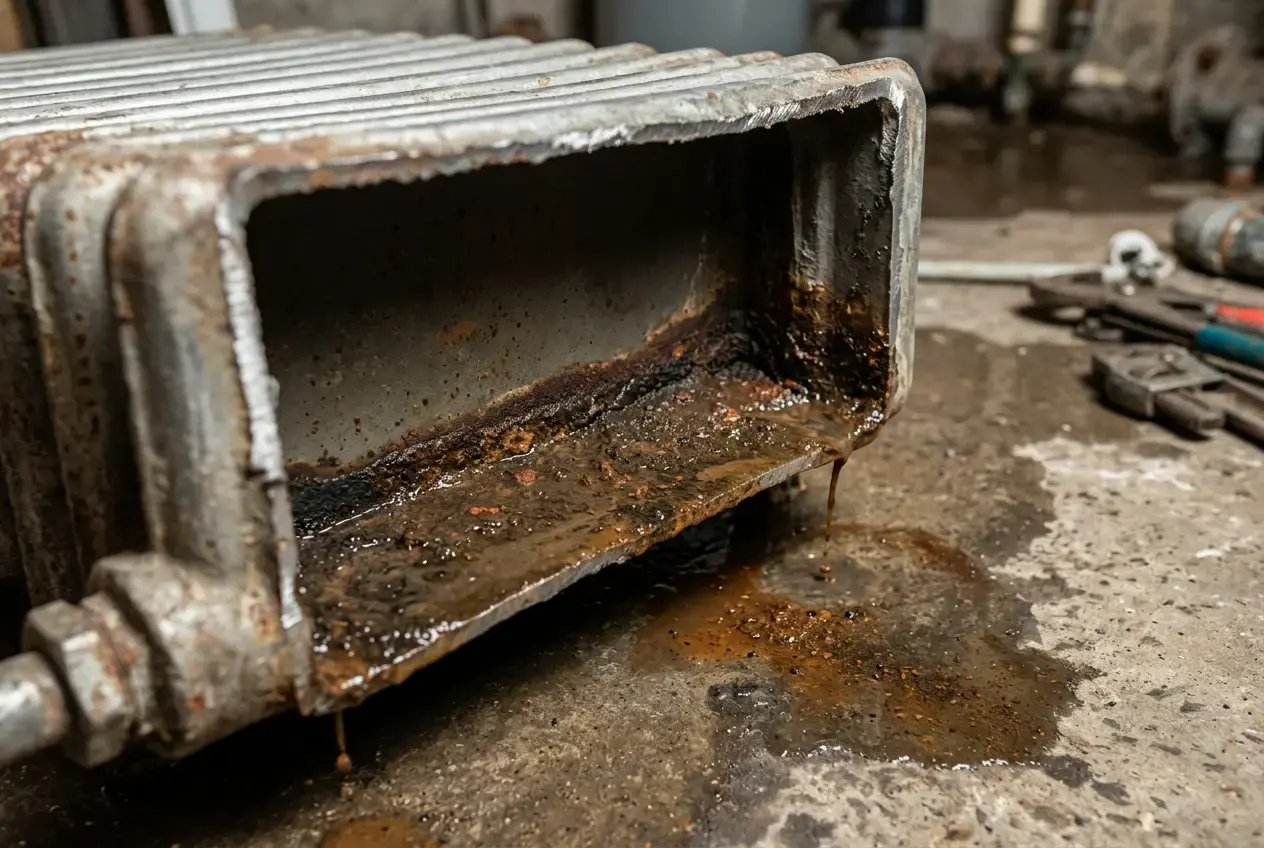
A radiator that is uniformly lukewarm across its whole surface, rather than patchy, often points to a balancing issue instead, where the flow through that radiator relative to others in the system needs adjusting at the valve. And a radiator that is old, rusting from the inside, or simply undersized for the room it is heating may be due for replacement rather than any amount of maintenance. Our guide to radiator types, materials and sizing covers how to work out whether a radiator is still fit for the room it is in.
How often should you need to do this?
An occasional bleed, once or twice a year, particularly after the heating has been off over summer, is completely normal. Air gets introduced into the system through small amounts of dissolved oxygen in the water and through minor losses during servicing, and a quick bleed at the start of each heating season deals with it.
What is not normal is needing to bleed the same radiators every few weeks or every month. Persistent air is usually a sign of a slow leak somewhere in the system, a faulty automatic air vent, or sludge build-up producing hydrogen gas as corrosion reacts with the water, which then needs releasing as gas rather than true air. None of those get better with a bleed key, and if the system is getting on in years, our guide to the signs your heating system needs upgrading will help you decide what to do next.
Radiator bleeding questions
Can I bleed a radiator with the heating on?
It is better not to. With the pump running, opening the valve can pull more air into the system than it lets out, and the water will be hot. Switch the heating off at the programmer and let it cool slightly first.
How much water should come out?
Very little. Close the valve as soon as water runs out in a steady trickle with no more hissing. A few drips into the cloth or dish is normal; if you are filling a jar, the valve is open too far or for too long.
What pressure should my boiler be at after bleeding?
Most sealed systems want 1 to 1.5 bar when cold, but check your boiler manual for your model. If you have a header tank in the loft and no gauge, there is nothing to top up.
Why is my radiator still cold after bleeding it?
If it is cold at the bottom or in patches, the cause is usually sludge rather than air. If it is evenly lukewarm, the system may need balancing or the TRV pin may be sticking. If the whole radiator is cold, check that both valves are open.
What if I have lost my bleed key?
Replacement keys cost very little at any DIY shop or builders’ merchant, and some valves take a flat-blade screwdriver instead. Avoid using pliers, which round off the square fitting and make the valve much harder to open next time.
If you’re bleeding the same radiators every few months, that’s usually a sign of a bigger issue worth having looked at. Get in touch for a professional opinion before it gets worse.