

Thermostatic Radiator Valves, or TRVs, are a simple upgrade that can truly change how your home heating performs. They attach directly to your radiators and let you control the heat in each room, making it easy to stay comfortable while cutting back on wasted energy.
This guide will look at all the aspects of them and why they may or may not be a good option for your home.
TRVs in short
- What they do: each TRV holds its own room at the setting you choose, so you stop heating rooms you are not using.
- Savings: research for the heating controls industry found TRVs cut a typical gas boiler’s energy use by around 18% over a heating season.
- Cost: standard TRVs are cheap; smart ones cost more but add schedules and app control.
- Leave one radiator without a TRV: the one in the room with your main thermostat.
- Heat pumps and one-pipe systems need care; check before you fit them.
How They Work
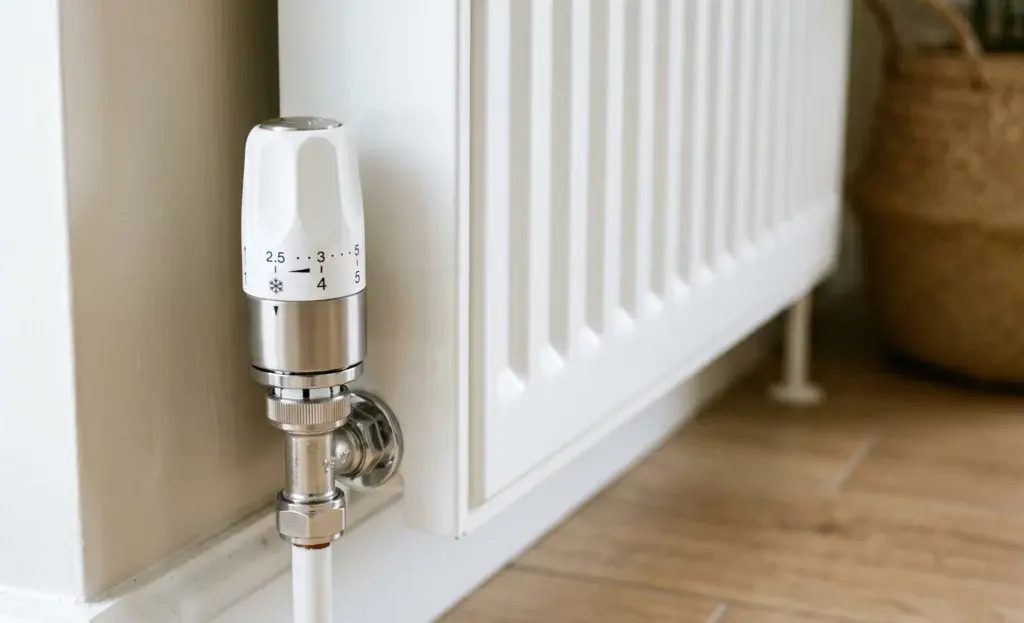
A TRV replaces the standard valve on a radiator. Inside each one is a sensor (usually liquid or wax) that checks the air temperature of the room it’s in. Once the air warms above your chosen level, the TRV slowly closes, limiting the flow of hot water through that radiator.
If the room cools down, it opens up again, letting more heat in. This design lets every room reach a different temperature; no longer do all spaces have to match whatever the main thermostat is set to.
Advantages are:
- Room by Room Comfort: Want your bedroom cooler for better sleep while keeping the living room warm? Or maybe you’d rather not heat the guest room at all. TRVs give you that flexibility.
- Quiet Performance: Once set, they make their adjustments silently and smoothly, going almost unnoticed as they handle your comfort.
- Automatic Adjustment: Sunlight warming up a room? The TRV senses the extra heat and dials back the radiator, saving energy without you having to lift a finger.
Why TRVs Can Be Worth Installing
Most people who get TRVs want to save money on heating bills, and the results can be significant. Research at the University of Salford, published by the heating controls body BEAMA, found that fitting TRVs cuts a typical gas boiler’s energy use by around 18% over a heating season. The saving comes from heating spaces only when you need them, rather than heating the whole house. The Energy Saving Trust has practical advice on using them alongside your other controls.
- Lower Heating Costs: Avoid wasting heat in empty rooms and spend less on energy. The savings really stand out in bigger homes or houses with little-used areas.
- Quick Return: Standard TRVs are inexpensive, and the money saved on bills often covers the upgrade within one or two winters.
- Personal Comfort for Everyone: One person likes a toasty home office; another prefers a chilly bedroom; TRVs let everyone pick their perfect temperature without thermostat squabbles.
- Reduced Carbon Footprint: Using less heat not only saves cash but also means your home uses less fuel, lowering your overall environmental impact.
Limitations: Might Not Be For You
TRVs work best in homes where you want different rooms at different temperatures or where heating runs frequently. But if your house already has advanced zone controls or simply maintains one set temperature throughout, the benefits from them may not be so large.
Other practical points:
- Main Thermostat Still Counts: TRVs don’t take the place of your home’s main thermostat. The boiler still follows this primary controller, so be sure the main thermostat sits in a room you usually keep warm. Don’t put a TRV on that radiator, since it can confuse the system.
- Not Suitable for One-Pipe Systems: While most homes have a two-pipe radiator system with a separate flow and return, some older houses use a single pipe. In that case, fitting TRVs could block the whole circuit. If you’re not sure which system you have, it’s best to ask a heating professional before fitting them.
- Use with care on heat pumps. A heat pump needs a steady minimum flow of water around the system. Many installers leave TRVs fully open in the main rooms and let weather compensation control the temperature, using TRVs only to trim bedrooms or rooms that overheat. Where many TRVs could close at once, the system needs a route for that minimum flow, such as a buffer tank or low-loss header; our guide to buffer tanks for heat pumps explains how that works, and our guide to heat pump settings for winter covers how TRVs fit in.
This is how TRVs suit the most common setups:
| Your system | Are TRVs a good fit? | What to know |
|---|---|---|
| Gas or oil boiler, two-pipe radiators | Yes | The usual setup. Fit TRVs everywhere except the room with the main thermostat |
| One-pipe radiator system | Only with the right valves | Standard TRVs can starve radiators further along; ask a heating engineer |
| Heat pump | With care | Leave TRVs fully open in the main rooms and let weather compensation do the work; use them to trim bedrooms or rooms that overheat, as long as the system keeps its minimum flow |
| Already have zoned smart controls | Smaller gain | You already have room-by-room control; smart TRVs only add finer detail |
Standard vs Smart TRVs: What’s the Difference?
Here’s how they compare:
| Standard TRV | Smart TRV | |
|---|---|---|
| How you set it | Turn the head to a number, usually 1 to 5 | App, schedule, voice or the dial on the valve |
| Schedules | No | Yes, room by room |
| Power | None | Batteries, usually changed once or twice a year |
| Needs a hub or system | No | Usually the same brand’s hub or thermostat |
| Cost | Low | Several times the price of a standard TRV |
| Best for | Set-and-forget homes | Changing routines, home offices, rooms used at set times |
Paired: For anyone with a smart thermostat, pairing it with smart TRVs brings full zoned control without extensive plumbing changes. It’s an easy way to get a “smart home” feel to your heating system, often with less mess or fuss.
Pick the brand that matches your thermostat or hub. Smart TRVs from one brand rarely work with another brand’s system.
Our picks on Amazon
One reliable standard valve and the three most common smart systems in UK homes:
Drayton TRV4
- A long-standing UK favourite with installers
- Sold as a full valve with lockshield, or as a head only
- No batteries, no app
The simple, reliable choice for most homes. Check whether you need straight or angled valves to match your pipework.
See it on Amazontado° Smart Radiator Thermostat X
- Fits most existing valves with the included adapters
- Room-by-room schedules and open window detection
- Works with Alexa, Google and Apple Home
The newest tado range, which needs the tado X bridge. Older tado V3+ valves use a different system, so do not mix the two.
See it on AmazonDrayton Wiser Radiator Thermostat
- Pairs with a Wiser smart thermostat and hub
- Room schedules in the Wiser app
- Often sold in multipacks
A good-value smart system from the makers of the TRV4. Buy the hub or thermostat kit first if you do not already have Wiser.
See it on AmazonHive Radiator Valve
- Adds room control to an existing Hive thermostat
- Schedules and boost from the Hive app
- Works with Alexa and Google
The obvious choice if you already have Hive heating. You will need the Hive hub, which comes with a Hive thermostat.
See it on AmazonThese buttons open the current range on Amazon, so you can pick the right size, pack or kit for your system. Prices change often, so check the current price there. These are affiliate links: if you buy, I may earn a small commission at no extra cost to you.
What to Consider Before Upgrading
Upgrading to TRVs is usually quick. A qualified plumber can swap old radiator valves for TRVs, fitting them on each radiator except for the main thermostat’s location. In England, Building Regulations expect TRVs on all radiators except that one when a boiler or heating system is replaced, so a boiler swap is a natural time to do it.
It’s also a smart move to have your heating system checked and serviced at the same time, since installing new controls sometimes reveals small issues that need attention.
- Decide which rooms genuinely need individual heat control. Often you only need to cover bedrooms, living areas, or work spaces where you want focused comfort.
- Choose smart TRVs if you like technology, want to optimise for changing routines, or travel frequently.
- Classic TRVs work great for most families who prefer a “set it and forget it” approach.
- If you rent, get permission from your landlord before any changes to the heating system.
Tips for Getting the Most from Your TRVs
To really make the most of TRVs, adjust them at the start of each heating season. Keep settings low (1 or 2) in rooms that aren’t used often, while the main living spaces get higher settings for comfort.
If you’re heading out on holiday, turn them all the way down to save even more. For poorly heated or overly warm rooms, tweak them first instead of altering the main thermostat. Small adjustments go a long way toward better comfort and lower bills.
TRV questions
What number should I set my TRVs to?
Most TRVs run from 1 to 5, with 3 giving roughly 20°C. Try 3 in living rooms, 2 in bedrooms and 1 or the frost setting in rooms you rarely use, then adjust by one step at a time.
Should every radiator have a TRV?
Every radiator except the one in the room with your main thermostat. If that radiator had a TRV, it could shut off before the thermostat is satisfied and leave the boiler running.
Can I fit TRVs myself?
Swapping a TRV head is easy. Replacing the whole valve means draining at least part of the system, so it is a job for a competent DIYer or a plumber.
Do I need TRVs when I replace my boiler?
In England, Building Regulations expect TRVs on all radiators except the one in the room with the main thermostat when a boiler or heating system is replaced. Working TRVs already fitted can stay.
Are smart TRVs worth it?
They pay off most where rooms are used at set times, such as a home office or children’s bedrooms. In a home where every room is used all day, standard TRVs give most of the benefit for much less.