
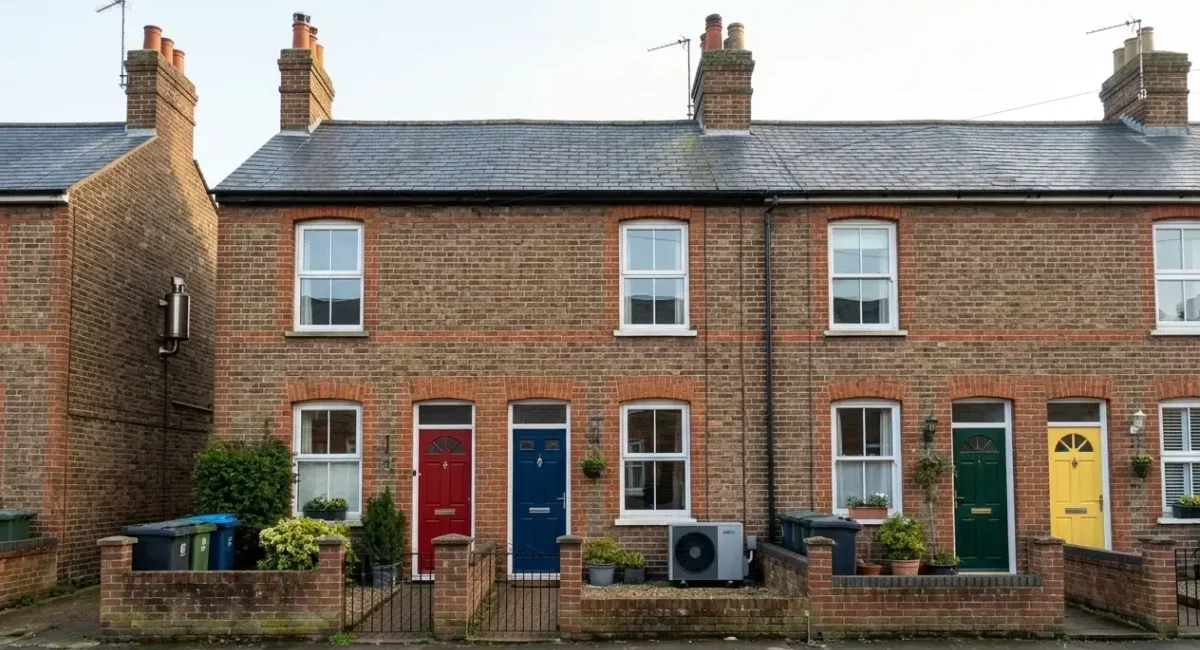
Heating grants in the UK are not one pot of money with one set of rules. What you can claim depends on which nation you live in, whether you own or rent out the property, your household income, and whether the building is new. Two neighbours with identical boilers can be told different things because one of them lives across a border or is on a qualifying benefit.
This guide sorts the main schemes by situation, so you can see which one to check first and why applications get turned down. The amounts quoted are correct at October 2026. They are set by governments and change, so confirm any figure on the scheme’s own website before it goes into a decision.
Heating grants in short
- England and Wales: the Boiler Upgrade Scheme takes £7,500 off an air source or ground source heat pump. Your installer claims it.
- Scotland: Home Energy Scotland offers up to £7,500 grant plus an optional interest-free loan for a heat pump.
- Northern Ireland: no Boiler Upgrade Scheme; lower-income households can check the Affordable Warmth Scheme.
- Lower incomes: ECO4 is closing, and the Warm Homes Plan takes over from 2027. Check your council for what is open now.
- Never pay a deposit to “secure” a grant. Nothing is certain until the scheme accepts the application.
Start with where you live, because the schemes differ by country
Housing and energy policy are partly devolved, so the schemes in England, Scotland, Wales and Northern Ireland are run by different bodies with different eligibility rules. The quickest way to avoid wasted effort is to match your situation to the first scheme worth checking:
- Homeowner in England or Wales: the Boiler Upgrade Scheme, then any income-based help if your household qualifies.
- Scotland: Home Energy Scotland, which administers the Scottish grant and loan options. The Boiler Upgrade Scheme does not apply there.
- Northern Ireland: the Affordable Warmth Scheme and other help for lower-income households, run through the Housing Executive and listed on nidirect.gov.uk. The Boiler Upgrade Scheme does not apply there either.
- Low-income households anywhere in Great Britain: the income-based schemes first, because they can cover far more of the cost than a flat grant.
- Landlord: the rules for your tenure and your tenant’s circumstances before you assume a homeowner scheme applies to you.
- New-build buyer or self-builder: new builds are excluded, but a qualifying self-build can claim the Boiler Upgrade Scheme.
One rule applies across all of them. No installer should take a deposit against a grant you have not confirmed in writing, and no grant should be treated as certain until the scheme administrator has accepted the application.
| Where you live | Main scheme for a heat pump | What it offers | Who runs it |
|---|---|---|---|
| England | Boiler Upgrade Scheme | £7,500 off an air source or ground source heat pump; £2,500 for air-to-air | Ofgem, claimed by your MCS installer |
| Wales | Boiler Upgrade Scheme; Warm Homes Nest for lower incomes | As England; Nest offers free improvements to eligible households | Ofgem; Welsh Government |
| Scotland | Home Energy Scotland Grant and Loan | Up to £7,500 grant, plus an optional interest-free loan of up to £7,500; £1,500 extra in some rural areas | Home Energy Scotland |
| Northern Ireland | No heat pump grant for most households | Affordable Warmth Scheme for household incomes under £23,000 | Housing Executive |
Correct at October 2026. Amounts and rules change, so confirm on the scheme’s own website before any figure goes into a decision. Off-gas homes in England and Wales replacing oil or LPG can get £9,000 under the Boiler Upgrade Scheme for applications made by 31 March 2027.
Boiler Upgrade Scheme: who qualifies and how the installer claims it for you
The Boiler Upgrade Scheme (BUS) is the main government grant toward replacing a fossil fuel heating system with a low-carbon one, and it covers England and Wales. It pays £7,500 towards an air source or ground source heat pump in place of a gas, oil or LPG boiler, or in place of direct electric heating, and £2,500 towards an air-to-air heat pump. Off-gas homes replacing oil or LPG can get £9,000 for applications made by 31 March 2027. It does not pay towards a new gas boiler, or towards replacing an existing heat pump. Our guide to the Boiler Upgrade Scheme covers it in more detail.
You do not apply for it yourself. Your installer applies on your behalf, and the grant is taken off the invoice, so you pay the quoted price less the grant instead of paying in full and waiting for money back. That is why a quote should show the grant as a separate deduction line. If an installer expects you to pay the full price and chase the grant yourself, ask why.
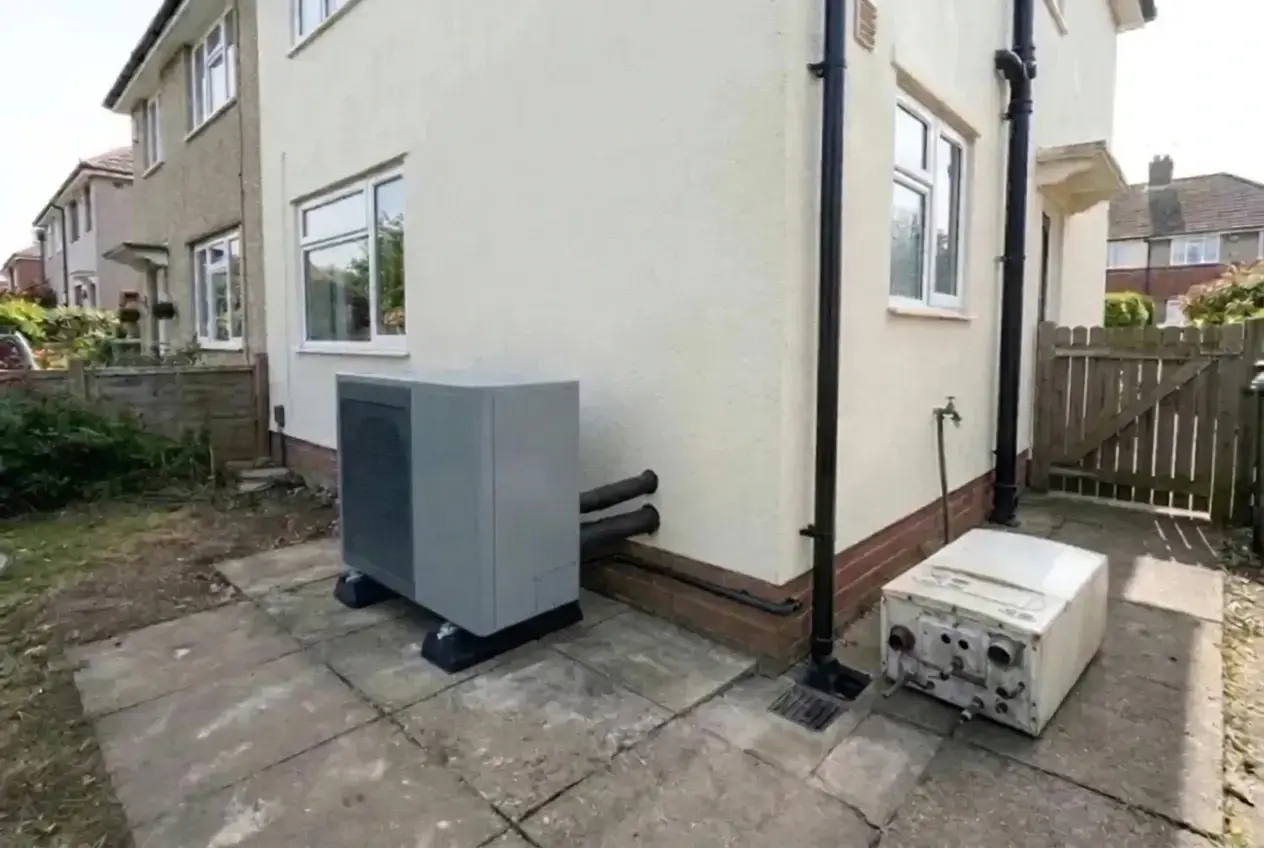
The installer and the heat pump both have to be certified under the Microgeneration Certification Scheme (MCS). An installer without MCS certification cannot make the claim, and a quote from one cannot include the grant. The property does not need a valid Energy Performance Certificate (EPC) to claim the grant, but it is a good idea to get one. If yours has expired, get a new one before the survey.
After you have confirmed your consent, your installer has three months from the moment the application is approved to complete the installation in line with industry standards and scheme requirements (six months for ground source heat pumps). When the new system has been installed and fully checked, your installer can claim the grant amount from Ofgem.
If the installer does not complete the work within the time limits set out above, they will have to submit a new application for the installation, and you will need to confirm again that you consent to this.
For how to judge whether an installer is any good beyond their ability to claim the grant, the guide on choosing the right heat pump installer goes through the checks worth making.
Income-based help: ECO4, local authority schemes and who they are aimed at
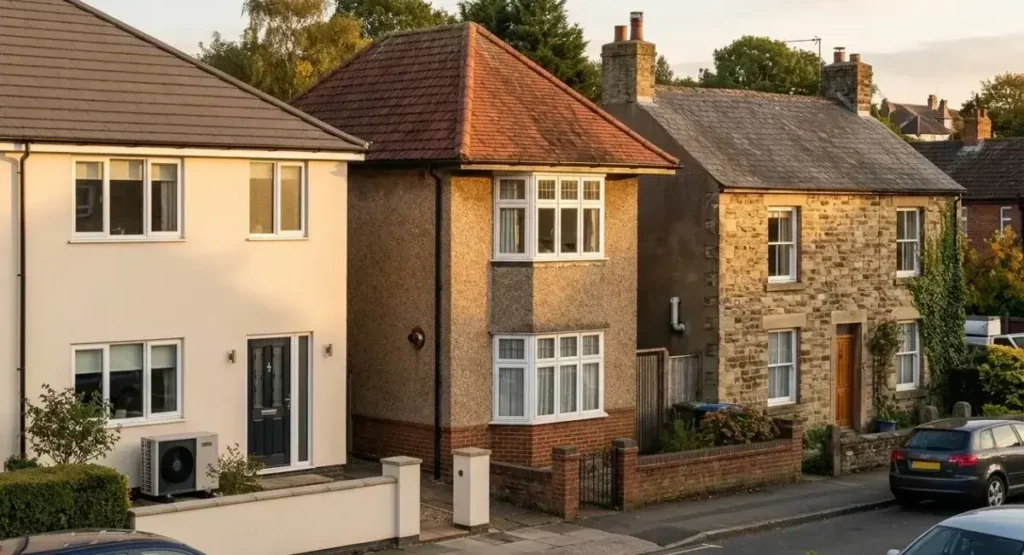
The Energy Company Obligation, known as ECO4, is a scheme that places duties on energy suppliers to fund heating and insulation improvements in lower-income homes. Local authorities also run their own programmes, such as the Warm Homes: Local Grant in England, and these have been renamed and restructured more than once. ECO4 was extended to let installers finish work already under way and closes at the end of December 2026. From 2027, the government’s Warm Homes Plan takes over as the main help for lower-income households, funded by grants rather than through energy suppliers, with eligibility rules still being finalised. Check gov.uk and your council’s website for what is open now rather than relying on an older article, including this one.
These schemes are aimed at households that meet particular criteria, usually a qualifying benefit or a low household income, combined with a home that has a poor EPC rating. The help can include insulation, a heating system replacement, or a heat pump. You do not choose the measures freely. A surveyor assesses the home and the scheme funds what the assessment supports.
Applications are usually refused for a short list of reasons:
- The household does not meet the income or benefit criteria, or cannot document it.
- The home’s EPC band is too high for the scheme. A better-rated home can fail the test even when the household qualifies.
- The scheme has run out of funding or is closed in your area.
- You rent, and the landlord has not given consent.
- The home has already had work funded under a previous scheme.
Approach these schemes through your local authority or the official gov.uk route. Unsolicited calls and doorstep offers promising free heating are a recurring problem, and legitimate schemes will not need you to pay anything upfront to find out whether you qualify.
Scotland, Wales and Northern Ireland: the devolved schemes and loans worth checking
Scotland. Home Energy Scotland is the starting point. Its Grant and Loan scheme offers up to £7,500 towards a heat pump, plus an optional interest-free loan of up to £7,500, with an extra £1,500 grant in some rural and island areas. Do not start work until you have a written offer. It separately points lower-income households to Warmer Homes Scotland. Check the current terms directly, because the amounts have been revised before. The Boiler Upgrade Scheme does not cover Scotland, so a Scottish installer quoting it should be questioned.
Wales. The Boiler Upgrade Scheme applies in Wales, so a homeowner there should check it first, as in England. The Welsh Government’s Warm Homes Nest scheme offers free home energy improvements to eligible lower-income households, and it is separate from the BUS. A household can look at both, though the funding for one piece of work generally cannot be claimed twice.
Northern Ireland. Northern Ireland has no equivalent of the Boiler Upgrade Scheme. The Affordable Warmth Scheme, run by the Housing Executive for the Department for Communities, targets homeowners and private tenants with a gross household income under £23,000, and nidirect.gov.uk is the place to read the current rules. The Northern Ireland Sustainable Energy Programme offers smaller measures, such as boiler upgrades and heating controls, to households with incomes under £38,000. For a household that does not qualify, the realistic comparison is the installed cost of a heat pump against the running cost savings, without a grant in the calculation.
In all three nations, interest-free or low-interest loans can matter as much as grants. A loan does not reduce the price, but it can make a heat pump affordable at the point of purchase, and the terms are worth reading as carefully as a grant’s.
Landlords: what is open to you and what is not
Landlords face the rental EPC C requirement, with the October 2030 deadline covered in more detail in our guide to EPC rules for landlords. Whether a given grant is open to a landlord depends on the scheme, the property and the tenant.
The points that decide eligibility are broadly these:
- Some grants are open to property owners, including those who rent out the home, but the rules on tenure and on the property’s circumstances differ between schemes. The piece on whether the Boiler Upgrade Scheme applies to rental properties sets out that question in full.
- Income-based schemes often depend on the tenant’s household circumstances, and some ask the landlord to contribute toward the cost. Confirm this before you tell a tenant that work is free.
- Tenant consent and access are needed for surveys and installation, and a refusal can end an application.
A landlord’s first job is to find out what the EPC says is holding the rating down. Often insulation or controls give more EPC points per pound than a new heating system does, and the comparison of heat pump versus insulation for EPC C is a good place to start before any grant is part of the plan.
New builds and self-builds: why grants rarely apply and what to look at instead
New-build homes are generally excluded from the Boiler Upgrade Scheme. The reasoning is that a new home is expected to meet current building regulations without public money, and the Future Homes Standard, which applies from 24 March 2027, will move new homes further toward low-carbon heating by default. A buyer of a new-build home with a heat pump is therefore usually buying a system that is already part of the price.
Self-builds are the exception. A self-build can claim the £7,500 Boiler Upgrade Scheme grant if it was built mainly with the owner’s own labour or money (a personal mortgage counts), has never been owned by a company, and is not part of a wider development sold with set plans. The installer applies and Ofgem confirms eligibility, so keep evidence of how the build was funded.
Other money-saving options for self-builders include:
- The VAT reclaim for self-builders: HMRC runs a scheme that lets people building their own home claim back VAT on eligible materials. Check HMRC’s current rules on what counts.
- Reducing heat demand first: better fabric and airtightness mean a smaller, cheaper heat pump. MVHR belongs in that conversation, and the guide to MVHR with a heat pump covers where the two work together and where they conflict.
- Choosing the system on site conditions: the decision between air source and ground source depends on land, budget and the building, not on the grant, which is the same for both. Our guide to air source or ground source for a new build covers the choice.
For the regulatory side, the guide on self-build heating before the Future Homes Standard starts covers what changes in March 2027.
Why applications fail: the eligibility traps and installer claims to question
Most refused or withdrawn applications come down to a handful of causes. Check each before you spend time on a survey.

| Eligibility trap | Why it fails |
|---|---|
| The property is a new build | Most new builds are excluded; only qualifying self-builds can claim the Boiler Upgrade Scheme |
| The installer is not MCS certified | Only an MCS-certified installer can claim the grant |
| The home already has a heat pump, or had public funding for the same work | The Boiler Upgrade Scheme does not fund replacing an existing heat pump, or double funding |
| The household does not meet the income or benefit test | Income-based schemes are means-tested and need evidence |
| The applicant is not the owner, or has not got the owner’s consent | The owner must consent and own the new system |
| The voucher expired before the installation was finished | Vouchers last three months (six for ground source) |
| What the installer says | What to know |
|---|---|
| “The grant is guaranteed.” | No grant is guaranteed until the administrator accepts the application. |
| “It’s free.” | Income-based schemes can cover the full cost for some households, but nobody can know until the eligibility check is done. |
| “The deadline is today.” | Genuine scheme deadlines are published on gov.uk, not announced by a salesperson on the day. |
| “Pay a deposit to secure the grant.” | The grant is secured by an accepted application, not by your money. |
| A quote with no grant deduction, or a figure that does not match gov.uk | Ask for the grant as a separate line, at the published amount. |
| They contacted you first, by phone or at the door | Approach schemes through your council or gov.uk instead. |
If a quote makes a claim you cannot verify on gov.uk or the scheme’s own website, treat it as unconfirmed until you can.
What may change by spring 2027 and how to avoid committing too early
Several things are scheduled or expected to move around the spring of 2027, and they pull in different directions.
The zero rate of VAT on the installation of energy-saving materials, including heat pumps, is set to run until 31 March 2027 under current legislation. Confirm on gov.uk whether it has been extended, because the cost of an installation completed after that date could differ. The £9,000 Boiler Upgrade Scheme rate for off-gas homes replacing oil or LPG also applies only to applications made by 31 March 2027, and ECO4 closes at the end of December 2026.
The Future Homes Standard applies from 24 March 2027 and changes what new homes must include. Anyone buying or building a new home should ask what the specification will be for a plot that completes after that date. The Future Homes Standard explained gives the background.

Grant levels and the funding behind income-based schemes are reviewed by the government and have been restructured before. A scheme open today may be renamed, reduced or closed by spring, and a new one may open. Do not plan around a rumoured change. Plan around what is published.
The way to avoid committing too early is to separate two decisions. First, decide whether a heat pump suits the property, which depends on the home’s heat loss, its radiators and its hot water use. The guide to preparing your home for a heat pump covers that work. Second, time the purchase around the grant and VAT position. A home that needs insulation work first may gain nothing by rushing to book an installer before the building is ready.
If your boiler has failed and you need heating now, a temporary or like-for-like repair can buy time to make the heat pump decision properly. The cost of a replacement is covered in new boiler cost in the UK.
Your next step: a short checklist to confirm a grant before you book an installer
Work through these before you sign anything or pay a deposit:
- Confirm your nation and tenure. Which scheme applies depends on both.
- Find the scheme on gov.uk (or Home Energy Scotland, or nidirect.gov.uk) and read the eligibility rules yourself, whatever the installer says.
- Check your EPC. If it is valid, note the current rating. It is no longer required for the Boiler Upgrade Scheme, but it helps.
- Check the installer’s MCS certification on the MCS website, and confirm the heat pump model is certified too.
- Ask for the grant to appear as a separate deduction on a written quote, with the total you will pay shown clearly.
- Ask who applies and when. For the BUS, the installer applies for you, so ask for the timeline and what happens if the voucher expires.
- Check the voucher and installation dates against the installer’s earliest realistic start.
- Ask what happens if the application is refused. A good installer will tell you in advance whether you can cancel without cost.
- Check for double funding. If you are using more than one scheme, confirm that they can be combined for the same work.
- Check whether VAT will be charged at the zero rate for your installation date.
Heating grant questions
How much is the heat pump grant in 2026?
In England and Wales, the Boiler Upgrade Scheme gives £7,500 towards an air source or ground source heat pump, or £9,000 for eligible off-gas homes replacing oil or LPG (applications by 31 March 2027). Air-to-air heat pumps get £2,500. In Scotland, Home Energy Scotland offers up to £7,500 plus an optional loan.
Do I apply for the Boiler Upgrade Scheme myself?
No. Your MCS-certified installer applies, and the grant is taken off your invoice. You confirm your consent when Ofgem contacts you.
Is there a grant for a new gas boiler?
Not through the Boiler Upgrade Scheme. Lower-income households may get a boiler replacement through ECO4 while it is still completing work, or through council schemes, depending on what the survey supports.
Can landlords claim heat pump grants?
Yes, landlords can claim the Boiler Upgrade Scheme for a rental property. Income-based schemes usually depend on the tenant’s circumstances, and may ask the landlord to contribute.
Do I need an EPC for the Boiler Upgrade Scheme?
Not since April 2026. A valid EPC helps, but where there is none your installer can provide other evidence, such as a utility bill or photos of the existing heating.
Getting this sorted before you commit is cheaper than finding a problem after the work has started. Get a heat pump quote that already shows the grant deducted, so you can see your real cost before you commit.