
If a heat pump fails in year six, the person who answers the phone matters as much as the brand name on the unit. Aftercare in the UK is a chain of four parties, and the brand is only one of them. Most buyers compare efficiency figures and warranty length, then find out in the first cold snap which links in the chain exist where they live.
This guide explains the chain and how to test it before you sign a quote. It applies to homeowners and to landlords, where a failed system leaves a tenant without heat and you with a legal duty to fix it.
Heat pump aftercare in short
- Aftercare is a chain of four: your installer, the local trade counter, the manufacturer’s technical line and an independent engineer. The brand is only one link.
- Each handover adds days, and in January days without heat matter.
- Ask your installer specific questions about each brand: how long they have fitted it, who they call when stuck, and who does refrigerant work.
- Plan for the installer disappearing: an insurance-backed guarantee, a warranty another engineer can service, and a full set of documents.
- Score each quote on the four links. If one quote is cheaper and just as strong on all four, take it.
What happens when a heat pump stops heating in January
The display shows a fault code on a cold morning, the house is cooling and the hot water is lukewarm. What happens next depends on which links in the chain you can reach:
- Hour oneYou run the safe checks: power, controller, pressure, ice. See checks before a call-out.
- Same or next dayYour installer diagnoses it. If they can fix it, it is one visit.
- Adds daysA fault in the control board or refrigerant circuit may need the manufacturer’s technical line.
- Adds daysA part from a distributor, or a second engineer with the right qualification.
If your installer can fix it, the job is a phone call and a visit. Every handover after that adds time.
The four links in the aftercare chain
Any one of these can let you down, and a good brand does not rescue a broken link.
The installer
Designed and commissioned the system and knows how it was set up. Most early faults trace back to installation or set-up: flow rates, control settings, an uncleaned filter, a pump speed set wrongly.
If it breaks: you hold a system nobody else knows.
The trade counter
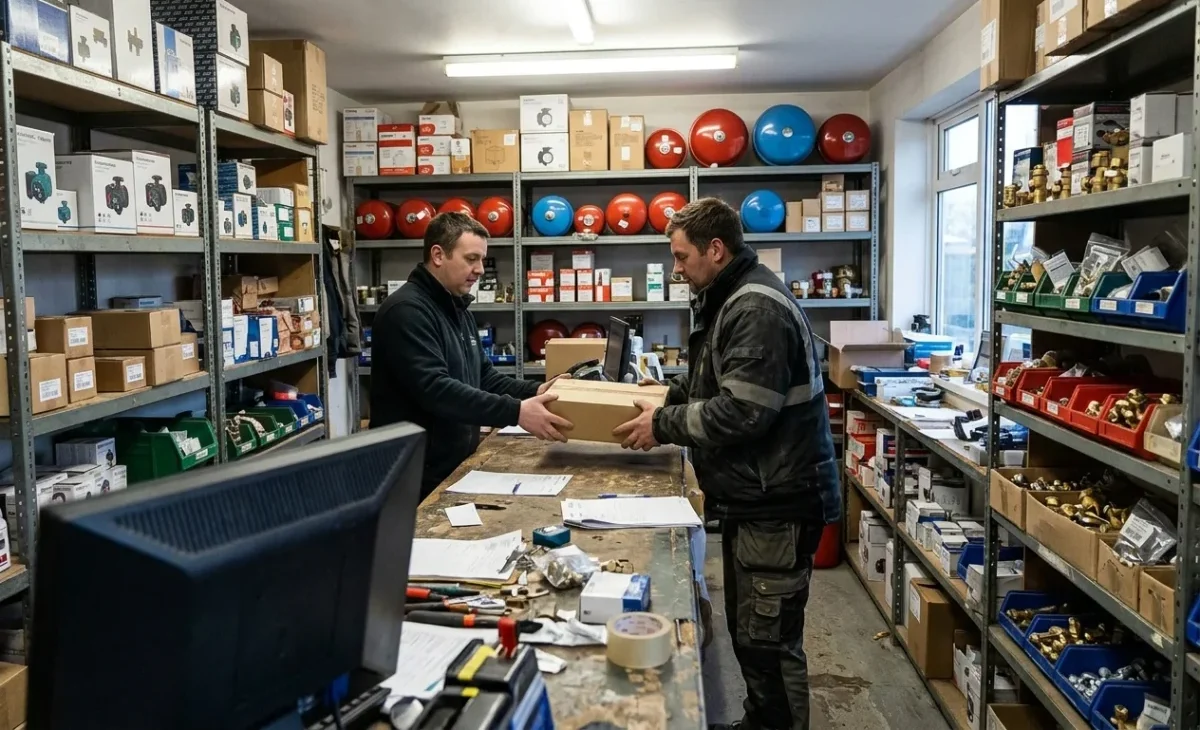
Installers buy parts through distributors and heating merchants. A local stockist means a part collected the same morning.
If it breaks: every part is ordered in and waits for a courier.
The technical line
Who an engineer rings when a fault code does not match the manual. Some can see live system data; others ring back next working day. Many only speak to registered installers.
If it breaks: the engineer guesses, and you pay for the guessing.
An independent engineer
Someone nearby who works on your brand if the installer cannot. A good gas engineer is not enough: refrigerant work needs a refrigerant-qualified engineer.
If it breaks: you depend entirely on the installer.
Parts: why the trade counter tells you more than the catalogue
A manufacturer can truthfully say every component is available. What matters is how long it takes to reach your house. Engineers choose which brands to fit partly on this: a brand they can get parts for by 10am is one they can repair in a day.
Pumps, sensors, expansion vessels, pressure components, flow switches and control boards are the usual failures. A merchant who stocks them has seen engineers ask for them. Which parts to ask about, how they reach engineers and how long brands support them is covered in which heat pump brands you will get parts for.
Questions to put to your installer about each brand they recommend
Installers recommend brands they already fit and understand, which is reasonable. Your job is to find out what that familiarity rests on:
| Ask, for each brand | A good answer | A warning sign |
|---|---|---|
| How many have you fitted, over how many years? | Several years of installs, so they have seen it age | Started fitting it last year |
| Who do you call when you are stuck? | A named technical line or rep, with a typical response time | “We never get stuck” |
| Where do you buy parts, and what is on the van? | A named merchant, and common spares carried | Everything ordered as needed |
| Who attends a refrigerant fault? | They hold the qualification, or name who they subcontract to | No clear answer |
| What is your call-out arrangement after the warranty? | A service contract with what it covers and costs in writing | “Just give us a ring” |
| Who handles a warranty claim? | They do, and they explain the process | You are left to deal with the manufacturer |
| Will it be registered with the manufacturer? | Yes, at commissioning, with the paperwork handed over | Unsure, or left to you |
Ask for the answers that affect cost or cover in writing. “Don’t worry, they’re very reliable” is not an answer to any of these.
The wider process of checking an installer is covered in how to vet a heating installer.
What happens to your support if the installer stops trading
Installers are often small businesses, and small businesses close, are sold or change focus. Over a heat pump’s fifteen-year-plus life, yours may not exist. Ask about three things before you sign:
Workmanship guarantee
Is it insurance-backed, or only the installer’s promise? Which consumer code (RECC or HIES) do they belong to, and what does it give you if they stop trading?
Manufacturer warranty
It normally stays with the product, but often needs registration and annual servicing by an approved engineer. Can another engineer take over the servicing without voiding it?
Your documents
Commissioning record, heat loss calculation, design flow temperatures, controller settings and serial numbers. Without them, a new engineer’s first visit is spent working out the system.

Landlords: one more question
Who deals with a fault when your tenant calls at the weekend, and can you put that contact in the tenancy information? In England and Wales you must keep the heating and hot water installations in repair and proper working order, so response time is your problem as much as theirs.
How to check a brand’s local support yourself in an evening
You do not need to rely on the installer’s account. These checks use public information and a few phone calls:
- Use the installer locatorSearch the manufacturer’s list of approved or trained installers by postcode, and count how many are within a reasonable drive.
- Ring the manufacturerSay you are considering buying, and ask who services units near you if your installer is unavailable. Note the wait and how specific the answer is.
- Ring a heating merchantAsk whether they stock the brand and its common spares. For the full parts check, use my parts availability test.
- Find independent engineersLook for local heating engineers who list the brand, and check they hold a refrigerant handling qualification.
- Read owners’ accounts with careLook for patterns across many posts, such as long waits for parts, not one angry story.
- Ask past customersWhat happened the last time something went wrong, and who fixed it?

The way a manufacturer treats a pre-sale enquiry is a fair guide to how it will treat you after the sale.
Weighing aftercare against price and efficiency when two quotes disagree
Compare like with like first. If two installers specified different flow temperatures, emitters or cylinders, the price gap may be the design, not the brand. Is your heat pump design right? explains what to check, and my heat pump quote checklist lines quotes up item by item.
Then treat aftercare as a cost. A cheaper system that is hard to service can cost more over its life through call-outs, waits and cold days, and a small efficiency advantage on paper rarely makes up for a unit nobody nearby can repair. Score each quote:
| Link in the chain | Quote A | Quote B |
|---|---|---|
| Installer: years fitting this brand, clear answers | ||
| Trade counter: local stock of common spares | ||
| Technical line: answered, and specific | ||
| Independent engineer: one within reach | ||
| Installed price after grant | ||
| Efficiency at your design flow temperature |
Mark each link strong, weak or missing. A weak link is a cost, paid later in call-outs, waits and cold days.
If one quote is strong on all four links and the other has a weak one or two, the extra cost is paying for something real. If the cheaper quote is just as strong, take it. Landlords should weight the chain more heavily: a tenant cannot wait a week for a part in winter. For the wider trade-off, see how to choose a heat pump manufacturer.
Common questions
Heat pump aftercare: common questions
Can any heating engineer repair a heat pump?
Many faults on the water and electrical side can be handled by a competent heating engineer with the documentation. Work inside the refrigerant circuit needs a refrigerant-qualified engineer, with extra training for units using R290.
Can I call the manufacturer’s technical line myself?
Usually only for warranty and general questions. Many technical lines speak only to registered installers, so detailed fault-finding goes through your engineer.
Does my warranty end if my installer closes?
A manufacturer warranty normally stays with the product, but conditions such as annual servicing by an approved engineer still apply. Ask the manufacturer who can take over. See heat pump warranties compared.
Is a service contract worth it after the warranty?
It can be, if it names response times and what is covered. Compare its yearly cost with a standard service plus a likely call-out, and check whether parts are included.
What if my new heat pump has problems in its first year?
Start with the installer in writing. Your new heat pump isn’t performing sets out who to call and how to escalate.
Next step
Ready to compare quotes? Ask through my heat pump quote page, then put the aftercare questions above to each installer before you sign.