
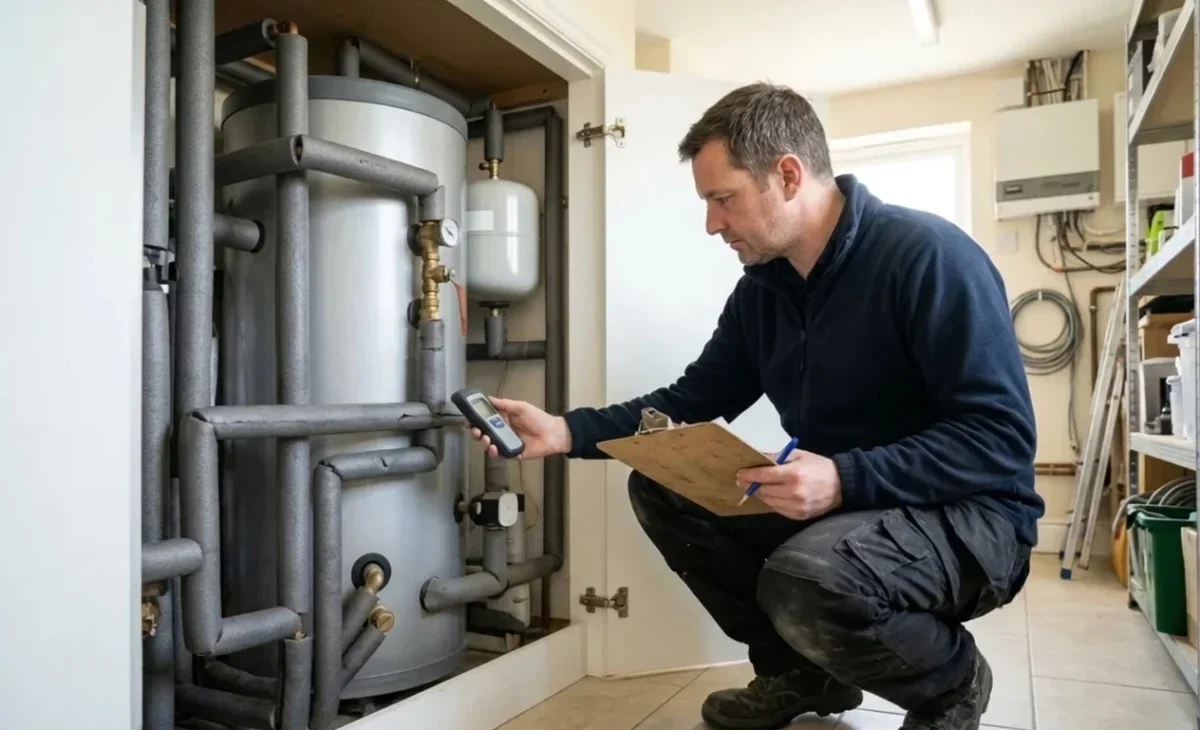
If your new heat pump is too cold, too loud, cycling on and off or running up bills, the first call usually goes to the company that installed it. Problems after installation are rarely a single broken part. They are more often a design or set-up decision that only shows itself in a cold spell, and the firm that made it has the records to explain it.
This guide covers who to call for which fault, what to gather first, how to protect your warranty and legal position, and what to do if the installer goes quiet.
A heat pump that is not performing, in short
- Call the installer first, in writing. They hold the records, they owe you the remedy, and warranties expect them to have the chance to fix it.
- Most new-system faults are design or set-up, not a broken part: sizing, emitters, flow temperature or controls.
- Build a file before you ring: contract, commissioning record, heat loss calculation, warranties and a dated log of the fault.
- An independent engineer should assess and report, not alter, unless the installer has refused or failed to act.
- If the installer will not fix it, escalate in order: formal complaint, consumer code, MCS, guarantee insurer, card provider, advice, then court.
Start with the installer: why the first call goes to them
They hold the records
The commissioning record, heat loss calculation, settings and contract. A new engineer has to rebuild all of that, at your cost.
They owe the remedy
Under the Consumer Rights Act 2015, a service must be done with reasonable care and skill. If it was not, you can ask the firm that sold the job to put it right, or reduce the price.
Warranties expect it
If someone else changes settings or pipework first, the installer can argue your fix, not their work, caused the fault.
Both a manufacturer warranty and an installation guarantee are easier to claim on when the original firm was given the chance to fix the problem and there is a record that you asked. Ring or email the installer first, and follow up in writing, unless one of the exceptions further down applies.
Faults that point to commissioning or design, not a broken machine
Heat pumps from reputable manufacturers seldom arrive faulty. When a new system underperforms, the cause is usually in how it was sized, set up or connected:
| Symptom | Likely causes | What to ask the installer |
|---|---|---|
| House not warm enough | Heat loss underestimated; radiators or underfloor loops too small for the flow temperature; compensation curve left on defaults; rooms left on old radiators the design said to change | The room-by-room heat loss figures and the radiator schedule |
| Cycling every few minutes | Unit oversized; too little water volume or flow from pump settings, balancing or closing zone valves; thermostat or TRVs fighting the heat pump | The design output against the heat loss, and the pump and valve settings |
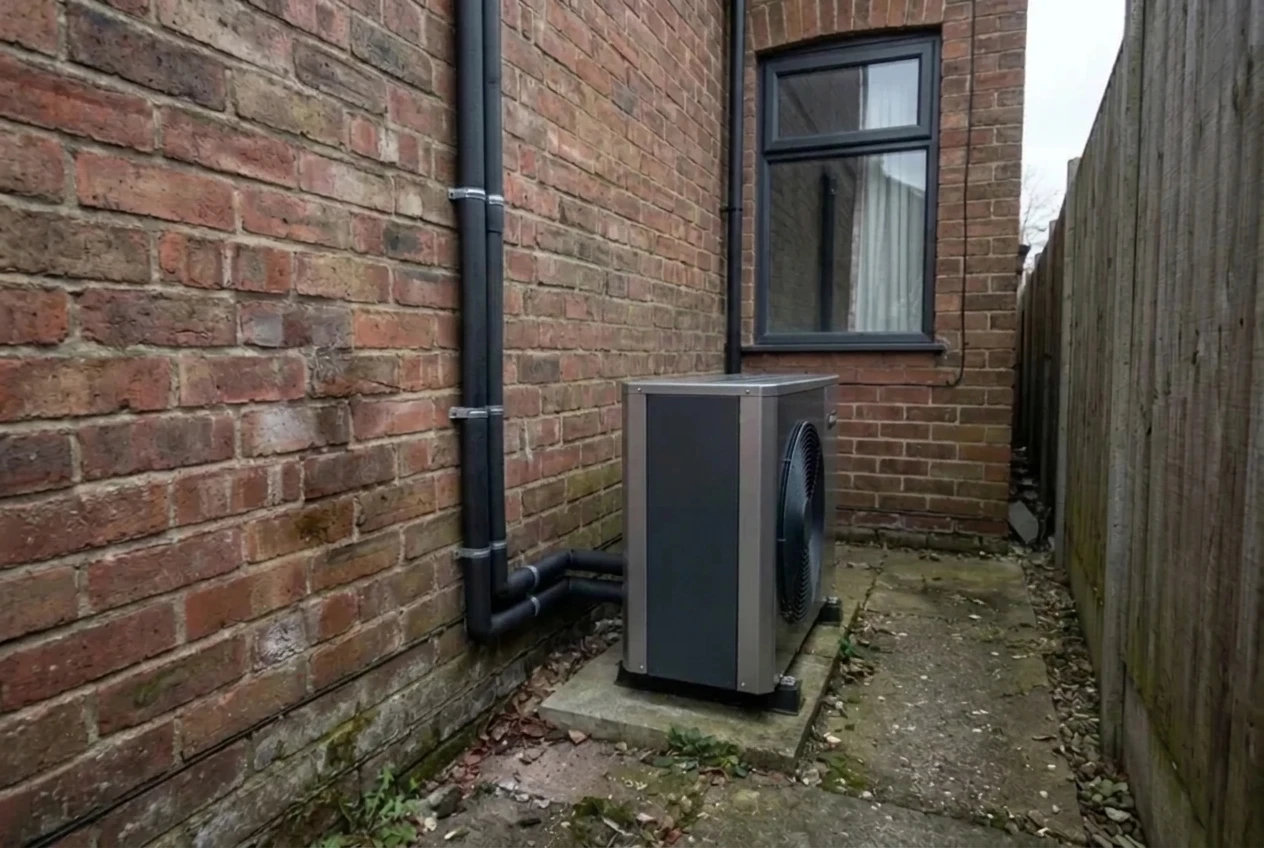
| Noise | Unit in a corner, against a reflecting wall or near a bedroom window; missing anti-vibration mounts; pipework clamped rigidly to the building; night mode never set | The noise calculation and why the position was chosen |
| Bills above the quote | Flow temperature set higher than needed; immersion doing the heat pump’s work; hot water schedule too frequent; estimate based on wrong assumptions | The flow temperature, the immersion settings and the basis of the running cost estimate |
For the reasoning behind emitter sizing, see underfloor heating or radiators with a heat pump. Whether a buffer tank would cure cycling depends on the cause: see do you need a buffer tank? before paying for one.
Some “faults” are normal
Defrost cycles in cold, damp weather produce a plume of vapour and a short pause in heating, and hot water cycles run hotter than space heating. My checks before you pay for a call-out help you rule these out first.
What to gather before you ring
A complaint with documents attached is hard to brush off. Collect these first:
| Document | What it shows | If you do not have it |
|---|---|---|
| Contract and quote | What was promised: output, rooms heated, any efficiency or running cost figure | Ask for a copy; it is the baseline for any claim |
| Commissioning record | Settings, flow temperatures, flow rates and checks done at handover | Not having one is a finding in itself; note it |
| Heat loss calculation | Room-by-room figures, the outdoor design temperature and the design flow temperature | Ask for it in writing; MCS installers must have done one |
| MCS certificate and consumer code | Certification, the code (RECC or HIES) and any insurance-backed guarantee | Search the MCS website for the installation |
| Manufacturer warranty | Registration confirmation and the conditions | Check with the manufacturer whether it was registered |
| Your own log | Dated room temperatures, controller settings, noise, meter readings, photos of the screen, when each fault began and when you reported it | Start today: three or four weeks of the same fault in similar weather is strong evidence |

How other engineers touching the system can affect your protection
Anyone who opens, adjusts or rewires the system can complicate a claim:
| Protection | Typical condition | What it means for you |
|---|---|---|
| Manufacturer warranty | Servicing and repairs by approved or authorised engineers | Read the exact wording; see heat pump warranties compared |
| Installation guarantee | No alterations by a third party before the problem is assessed | An insurer may refuse a claim if someone else changed the system first |
| Consumer code | The member’s obligations continue | A dispute is harder to settle if the evidence has been changed |
| Restricted work | Refrigerant circuit and unvented cylinders need qualified engineers | Never let an unqualified person open either |
None of this stops you getting a second opinion. It means an independent engineer should look and report, not alter, unless the installer has refused or failed to act. Read your own documents for the exact conditions rather than relying on a general rule.
When to bring in an independent engineer
No response
You reported the fault in writing and got no reply, or a vague one, within a reasonable time.
Repeat visits
The installer has been more than once and the same problem returns: they are treating symptoms.
A design dispute
You think the system was undersized or specified wrongly. An installer cannot be a neutral judge of their own design.
Firm closed
Use the installation guarantee or consumer code to find a replacement; an independent engineer is the practical option.
Safety
Water on electrics, scorching, burning smells or, on a hybrid, a smell of gas: isolate it and get qualified help at once, whoever installed it.
Even then, use the independent engineer as an assessor first. A written assessment is evidence; a repair done without the installer’s knowledge can make you the party who changed the system.
Getting an independent opinion without weakening your case
Tell the engineer before the visit that you want an assessment and a written report, and that you are not asking them to change anything yet. Ask for these in writing:
- Readings: flow and return temperatures, flow rate, compressor behaviour, controller settings and room temperatures
- A comparison with the design: do the radiators, pipework and unit match the heat loss calculation, and was the calculation reasonable?
- A clear cause: setting, design shortfall, workmanship or component fault, with the evidence for it
- Remedies, split in two: what falls under the installer’s guarantee, and what would be an improvement beyond the original specification
- Photos: outdoor unit position, pipework, labels and the controller
- Their qualifications, so the report carries weight
Send a copy to the installer with a covering message giving them the chance to put the faults right and asking for a visit date. That keeps you on the right side of warranty conditions and shows you acted reasonably. For what a reviewer looks at in the design itself, see, is your heat pump design right?
If the installer will not put it right
Work through these in order, and keep a copy of everything:
- Complain formally in writing. Use the installer’s complaints procedure. State the faults, dates and evidence, what you want done, and a reasonable deadline.
- Use the consumer code. MCS installers belong to RECC or HIES, which can offer conciliation or an alternative dispute resolution service.
- Complain to MCS about the installer’s compliance, if the job was done under MCS.
- Claim on the installation guarantee. If it is insurance-backed, notify the provider and follow its process; it may arrange another contractor.
- Check how you paid. Section 75 can make a credit card provider jointly liable for purchases priced between £100 and £30,000. Finance agreements can carry similar protection.
- Get advice. Citizens Advice can tell you where you stand, and passes reports to Trading Standards.
- Court, as a last resort. Send a formal letter before action first. Small claims routes and limits differ between England and Wales, Scotland and Northern Ireland.
Do not withhold the final payment without advice
Holding back money owed under the contract can put you in breach yourself, and weaken an otherwise strong case.
Prevention for next time: what to agree on at handover
If you are about to have a heat pump fitted or are advising someone who is, settle these before the final payment:
- A signed, dated commissioning record with flow temperatures, flow rates and settings
- The room-by-room heat loss calculation and design flow temperature, as documents
- A demonstration of the controller: weather compensation and hot water schedules
- Written guarantee, consumer code and warranty details, with who to contact for each
- A follow-up visit after the first cold spell, to tune settings against real weather
- The outdoor unit position and expected noise agreed in advance

For noise, see how loud is a heat pump? The best protection is choosing carefully at the start: see how to vet a heating installer and how to choose a heat pump installer.
Common questions
Heat pump not performing: common questions
How long should an installer have to fix a fault?
There is no fixed period in law; it must be a reasonable time. Report in writing, give a clear deadline such as 14 days for a visit, and record every contact.
Can I get my own engineer to fix it?
You can, but it may weaken a warranty or guarantee claim. Ask an independent engineer to assess and report first, and give the installer the chance to put it right.
Is my heat pump faulty if it steams in cold weather?
Usually not. Defrost cycles produce vapour and a short pause in heating on cold, damp days. My pre-call-out checks help you rule out normal behaviour.
Can I withhold the final payment?
Not without advice. Withholding money can put you in breach of contract yourself. Get advice from Citizens Advice first.
What if my installer has gone out of business?
Claim on the insurance-backed guarantee if you have one, contact the consumer code, and check whether you paid by credit card. The manufacturer warranty normally still stands.
Who can work on the refrigerant side?
Only an engineer qualified to handle refrigerant. On sealed monobloc units using R290, they also need training for flammable refrigerants.
Next step
Start with the safe checks, so you can rule out normal behaviour and give the installer a clear description of the fault.