
If your heat pump has gone cold, noisy or expensive, the cause is often something you can check yourself in twenty minutes. This guide sorts every check into three tiers, so you know what to fix, what to report and when to stop.
Check and fix
Safe for you to do: power, schedules, thermostat, clearing leaves, bleeding a radiator, a single pressure top-up.
Record and report
Worth noting and passing to your installer, but not worth touching: error codes, ice that will not clear, the backup heater running a lot.
Stop and book
Refrigerant, electrics, leaks and anything inside the casing. Switch off if it is safe to, and call a qualified engineer.
The tiers matter because a heat pump contains pressurised refrigerant and mains electrics. Neither is homeowner territory, and everything below keeps you clear of both.
Heat pump checks in short
- Write things down first. A reset wipes the evidence an engineer needs; note the code, the time and the outdoor temperature.
- Most “faults” are settings: a schedule changed by a power cut, holiday mode left on, or the heating used in bursts like a gas boiler.
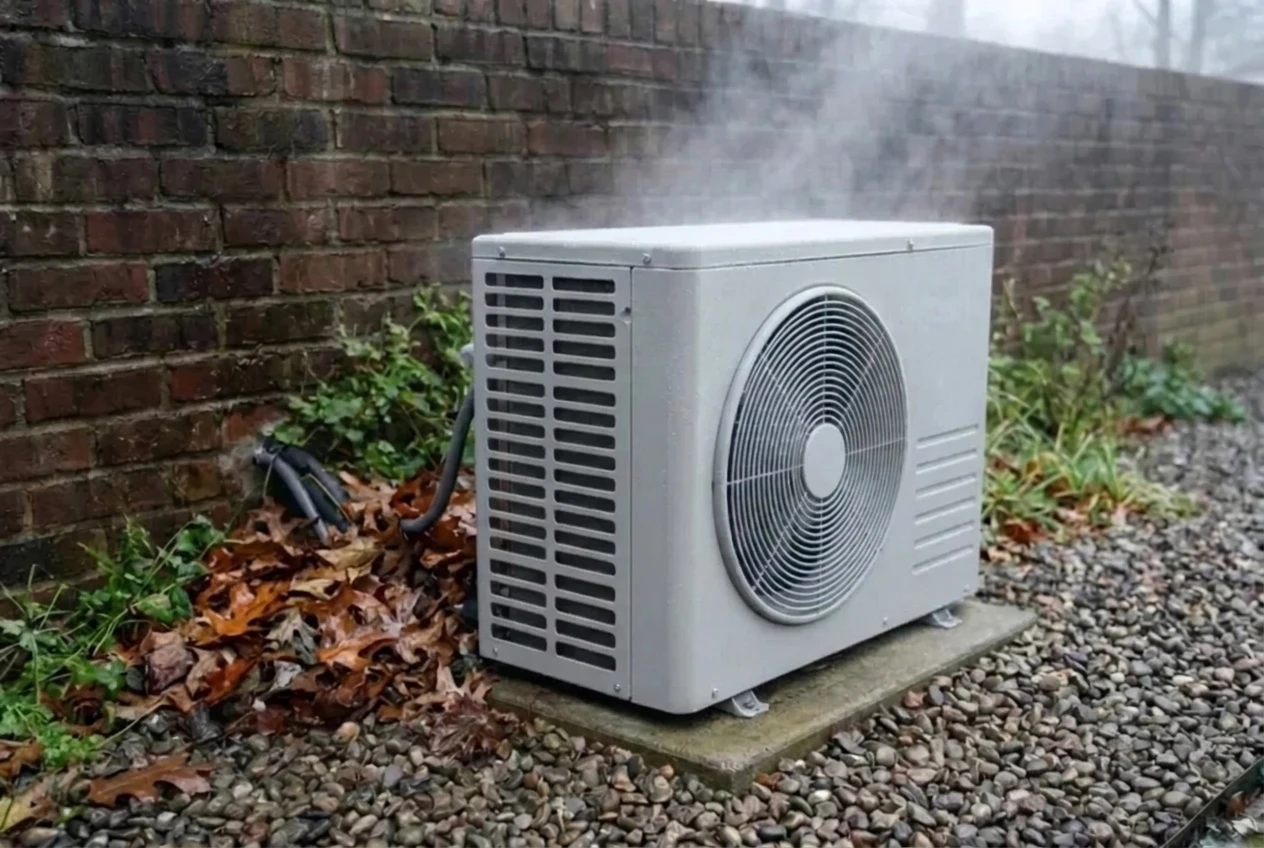
- Steam and a brief dip in heat on cold, damp days is a normal defrost, not a breakdown.
- Reset once, top up once. If the same code or pressure loss comes back, stop and report it.
- Never open the casing or touch refrigerant or electrics; that is engineer work, and it can affect your warranty.
Write down what you are seeing before you touch anything
Start with notes, not a screwdriver. Once you change a setting or reset the unit, the evidence of what it was doing is gone, and the engineer will want it.
- The complaint in plain words: “Living room 17°C at 6pm, thermostat set to 20°C” or “Loud thumping from the outdoor unit at about 3am.”
- The date, time and outdoor temperature. Faults that only appear on cold, damp mornings point somewhere different from faults that appear all day.
- Any message on the display or app, word for word with the code number. A photo is better.
- What changed recently: a new thermostat, a power cut, a schedule edit, new radiators, a tariff change, or a long gap since the last service.
- A meter reading, if you can reach the meter.
Keep it all on one sheet of paper or in one note on your phone. You will add to it as you go, and it becomes the page you hand to the engineer.
Five-minute checks: power, schedule, thermostat and settings
These are all Tier 1. Nothing here involves opening a panel or touching a pipe.
| Check | What to look for | If it is still wrong |
|---|---|---|
| Power | The outdoor isolator and the breaker at the consumer unit are on, and the controller is awake. After a power cut, allow a few minutes to restart. | Reset a tripped breaker once. If it trips again, leave it off: Tier 3 |
| Schedule | Heating and hot water times, holiday mode, and the controller’s date and time. A clock an hour out shifts every schedule. | Correct it, note what you changed, and watch for a day |
| Room thermostat | Set temperature, batteries if wireless, and position: a hallway, sunny wall or spot near a radiator reads warm. | Note the reading against a separate thermometer |
| Hot water | Whether the cylinder schedule ran, and whether a boost or legionella cycle is set. | Note the cylinder temperature if shown: Tier 2 |
If your thermostat is in the wrong place or struggles with weather compensation, see the best smart thermostats for heat pumps.
Two settings cause more complaints than any fault:
Used like a gas boiler
Long off periods followed by a hard push leave rooms cold and push the bill up. A heat pump works best running steadily at a low flow temperature, and a steady, lower setting nearly always costs less.
Weather compensation
If rooms are too cold only in cold weather, or too warm in mild weather, the compensation curve may need adjusting. Ask your installer; do not change it by trial and error.
Note anything you change and when, so you can tell whether it helped. For the settings that work best in cold weather, see my heat pump winter efficiency tips.
What you can safely look at on the outdoor unit
Stay outside the casing. You are looking, not opening. The fins bend easily and are sharp, so never push anything into them.
| What you see or hear | Usually means | What to do |
|---|---|---|
| Steam or vapour, a change in sound, heat dipping for a few minutes on a cold, damp day | A normal defrost cycle | Nothing Tier 1 |
| A light frost on the fins that clears every so often | Normal in cold, humid weather | Nothing Tier 1 |
| Leaves, snow, bins, a fence panel or a plant blocking airflow | The unit is short of air | Switch off at the isolator and clear it by hand or soft brush Tier 1 |
| Ice that stays for hours with no defrost, or a block building under the unit | Defrost or drainage problem | Photograph it; do not chip or pour hot water Tier 2 |
| Water pooling on a path | Condensate drain blocked or badly routed | Clear leaves from the base; leave the pipework alone Tier 2 |
| Rattling, metallic scraping, or a noise that gets steadily worse | Something loose or failing | Video it with the time and weather Tier 2 |
For what counts as a normal sound level, see how loud is a heat pump?
Water side checks: pressure, radiators and flow temperature
The water side is the sealed circuit carrying heat from the heat pump to your radiators or underfloor loops. Some checks here are Tier 1; some are firmly Tier 2.
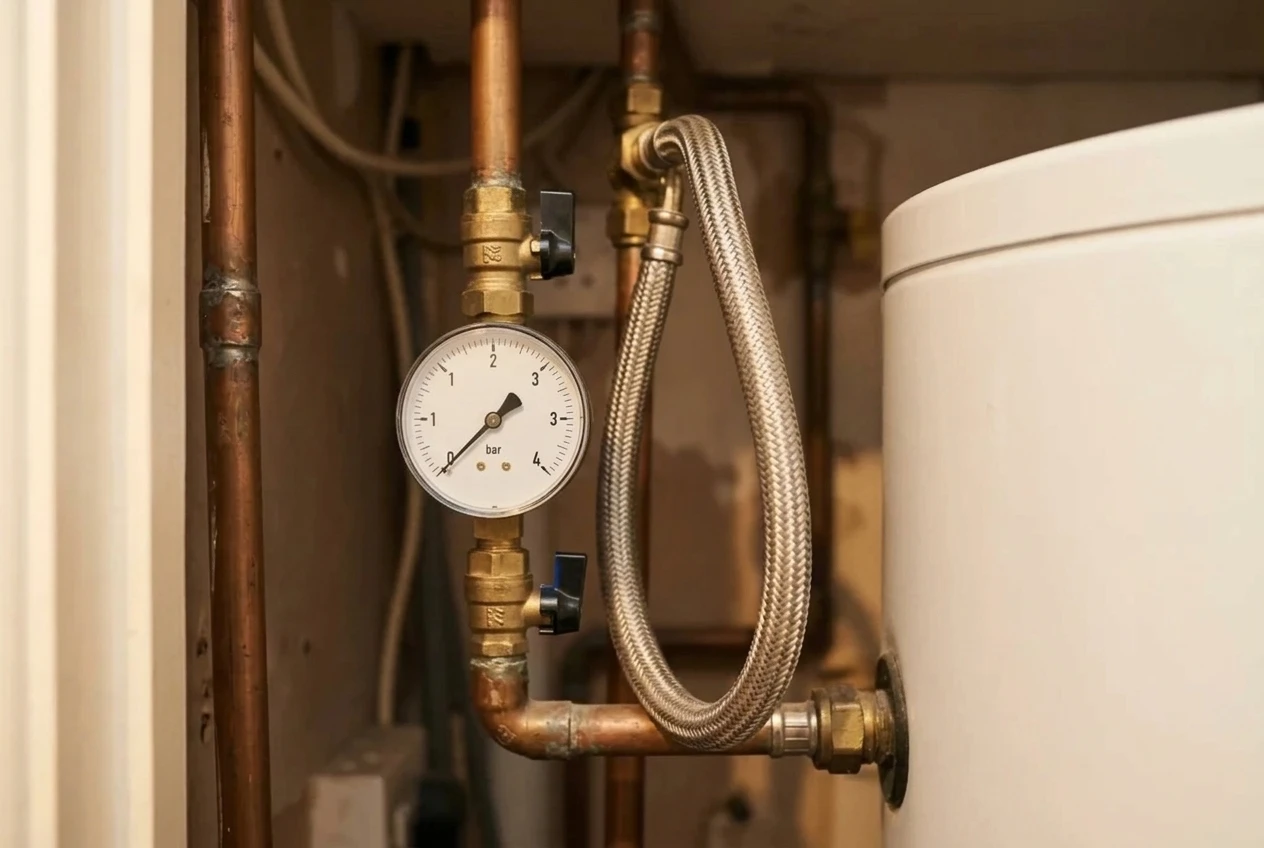
Pressure. Find the gauge, usually on the indoor unit or near the cylinder, and compare it with the cold pressure in your manual rather than a figure from the internet. If it is a little low and your system has a filling loop, you can top it up once by the method in the manual, then close both valves and disconnect the loop. Write down the date. If the pressure drops again within days, stop topping up: that is a leak or a failing expansion vessel, so it is Tier 2, or Tier 3 if you can see water.
Radiators. Feel each one, top and bottom.
| Symptom | Likely cause | Tier |
|---|---|---|
| Warm at the bottom, cold at the top | Trapped air | Bleed it, then recheck the pressure Tier 1 |
| Cold at the bottom, warm at the top | Sludge or a stuck valve | Tier 2 |
| One radiator cold, the rest warm | Valve closed, TRV pin stuck, or balancing | Check the valve is open; otherwise Tier 2 |
| All radiators lukewarm, none cold | Flow temperature setting, small radiators or a design limit | Normal if rooms reach temperature; if not, Tier 2 |
| House never warm enough since the first winter | Design, not a failing part | Raise it with the installer as a design question Tier 2 |
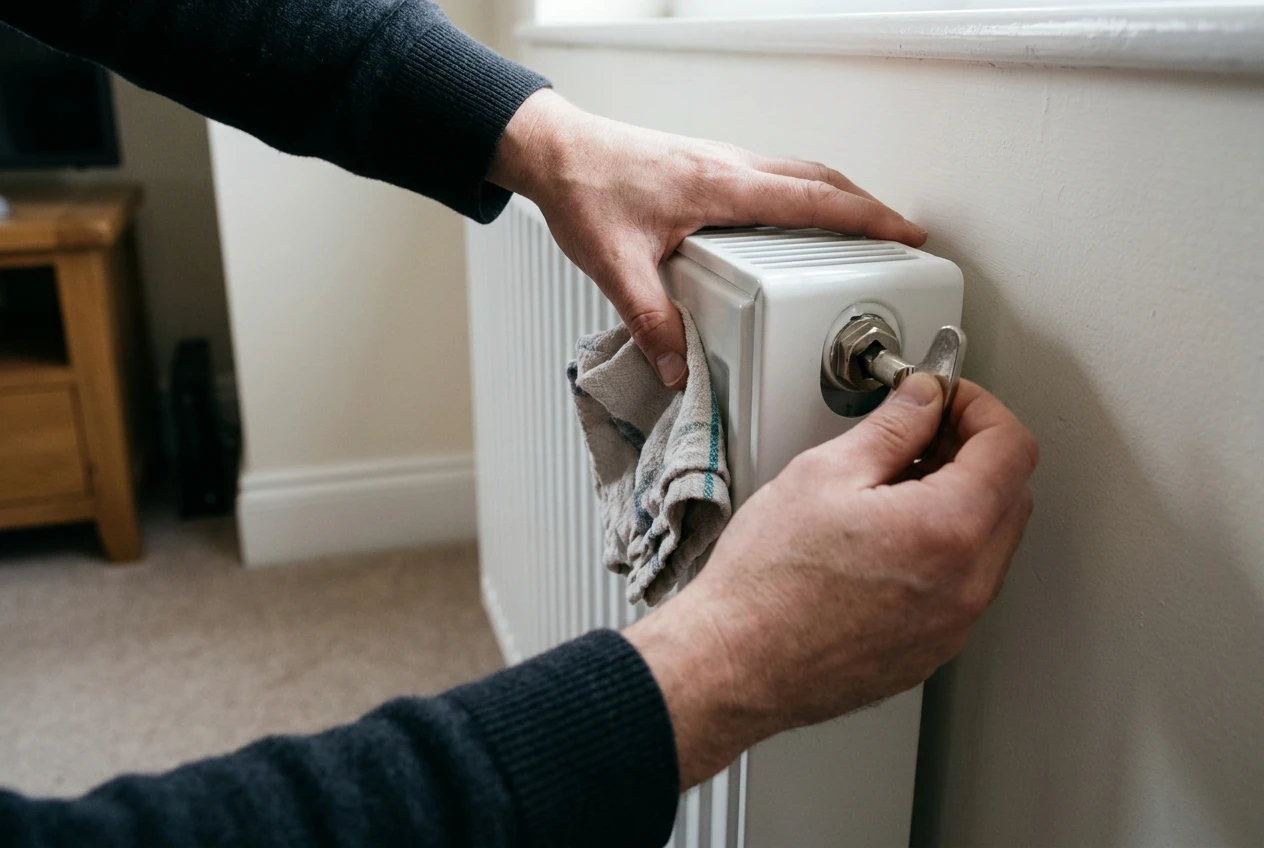
Turn the heating off before you bleed, so the pump is not pulling in air, and check the pressure afterwards. My guide to bleeding a radiator properly goes step by step. Heat pumps run radiators cooler than a boiler, so warm rather than hot is normal; see underfloor heating or radiators with a heat pump.
Flow temperature. If the display shows flow and return temperatures, note both at the time of the complaint, with the outdoor temperature. A flow temperature that never rises towards its target is useful information. Do not change the heat curve or maximum flow temperature as an experiment.
Design faults. If the house has never been warm enough, or the unit switches on and off every few minutes, the cause may be the design. See is your heat pump design right? and do you need a buffer tank?, and raise it with your installer as a design question, notes attached.
Reading the display, the app and your meter
This is where most Tier 2 work happens. You are gathering information, not repairing anything.
The one-reset rule
Write down the exact code and what the manual says it means, then try one reset by the method in the manual. If the same code returns within a day or two, stop. Repeated resets can mask a fault and, on some systems, affect the warranty: check your warranty terms.
The app. Look for run hours, energy use and alarm history. A log showing frequent short runs, repeated defrosts or the backup heater running tells the engineer more than you can describe from memory.
The immersion or backup heater. Many systems use an electric element for hot water top-ups, the weekly legionella cycle, or as backup when the heat pump struggles. A backup heater running often is the most common reason for a bill far above what you expected. Record when and for how long; do not disable it yourself, because it may be part of the hot water safety cycle or the cold-weather backup.
Your meter. Take a reading at the same time each day or week and note the weather beside it, so you compare like with like. If your unit rate changed, a higher bill with normal use is a price issue, not a fault: see the best electricity tariffs for heat pump owners. A separate monitor on the heat pump circuit isolates the heating from the rest of the house; see energy monitor apps for tracking heating costs.
Where DIY stops: refrigerant, electrics and sealed system faults
These are Tier 3. When you reach one, stop and book a qualified engineer.
Refrigerant
- Oily residue on pipes
- Hissing
- Frost on the pipework in mild weather
- Unit running but no heat
Refrigerant is not a top-up item. It needs a refrigerant-qualified engineer.
Electrics
- A breaker that trips again
- Burning smell or scorch marks
- Buzzing from the isolator
- Damaged cable, or water near connections
Switch off at the isolator if it is safe to reach, and leave it.
Sealed system
- Pressure that keeps dropping
- Visible leaks at the cylinder or pipes
- A failed expansion vessel
- Anything that means removing a panel
Water and electrics sit close together; do not open anything near the controls.
Do not remove panels on either the outdoor or indoor unit. Inside are live parts and pressurised sections, and warranties often depend on work being done by approved engineers. If you are in any doubt, treat it as Tier 3: a call-out costs less than a repair made worse by a well-meant attempt to fix it.
What to tell the engineer so the visit is shorter and the bill is smaller
Engineers charge for time, and much of that time goes on working out what is going on. Hand over one side of A4 that does it for them.

The system and the fault
- Make, model, installation date and installer
- Cylinder, buffer tank or backup heater fitted
- The complaint in one or two sentences, when it started, constant or on and off
- Outdoor temperature and weather when it happens
- The exact error code, with a photo of the screen and any alarm history
Your readings and actions
- Pressure, flow and return temperatures, and dated meter readings
- What you checked and changed, with dates: “Cleared leaves 3 Nov. Bled two radiators. Topped up once.”
- What you did not touch: no casing opened, no curve settings changed
- Photos and video, labelled with the date
- The commissioning certificate and last service record
A page like this lets the engineer go straight to the likely cause and bring the right parts. It also gives you a record if the fault comes back, or if there is a dispute over whether it was covered. Regular servicing catches many of these faults early; see what is carried out during a heat pump service.
If the installer will not put a fault right, see your new heat pump isn’t performing: who to call.
Three cheap tools that make these checks easier
- A radiator bleed key: for Tier 1 bleeding. Have a cloth ready and turn the heating off first.
- An infrared thermometer: read radiator tops and bottoms, and the flow and return pipes, without guessing by hand.
- An energy monitor: a clamp-on monitor shows what the heat pump circuit is using, separate from the rest of the house. It must be fitted by an electrician if it goes inside the consumer unit.
Common questions
Heat pump troubleshooting: common questions
Why is steam coming out of my heat pump?
In cold, damp weather the outdoor coil frosts over, and the unit runs a defrost cycle to clear it. The steam is the frost melting off. It is normal, and the heating dips for a few minutes while it happens.
What should the water pressure be?
Use the figure in your manual, because it varies between systems. Many sit somewhere around 1 to 1.5 bar when cold. A single top-up is fine; pressure that keeps dropping means a leak or a failing expansion vessel.
Is it safe to reset my heat pump?
One reset by the method in the manual is fine, after you have written down the code. If the same code returns within a day or two, stop resetting and report it, because repeated resets can hide a fault.
Why are my radiators only warm, not hot?
Heat pumps run radiators cooler than a boiler, so warm is normal. What matters is whether the rooms reach temperature. If they do not, the radiators may be too small for the flow temperature.
Why is my heat pump bill so high?
The usual causes are the backup heater running often, the heating used in bursts, a high flow temperature, or a tariff change. Compare meter readings week by week in similar weather before assuming a fault.
Should I call the installer or the manufacturer?
Start with your installer, especially in the first years, because the workmanship warranty and commissioning records sit with them. If they have stopped trading, contact the manufacturer’s service line.
Next step
Call your original installer first, because the workmanship warranty sits with them. If they have stopped trading, or you are thinking of replacing an older system, ask for a quote through my heat pump quote page and take your notes along.