
If you are working out how to get a rental property to EPC C, the order of the work matters more than any single upgrade. Heating is usually the most expensive item on the list, and on many properties it is not needed to reach the band. Fabric work and a corrected certificate can close most or all of the gap first.
This guide works for one property at a time. It ends with a decision point for each common rental type, so you can see where your own property sits.
Getting a rental to EPC C in short
- Work out the gap. Band C starts at 69 points; subtract your current score.
- Check the certificate first. Wrongly recorded walls, loft depth, controls or lighting can cost several points and are cheap to correct.
- Fabric before heating. LEDs, controls, loft and cavity insulation usually give the cheapest points.
- Reassess before you touch the heating. The gap may already be closed.
- Only then choose a boiler or a heat pump, based on the property type and the points still needed.
Read your current EPC before you spend anything
Look up the property on the government’s “Find an energy certificate” service using the address or postcode. Three things matter on the certificate: the current score, the band, and the list of recommendations.
Band C covers scores of 69 to 80. Subtract your current score from 69, and you know how many points you need. A property on 62 needs seven points. A property on 45 needs twenty-four, which is a different project.
Work out your points gap
Enter your score to see how many points you need.
The recommendations page lists each measure with an indicative cost range and the rating you would reach if you carried it out. Treat the order as a starting point rather than a plan. The cost ranges were set when the certificate was lodged, so get current quotes before you budget. Also check the lodging date. An older certificate may rest on survey data that no longer matches the property, and that leads into the next step.
Write down the score, the points gap, and each recommendation with its cost and points. That sheet is the working document for everything below.
For the rules themselves, including the October 2030 deadline and how cost caps and exemptions are expected to work, see our EPC rules for landlords explainer.
Timing tip: the 2030 rules and your current certificate
Under the plans announced in the Warm Homes Plan, private rented homes will need to reach band C by October 2030, with a £10,000 cost cap per property that counts work done from October 2025. New-format EPCs will report more than one metric, and the expectation is that landlords will need C on fabric performance plus either the heating system or smart readiness.
A property that reaches C on the current style of certificate before October 2029 is expected to stay compliant until that certificate expires. If you are close to C now, getting there sooner rather than later could buy you years. The detail is not final, so check our EPC rules for landlords explainer for the latest position.
Check the certificate is right: common errors that hold a rating down
An EPC is built from data an assessor collects on one visit. The assessor records what they can see or what can be evidenced. Where something cannot be confirmed, the software falls back on assumptions based on the age of the property, and those assumptions are usually pessimistic. A certificate that undersells the property is common and cheap to fix.
Check the data recorded against the property for these items, and gather the evidence that proves each one:
| What the EPC records | Common error | Evidence to gather |
|---|---|---|
| Wall type | Cavity recorded as solid, or filled cavity recorded as empty | Cavity insulation guarantee (such as a CIGA certificate) or installer invoice |
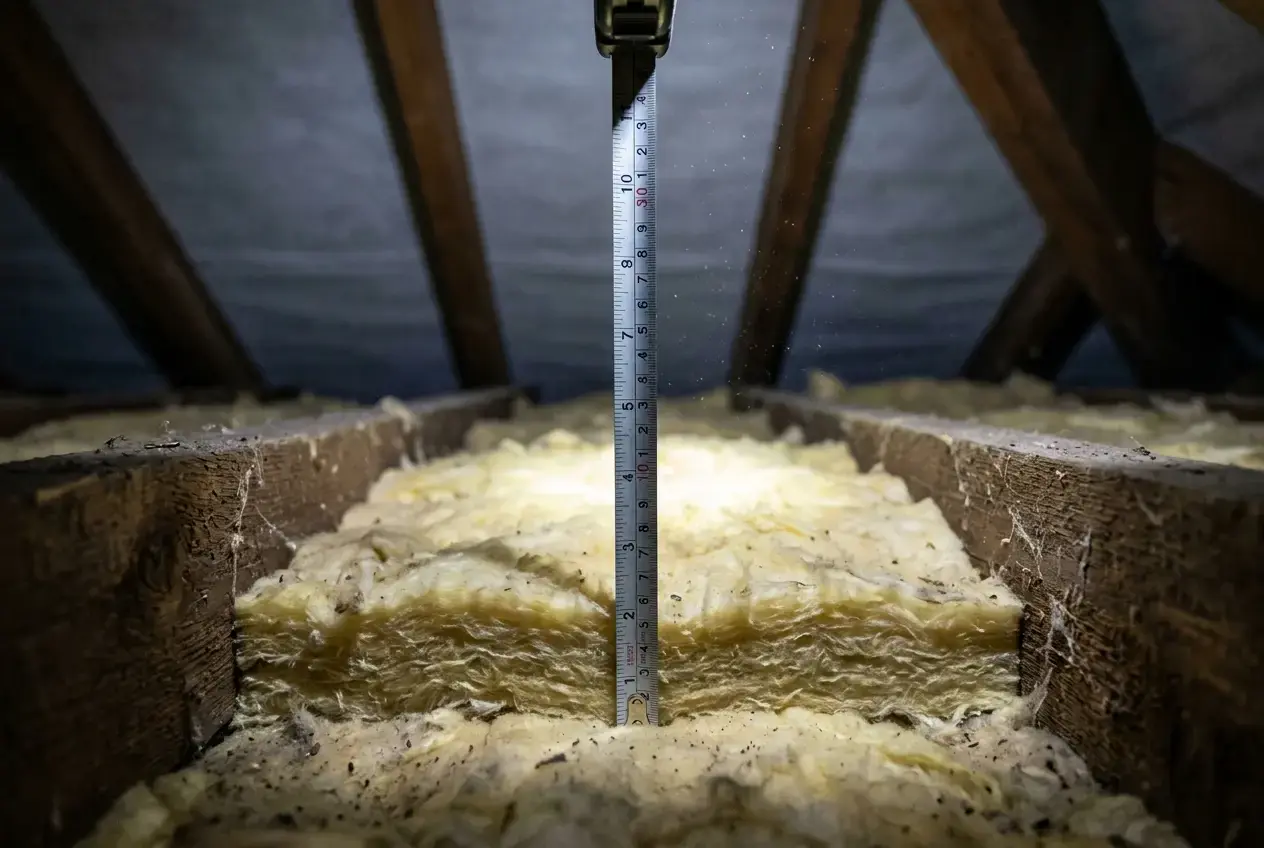
| Loft insulation depth | Old or guessed depth | Dated photos with a tape measure showing the depth |
| Heating controls | Thermostat, programmer or TRVs missing | Photos of each control; installer invoice |
| Boiler | Wrong or generic model | Photo of the data plate; Gas Safe record |
| Hot water cylinder | Insulation or cylinder thermostat missing | Photos of the jacket or factory foam and the thermostat |
| Lighting | Too few low-energy fittings recorded | Walk-round photos showing LEDs throughout |
| Windows | Double glazing recorded as single, or wrong date | FENSA or CERTASS certificate, or invoices |
| Extensions and roof rooms | Wrong construction or insulation assumed | Building control completion certificate and drawings |
Gather evidence before you book a new assessment: installer certificates, guarantee documents, invoices, and dated photographs of loft insulation with a tape measure showing the depth. An accredited assessor can use that evidence where they could not otherwise confirm a feature.
A new assessment can also lower a rating if the first one was generous, so go in knowing the property’s actual condition. Whatever the result, the newest certificate on the register replaces the older one.
Fabric first: the cheap upgrades that move the rating most
The EPC rewards reduced heat loss and efficient heating together, and fabric measures are usually the cheapest points. Work down this list in order, skipping anything the property already has:
- Lighting. Swapping remaining bulbs for LEDs costs very little, and the points are small but certain.
- Heating controls. A programmer, room thermostat and thermostatic radiator valves are inexpensive on a conventional wet system and are recorded on the certificate.
- Loft insulation. Topping up to the recommended depth is typically the best value of any measure. Our home insulation guide covers the detail.
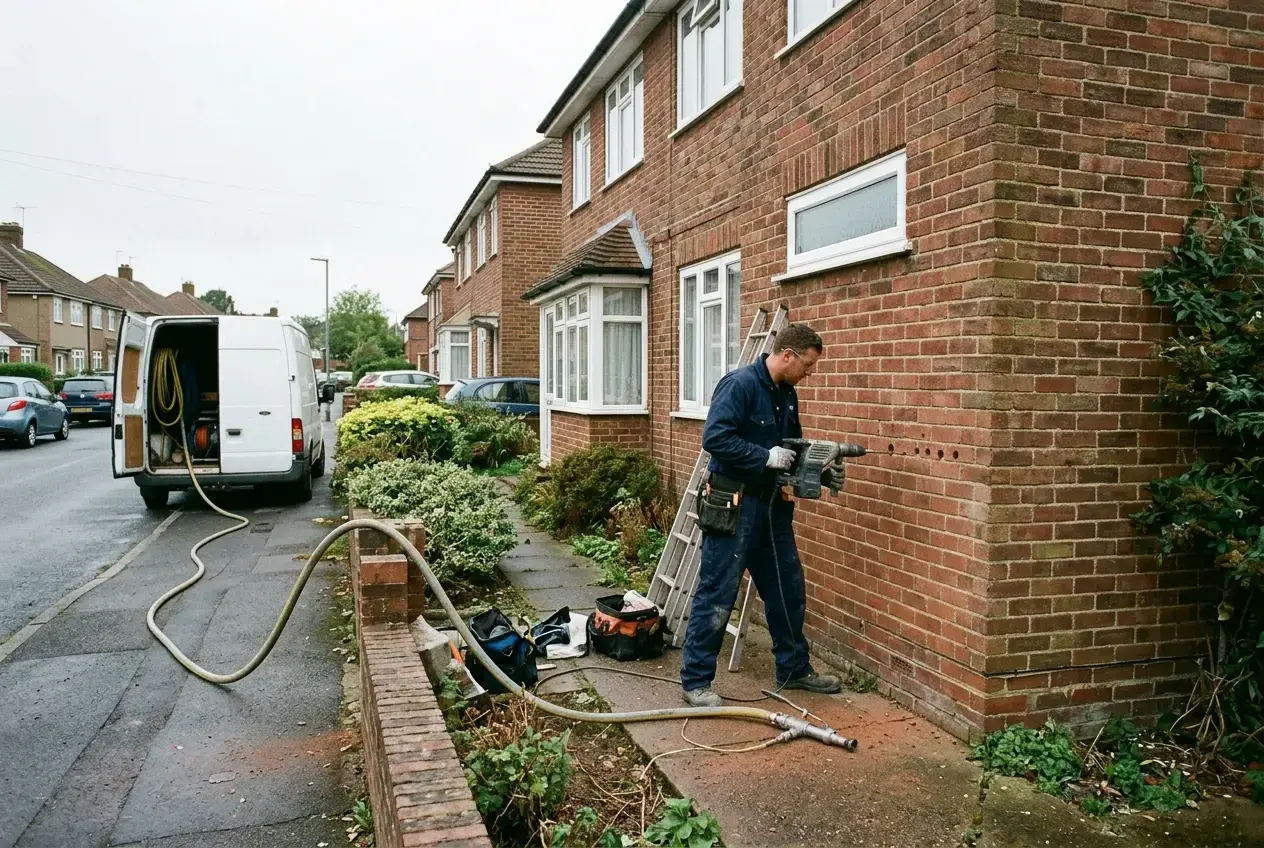
- Cavity wall insulation. If the walls are unfilled cavities and the construction is suitable, this usually moves the score more than anything else on the cheaper end. A survey should come first, because unsuitable walls or exposed locations can make fill a bad idea.
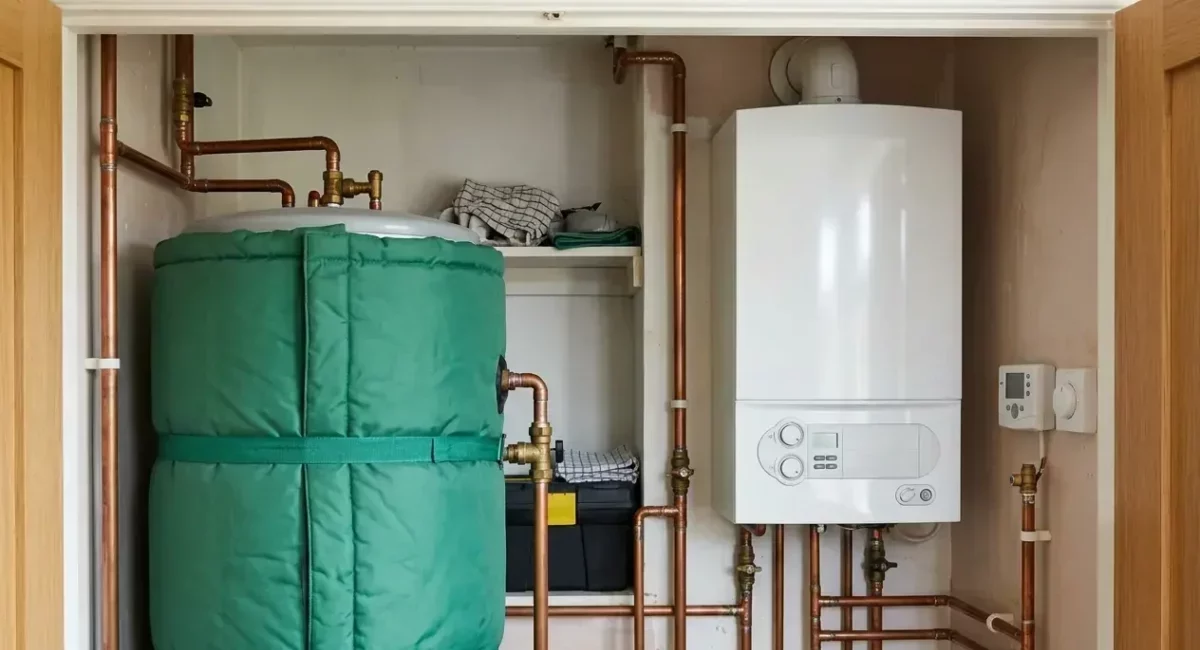
- Hot water cylinder insulation. If there is a cylinder, check the insulation and thermostat.
- Draught-proofing. It helps the tenant’s comfort and bills, though it counts for less in the calculation.
- Solid wall insulation, floor insulation and windows. These are more disruptive and expensive. Do them if the points gap demands it, not before.
Solar PV also feeds into the rating and can add meaningful points where the roof is suitable. It costs more than the items above, so it belongs after them on most budgets.
Decision point by rental type
- 1930s to 1970s cavity-wall house. Do items 1 to 5, then reassess. Many properties in this group reach C without any change to the heating.
- Victorian or Edwardian solid-wall terrace. Loft insulation and controls are quick wins, but the walls hold the rating down. Get a price for internal or external wall insulation and compare it against the points you need before choosing between wall work and a heating change. The heat pump vs insulation comparison goes through that trade-off.
- Flat. Your control is limited to the inside of the flat. Lighting, controls, cylinder insulation and glazing are the main levers, and the building’s roof and walls depend on the freeholder or the block.
- Newer house, built after 2000 or so. Fabric is usually already decent. Check the data errors above before assuming you need new equipment.
Once the fabric jobs are done, get the certificate updated before you commit to heating. The gap may be gone.
When your existing boiler is worth keeping and when it is not
If a reassessment still shows you short, look at the boiler against the points you need.
Keep it when it is a condensing gas boiler in good working order, with full controls, and the remaining gap is small. Replacing a sound boiler with an identical-efficiency model gains nothing on the certificate. A few points are often available instead from better controls or a cylinder fix.

Replace it when it is a non-condensing model, when it is near the end of its life and has already cost you repair bills, or when the certificate records a low efficiency and the points gap is large. A modern condensing boiler with proper controls adds points a tired old unit cannot. Boiler prices and what is included vary a lot, and the new boiler cost guide covers what to expect.
Remember your gas safety duties and the annual check apply whatever you decide, and a boiler that fails repeatedly in a tenanted property costs you more than the replacement. Heating should be judged on reliability for the tenant as well as the points it earns.
Heat pump or new boiler: a decision guide by property type
Do not assume a heat pump produces a jump in the band. The rating depends on the fabric the heat pump is working with, and because the current EPC is based on running costs, and electricity costs more per unit than gas, the gain can be smaller than expected. The new-format EPCs, with a separate heating system metric, are expected to reward heat pumps more directly. A heat pump in a poorly insulated property can also leave the tenant with high bills and a complaint at your door. The decision depends on the property.
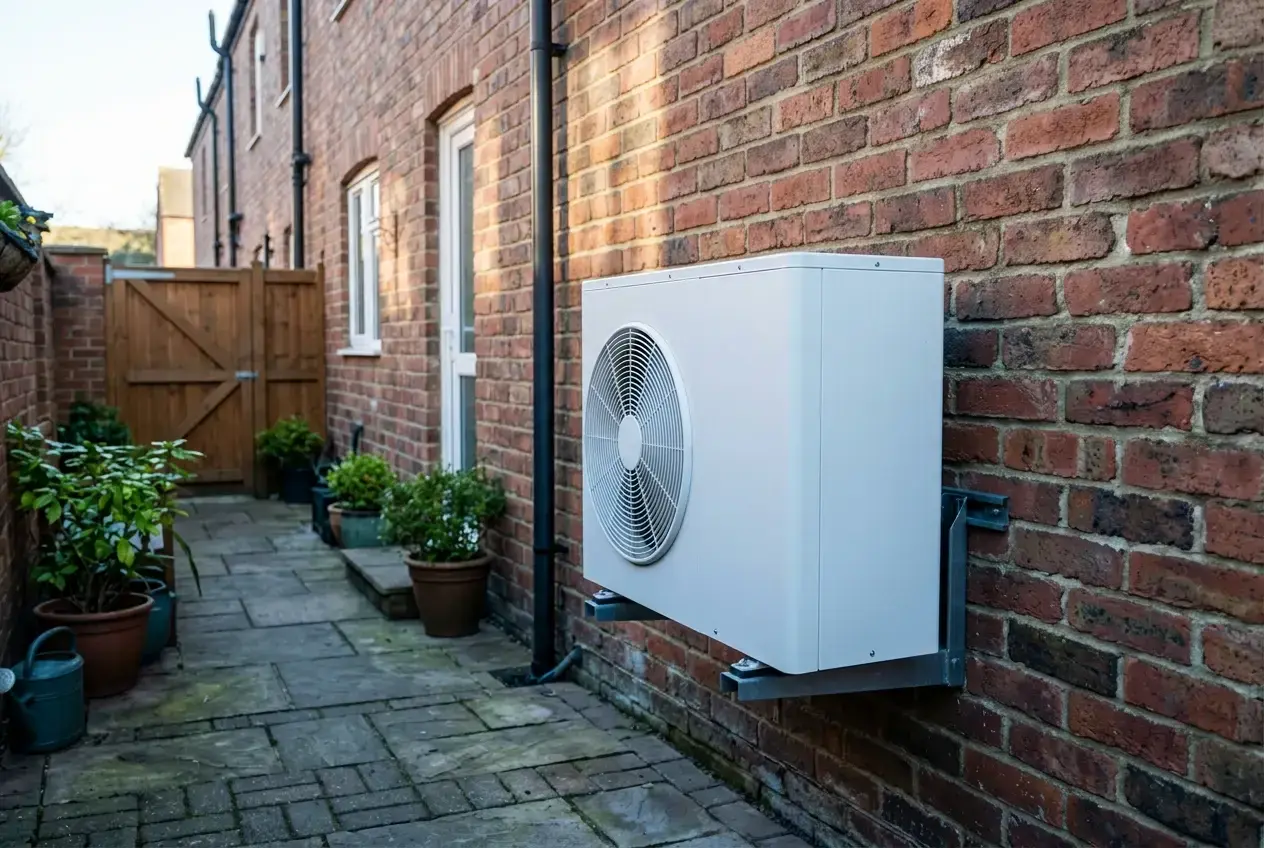
- Well-insulated house with space for a cylinder and an outdoor unit. A heat pump is a strong candidate, especially if the boiler needs replacing anyway and a grant applies.
- Cavity-wall semi with loft and cavity done. Check the radiators. Many were sized for a boiler running hotter water, and a heat pump may need larger emitters in some rooms. If the rating already reaches C with a boiler, a heat pump becomes an optional choice rather than a requirement.
- Solid-wall terrace. Heat loss is high, so a heat pump either needs more fabric work or larger radiators throughout. If wall insulation is not practical, a new condensing boiler with good controls may be the cheaper route to the band, provided the numbers work.
- Flat. Consent from the freeholder or management company for an external unit is often the obstacle, and there may be no space for a cylinder. Air-to-air systems and electric hot water options are worth reading about.
A heat pump needs a competent design and installation to deliver what the certificate promises. If you take that route, the guide to choosing a heat pump installer explains how to judge quality rather than price alone.
Grants, exemptions and what applies to a tenanted property
Funding rules for landlords differ from those for owner-occupiers, and they change, so confirm the current position before you commit money on the assumption that a grant will pay. The page on whether the Boiler Upgrade Scheme applies to rental properties sets out the landlord position. Some other schemes depend on the tenant’s circumstances or the property’s current rating, and the property may need an assessment before you apply.
Exemptions are for properties where reaching the band is not possible within the rules, for example because of cost limits or a measure that cannot be installed. Exemptions need evidence: quotes, assessor reports and records of what you did. Keep every document from the start, even if you expect to reach C. If the work is cut short, the paperwork is what supports any claim.
Keep in mind that the requirement applies to the property, not to a tenancy. A tenant leaving or staying does not change what the certificate must show.
Sequencing the work around tenancies and a reassessment
Order the work so that the cheap, low-disruption jobs happen first and the costly ones only when the numbers require them. A workable sequence looks like this:
- Pull the EPC
Record the score, the points gap and the recommendations.
- Correct the data
Gather evidence for any errors and book a reassessment if you suspect the rating is understated.
- Do the fabric jobs
Lighting, controls, loft, cavity and cylinder, in the order above.
- Reassess
If the certificate now shows C, stop here.
- Decide on the heating
If a gap remains, choose between the boiler and a heat pump using the property-type guide.
- Finish and keep the paperwork
Complete the heating work, reassess again, and keep the final certificate and every supporting document.
Tenants matter at each stage. Entering the property for inspections or work needs reasonable notice, usually at least 24 hours in writing, and the work should be arranged around the tenant. Lighting, controls, and loft work are easy to do with a tenant in residence. Cavity fill is usually a one-day job. Changing the heating system is more intrusive, and with winter close it is best timed so the tenant is not left without heating or hot water. Between tenancies is easiest for anything involving the heating or the walls.
Allow for the assessor’s lead time too. An assessor needs access, and the new certificate takes time to be lodged on the register, so do not leave the reassessment until the last week.
EPC C questions from landlords
What score is EPC band C?
Band C covers scores of 69 to 80. Band D is 55 to 68, and band E is 39 to 54.
How much does it cost to get a rental to EPC C?
It depends almost entirely on the starting point. A property a few points short may get there with LEDs, controls and a loft top-up for a few hundred pounds; a solid-wall terrace in band E can run into thousands. The planned rules cap required spending at £10,000 per property.
Will a heat pump get my rental to EPC C?
Not on its own, and not reliably on the current certificate, which is based on running costs. In a well-insulated property it can help; in a draughty one it can leave the tenant with high bills. Fabric work comes first.
Can I get a new EPC if I think mine is wrong?
Yes. Any accredited assessor can produce a new certificate, and the newest one on the register replaces the older one. Gather your evidence first, and remember a new assessment can go down as well as up.
Do I need my tenant’s permission for the work?
You need to give reasonable notice for access, usually at least 24 hours in writing, and agree times with the tenant. Disruptive work such as a heating change is easiest between tenancies.
If the numbers point to a heat pump for your property, a quote gives you a real figure to compare with the cost of fabric work and a replacement boiler. Get a heat pump quote for your rental property and see whether a heat pump fits your route to EPC C.